Tim Keller writes: “there is light and high beauty beyond evil…” (King’s Cross)

In writing about the death of Jesus as described in the gospel of Mark, Timothy Keller writes in 6a00d83452063969e20147e2a462fb970b-250wi.jpgKing’s Cross: The Story of the World in the Life of Jesus,  of a officiating Roman centurion, who confesses that Jesus was the Son of God, a claim that Keller rightly calls “momentous.”   Keller notes how few understood Jesus’ real identity; people had been asking and wondering.  “But the first person to get it,”  he says, “was the centurion who presided over his death.”

This was even more unlikely because he was a Roman.  Every Roman coin of the time was inscribed “Tiberious Caesar, son of the divine Augustus.”  The only person a loyal Roman would ever call “Son of God” was Caesar–but this man gave the title to Jesus.  And he was a hard character.  Centurions were not aristocrats who got military commissions; they were enlisted men who had risen through the ranks.  So this man had seen death, and had inflicted it, to a degree that you and I can hardly imagine.

Here was a hardened, brutal man.  Yet something had penetrated his spiritual darkness.  He became the first person to confess the identity of Jesus Christ.

There is a striking contrast between the centurion and everyone else around the cross.  The disciples–who had been taught by Jesus repeatedly and at length that this day would come—were completely confused and stymied.  The religious leaders had looked at the very deepest wisdom of God and rejected it.

What penetrated the centurion’s darkness? How did he suddenly come into the light?  For thirty years years I have been thinking about this question, trying to figure out why it was the centurion who first understood who Jesus was.  Here’s what I believe shone the light into his darkness: The centurion heard Jesus’ cry, and saw how Jesus died.

In have only ever seen one person actually breathe his last breath.  I’ll never forget that experience.  Very likely you, too, have been present for a death only once or twice, if at all.  But the centurion had seen many people die—and many of those by his own hand.  Yet even for him this death was unique.  He saw something about Jesus’ death that was unlike any other.  The tenderness of Jesus, despite the terror, must have pierced right through his hardness.  The beauty of Jesus in his death must have flooded darkness with light.

After a few good pages, Keller writes,

By saying the centurion “heard his cry” Mark is pressing the story right up to your ear.  If you listen closely to that cry—my God, my God, why have you forsake me?—you can see the same beauty, the same tenderness.  If you see Jesus losing the infinite love of his Father out of his infinite love for you it will melt your hardness.  No matter who you are, it will open your eyes and shatter your darkness.  You will at long last be able to turn away from all those other things that are dominating your life, addicting you, drawing you away from God.  Jesus Christ’s darkness can dispel and destroy your own, so that in the place of hardness and darkness and death we have tenderness and light and life.

The New York pastor ends this moving chapter with a story of his own thyroid cancer, a fantastic excerpt from Tolkien’s Lord of the Rings, and a reminder that it is true, after all. 

Because of Jesus’ death, evil is a passing thing—a shadow [as Sam saw in Lord of the Rings.]  There is light and high beauty forever beyond its reach because evil fell into the heart of Jesus.  The only darkness that could have destroyed us forever fell into his heart.  It didn’t matter what happened in my surgery—it was going to be all right.  And it is going to be all right.

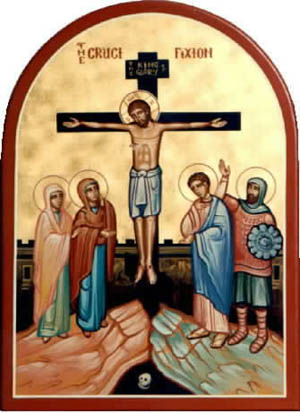
Note the shield on the character
on the right.  The centurion, of course.
And the skull at Christ’s feet.
Death destroyed!

phn02.jpg

Short books for a Holy Week.

Some (mostly) very brief books you may not know of, suggested for these next holy days.
See below to learn about our one week only discount on these, while we have them in stock…hope this is helpful.  Blessings on your Lenten  journey.

characters-passion-lessons-on-faith-trust-fulton-j-sheen-paperback-cover-art.jpgCharacters of the Passion  Fulton J. Sheen (Liguori) $9.95  Fulton Sheen was a prolific writer, a beloved Catholic leader, certainly one of the 20th centuries most well-known prelates.  He was an articulate radio and TV personality, the closest thing there was to a Catholic Billy Graham, thoughtful and compelling–maybe a bit of C.S. Lewis, even.  He was known as a persuasive speaker, a wise leader, and a great Bible expositor.  Here he explores the eternal drama of the cross by using the stories of those who were influential in the death of Jesus.  There is comfort and strength and goodness and hope here through brief but penetrating characterizations of those involved in the passion story—Peter, Judas, Pilate, Herod, Claudia and Herodias, Barabbas and the thieves.  94 pages.

The Passion of Christ  Veselin Kesich (St. Vladimir’s SeminarySVSKESICH-05.jpg Press) $10.95  Dr. Kesich is Professor of New Testament and Greek at the famous Russian Orthodox seminary, St. Vladimir’s, in New York.  This brief and profound study, first published nearly 50 years ago,  shows “how the authors of the passion narratives present a double perspective: that of the time of Jesus and that of their own time following the destruction of the Temple.”  Within this historical context, the author addresses the questions of anti-Semitism and the family quarrels between Jews and Christians…”  Kesich reasserts (against some liberal scholarly opinion) the centrality of the cross, exploring the trial and the purpose of Christ’s suffering.  An important scholarly voice, written in a concise and nearly devotional style. 92 pages.

The Scriptures, the Cross & The Power of God: Reflections for Holy Week  Tom Wright (WJK) $12.95  This is a very small, mass-market-sized paperback that is worth its weight in gold, as they say.  N.T. Wright is always worth reading, and here offers 9 short meditations, starting with Palm Sunday Mattins, throughout each day of the week (including two on Maundy Thursday, morning and evening), concluding in a marvelous Easter Vigil meditation and an Easter morning sermon. Very nicely done. 84 pages

christians at the cross.jpgChristians at the Cross: Finding Hope in the Passion, Death, and Resurrection of Jesus  N.T. Wright (The Word Among us Press) $10.95   I have written about this often, a book of Wright’s that is not as well known as it ought to be.  These are a series of 8 sermons, delivered in a rural parish that had the distinction of being the site of a horrible colliery accident in 1951, a tragedy that marked the town deeply.  Miners died and the town, it’s businesses and economy and community, grieved and struggled.  Later, the town was known for a bitter strike, and was eventually the last mining pit of this sort around—until it was closed by the government, leading to more crisis.  (You may have seen scenes of Easington in the movie Billy Elliott.) These are sermons–pastoral and prophetic–spoken into a setting of sadness, unemployment and loss.  79 pages

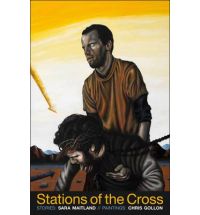
9780826405685.jpgStations of the Cross  Sara Maitland, with paintings by Chris Gollon (Continuum) $19.95  This is not a large sized coffee table book, just a hand-sized paperback, printed on heavy stock, to show off the evocative, striking–at times with an odd touch, although not quite like Salvador Dali–paintings of the stations. The paintings has been commissioned by this renowned, eccentric artist for St John on Bethnal Green, in the heart of London’s East End.  Novelist and storyteller Sara Maitland was so moved by these vivid paintings that she did a series of first person narratives, making this an engaging, contemporary, and provocative Holy Week resource. Not for everyone, perhaps, but some will find this very, very helpful. 125 pages

Christ on Trial: How the Gospel Unsettles Our Judgement
  Rowan Williams (Eerdmans) $15.00   This is a very profound and literate study of the trial of Christ by the eloquent and thoughtful Archbishop of Canterbury.  One need not approve of all of the Archbishop’s leadership to appreciate his scholarly abilities, his notable writing, and the way he can unlock a scene from history and plumb from it personal and contemporary meaning.  In this book he explores literature, current events, questions of martyrdom, meditates on matters of freedom and tyranny…and more.  Well worth pondering. 141 pages.

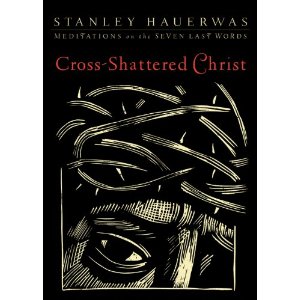
51TOq+4h0TL._SL500_AA300_.jpgCross Shattered Christ: Meditations on the Seven Last Words  Stanley Hauerwas (Brazos) $14.99 hardback These are real sermons preached in one of those three hour Good Friday services and is one of the more interesting ones I’ve ever read.  (I’ve read a few, and even preached at a few!)  They were revised a bit (when an author thanks Alasdair MacIntyre, Sam Wells, Greg Jones and Paula Gilbert, Ellen Davis and Rodney Clapp you know it is serious stuff.)  There are stunning wood-block prints by the amazing Rick Beerhorst before each sermon in this handsome, hand-sized hardback and these are worth the price of the book themselves. 
108 pages.


It is Finished: Meditations on the Death of Jesus
  Darrell W. Johnson (Regent College Press) $14.95  Johnson is a much-admired professor at Regent in British Columbia and has a tremendous book on Revelation (Discipleship on the Edge) and another on the trinity and another on the Lord’s Prayer.  Here he meditates on 6 key New Testament texts that explain the execution of Jesus and the mystery and majesty of the cross, exploring it from various angles.  To illustrate his perspective, know that he recommends scholars such as Gustav Aulen, Richard Bauckham, Henri Blocher, Martin Hengel,  Jurgen Moltmann, Leon Morris, Wright,  McGrath, his colleague J.I. Packer, and his friend John Stott.  Just what you’d expect from the thoughtful, solid folk at Regent!  I intend to read this this week, in fact—Johnson is very good.  95 pages.

Between Cross & Resurre
ction: A Theology of Holy Saturday 
Alan Lewis  (Eerdmans) $27.00  (This is now the paperback price, but we have one hardback [now out of print in hardcover] left for that price.)  I often recommend this, and most years we don’t even sell one.  A few very discerning pastors who read seriously have told me that this is one of the best books they have ever read.  It is mature and meaty, long and not simplistic.  I want to call it a tour de force.  Most eloquent endorsements are from the likes of Colin Gunton, Daniel Migliore, and Douglas John Hall and Thomas Torrance.  The late Dr. Lewis was a prof at the Presbyterian (USA) Austin Theological Seminary and this was truly his life’s work .477 pages.

FlemingRutledge.jpgThe Undoing of Death: Sermons for Holy Week and Easter  Fleming Rutledge (Eerdmans)9780802830210.jpg $18.00 I might as well list this one again this year as it is one of my favorite serious studies of the season–I say studies because it has an air of rigor about it, but each really is a sermon or homily preached by Rutledge and there are dozens here, compiled from more than 20 years of her preaching.  I’ve drawn from it often, cite it in classes or sermons I’ve done, and have enjoyed celebrating it with anybody who reads this sort of thing.  The author is moderate, eloquent, intellectual and literary, a beloved pastor of the energetic Grace Episcopal church in New York City.  There are a few photos in here, too—of bas relief, sculpting, ceramic art and frescoes, illustrating how our long tradition within the Christian church has understood this mighty topic.  Not a quick read, but richly rewarding and recommended.  May messages of this sort of sturdy orthodoxy flourish, moving God’s people to think and live and die well.  360 pages.

BookNotes

SPECIAL
DISCOUNT
 – any book mentioned –
THIS WEEK ONLY

 while supplies last

25% off
order here
takes you to the secure Hearts & Minds order form page
inquire here
if you have questions or need more information

Hearts & Minds 234 East Main Street  Dallastown, PA  17313     717-246-3333


4 New Books on Spirituality, last year’s Common Prayer book, and a great DVD by Ruth Haley Barton

WHERE DID THE TIME GO?

I wonder how many are like me, starting off with high hopes and mature expectations and then, a week before Christmas, or Easter, are lamenting the lack of spiritual discipline, the fast-paced lifestyle, the hectic stuff that comes up day by day, eroding a sense of very deeply entering the liturgical cycles.  What happened to my Lenten devotions, my contemplative intentions, the self-reflection and study and silence and fasting?  As is usually the case, in Advent and Lent, it comes undone pretty quickly for our household. Where did the weeks go?

Here are six resources on spiritual formation that might jump-start your Lenten journey, get you back on track, revive your soul in these next weeks.  Taking just a few intentional hours to prepare for Holy week might be beneficial, you know, and a new book or DVD like this might offer the assist you need.  Or perhaps you know someone you could gift with a book—just a token of friendship, sharing the Lenten love.  

6a00d8341c65c453ef0147e04d3617970b-200wi.pngNaked Spirituality: A Life with God in 12 Simple Words  Brian McLaren (HarperOne) $25.99  I have to admit I went into this with my guard up.  I love Brian and yet realize that many think he has gone a bit too far in reconstructing “a new kind of Christianity.” I disagreed somewhat with Scot McKnight, for instance, in his serious critique in Christianity Today a year ago of the previous McLaren book of that title although I do share McKnight’s concerns. (Read Brian’s reply, here, too.)  Still I am wary.  I hope that isn’t an indication of a lack of generosity in my reading but just my evangelical scruples reminding us to not take lightly serious deviation from “mere Christianity” (as most of the church has understood it for most of church history.)  Some may roll their eyes at my theological concerns, while others have rolled me out the door for daring to suggest that we read widely and host tough questions.  

And so, with a small chip on my shoulder and a heart aflutter with anxiety, I started my early preview copy of Naked Spirituality.  And was absolutely hooked from the first page.  I loved reading it!  I read it carefully and with great interest, found it to be one of the most stimulating books on spiritual formation I have read in ages.  Mr. McLaren has a rare gift–a considerable and blessed gift–of speaking to those who have not been attracted to church, or to those who have drifted, or been “de-churched” by toxic congregations, or have big questions that they feel (rightly or wrongly) are not permitted in the religious groups they know. (He had a whole book, now divided into two smaller ones, which was essentially a letter and ongoing dialogue with an unchurched seeker he came to know, inviting her step by step, without propaganda or pushiness, to consider what she believed about deep things, about Christ and about the gospel.) McLaren speaks plainly, honestly, with gentle solidarity with those who are “spiritual but not religious.”  He makes sense in ways that some of the more obtuse spiritual writers—from contemporary liberal mystics to old Puritan divines—simply don’t.  I don’t mean just to say he is easy to read and comprehend (although that isn’t a bad thing in a book, of course.)  He speaks about life as most of us experience it, down to Earth and honest, candid about struggles and perplexities and disappointments.  He notes in the video promo clip above that this book is really close to his heart.  It shows.

SPIRITUAL BUT NOT RELIGIOUS


I have never had much sympathy for that “spiritual but not religious” phrase (and here is a spectacular critique by Chris Smith of the Englwood Review of Naked Spirituality poking at McLaren’s willingness to even consider the plausibility of spirituality without religion.  They suggest McLaren’s postmodern sensibilities have been betrayed as this idea that one can have religious experience inside one’s own head outside of and not connected to a gathered narrative tradition is pretty darn Modernist.)  

Still, there are those who see themselves as driven away from (or, at least, not attracted to) congregations of worship and they hunger still for guidance on how to pray.  They could go to some silly avatar from the latest new age trend or take up classic Eastern practices, and some do.  McLaren is generous about all that, seeing the good in many traditions and practices, but he is also a passionate Christian evangelist.  He wants to talk about the God of the Bible as revealed in Jesus the Christ, if in less dogmatic tones than some are used to.  This is a tremendous resource for these kinds of seekers, drawing on a bit of interfaith insight, rooted seriously in the gospels, clearly Christian and full of common sense clues to learning the art of a life with God.  And it’s loaded with pastoral advice, simple instruction, helpful analogies, and tons of stories of Brian’s own life.  I’m happy to announce that most of my fears were unfounded and this book does what it sets out to do.  And more.

His own stories are among the best parts.  He tells here in ways he hasn’t before of the trauma of the years fighting his son’s serious cancer. He mentions his former Pentecostal experiences (a very real thing for him–who knew?) and his disillusionment with some of that. He has a sweet story about a near-break-up with the woman he was engaged to (who took him back and indeed married him.)&n
bsp; Of course he tells of saving turtles.  He writes about some hurts he has received, some hurts he has caused.  These stories are honest and kind and good, presented well, coming across as a long conversation with a wise older brother. At every point they illustrate the life of a real and raw experience of God and the human responses we offer. 


ONE WORD PRAYERS IN FOUR SEASONS OF LIFE:
POSTURES OF THE SOUL/ATTITUDES OF THE HEART
What I initially found a bit odd, almost off-putting, and frankly which created some suspicions—I’m just not that drawn to overly mystical ambiguities and want things explained, if not nailed down—was the minimalist approach, and the very structure of the book: each unit is a lesson on prayerfulness by way of using just one word.  (Well, he gives you some alternate words in each section, too.) He has two chapters on each of these single words.  And you know what?  This ended up being very helpful, nearly brilliant.  Again, my suspicions were mostly melted, as Brian’s kind style, clear teaching, and wise counsel were more than evident as the subtitle is explored, word by word, practice by practice.  The book is arranged well, develops very well, section by section, and I found myself wanting to share stories, insights, ideas with Beth as I read and pondered.  This is the sign of a good book for me, and I hope many BookNotes fans read it.  In the aftermath of last year’s New Kind of Christianity and the recent hubbub around Rob Bell’s Love Wins, many traditional evangelicals will be wary.  Fair enough.  But I think those who mistrust this (as I nearly did) should be open to its treasures. Give it a try and see for yourself.  It is going to be really helpful for many, and I count myself very glad to have read it.  I suspect I will come back to it often. 

I really appreciated and enjoyed how Naked Spirituality is arranged.  It does a sort of “faith development” thing, moving towards “seasons” of life and the different takes on our unfolding faith during each “season.”  These ring very true for me, and I am sure they do for many of us.  McLaren is clear that these aren’t fool-proof stages or lockstep phases that are set in stone.  And he is clear we cycle through these stages various times in our spiritual journey, so there is no need to get caught up in questioning this developmental framework, as if it is one unbroken upward evolution, which is not how he describes it.  (I can just hear it now, some lame critic who knows Brian studies Darwin and appreciates the complex beauties of evolutionary theory, trying to “nail him” by saying his faith perspective is essential evolutionary.  Well, not quite.)  I like his approach a lot, actually, and have been pondering it since I started the book.  I will offer a few brief criticisms later, but for now, I celebrate and affirm and commend the basic approach, design and advise offered here.

He suggests we go through four stages or levels or kinds of spiritual experience.  We can pray in each of these by using these key words that illustrate and give voice to our longings and needs at this stage.  Here’s the overview.

Simplicity: The Season of Spiritual Awakening
His words in this first part are Here (as in God is here, I am here) Thanks (he explains the often used Hebrew word dayenu) and O, which he links to the word hallelujah.  His call to practice jubilation and to stand in awe is just beautiful! 

Complexity: The Season of Spiritual Strengthening
In this section the words that are used to facilitate our prayers are Sorry, Help, and Please.  The chapters on intercession (“Please”) are wonderfully helpful, reminding us to be “stretcher bearers” bringing others to Jesus like those guys who ripped the roof off to get their friend to Jesus.

Perplexity: The Season of Spiritual Surviving
This is an intense section, and, again, very helpful, I’d think, for both beginners (who may have not realized that there is so much lament in the Bible and that doubt is not to be shunned) and for those of us who know in our gut that this is a good stage, but find it naturally unsettling.  Here are the words he uses to help us in this season:  When, No, and Why.  There are many good books on our struggles with hard times, dry times, the “dark night of the soul” and how to express our questions and anger at God.  This is as clear and helpful as any.

Harmony: The Season of Spiritual Deepening
Behold, Yes, and …. (that’s dot, dot, dot) are the words here, and they are wonderful, even if a bit confusing, and surely inadequate (as McLaren would admit since the last two chapters are on silence, which he denotes by the …)  In this section where he describes the deepening that is on the other side of perplexity,  McLaren explores the emergence of a meditative mind, faith beyond belief, and a deep and universal vocation of love.  The last chapter suggests that we may come full circle, in fact, with a new sense of naming the mystery.  Here he reminds us of the need to reject false tensions between “being” and “doing”—this is particularly important in his call to be social activists that are rooted in a truly spiritual life, and a spiritual life that, in fact, bears fruit of social and cultural engagement.   McLaren insists (without any discussion of the role of institutions and cultures, unfortunately) that the world changes as we are changed: “peace comes to the world as peace flows in our innermost being and out through us to others.” 

McLaren draws on his friend Richard Rohr, here, whose Center for Action and Contemplation unites social reformers and contemplatives, helping deepen the tradition represented by voices such as Thomas Merton, Elizabeth O’Connor and Parker Palmer, each who have directly taught on how to be “contemplatives in a world of action” and have advised that social activists not try to challenge the evils of this world without attending to the deepest issues of our own sinful selves.  

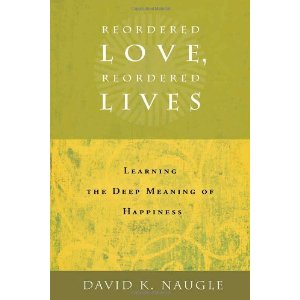
This is a huge interest of mine, and I’m afraid I’ve not found my way into God’s grace to adequately transform me here, yet.  I mentioned him a few posts ago, but David Naugle’s Eerdman’s release Reordered Love, Reordered Lives is a very helpful and balanced study of how our desires and loves can be formed by the ways of God. Excellent!  This is also the theme of the new Rick McKinley book, A Kingdom Called Desire: Confronted by the Love of a Risen King (Zondervan.) I long for a gospel-transformed life, for Christ’s power and imputation of His character to become my own, seen in how life is lived out in daily grind of work and home as well as in the public square.  Those of us who speak a lot and work hard to inspire social change simply must be also attentive to our own inner lives lest we foist our own hurts and fears on our public work. 

McLaren is a friend and brother and ally here, and I appreciate his pointing us towards the mystery, sometimes following Jewish custom and referring to God as G-d (since  the God who is really there stands beyond any of our words or concepts, to be hallowed and not turned into an idol.)  But the final chapters were a bit too ethereal for me, and bit too individualistic, too I’d say; they are not naive, really, but a bit less gritty than the earlier chapters.  And, unlike most of the book, this portion was a bit less Christ-centered, or so it seemed to me. (He does do some nice work on several Psalms in this part though which was great.)  I suspect some evangelicals will find the poetic mystery stuff a bit untethered.  Others will adore this ending portion. The final afterward “The Sea to Which All Rivers Run”—which is about love—is both beautifully w
ritten, deeply true, and yet, I wished for more.  It makes reference to the Trinity, and in several complex sentences he makes it clear that this is not pantheistic (for those that are wary.)  He invites us to a “secret life of calm stillness.” 

As we enter into the season of Holy Week, we would do well to ponder the unjust trial of Jesus, His betrayal, the wounds of Christ, the stations of the cross, the doctrines of justification, the mysteries of Holy Saturday–not to mention, then, the victory of Resurrection, the proof of God’s redemptive work in the world.  There is more going on here in Christ’s suffering and the vindication of God’s Easter Kingdom than can be summarized by Brian’s reminder, even though, it is a good reminder:  “And so it is that the last simple word is the best and the biggest, comprising and fulfilling all others.  Spirituality is love.  to hold nothing but naked love in your naked heart–not just the word, but the reality—always, for all, that is the sea toward which all rivers run.”

Sure, many of us will want to enhance and under-gird Naked Spirituality–making it a bit less naked, I guess— with a more impeccable orthodox theology and robust Cruciform discipleship, standing in the best traditions of “mere Christianity” and creedal truths, lived out together in a community of faith, a real neighborhood church.  But this guidebook to simple words for a not so simple spirituality is an incredible gift, a true asset to us, bread for the journey.    

SR-participants-guide-and-dvd_large.pngSacred Rhythms: Spiritual Practices that Nourish Your Soul and Transform Your Life  DVD  Ruth Haley Barton (Zondervan) $31.99 book and DVD study pack.  I’ve often said that Ruth Haley’s books, esp Search for Solitude and Silence and Sacred Rhythms, are amongst my all time favorite books in their huge field of so many great titles.  Ruth is a friend, a great speaker, a lively and honest teacher, and one whose journey into contemplative spirituality has deepened and matured and widened over the years.  She is a guide I trust, a speaker we enjoy, and an author that we always recommend, any chance we can.  Those of you who have meet us where we have sold books at events, conferences, retreats or workshops know this is true.  We are fans.

At last, the energy, charm, pleasantness and vibrant teaching of Ruth is available on DVD.  The books are very good, but seeing her live is a real treat and we simply cannot say enough about this new curriculum.

It is based quite obviously on the book by this title, and includes six sessions.  The study guide0310889456.jpg is designed for the DVD and is a wonderful way to experience and incorporate these spiritual teachings into your life.  The study book is ideal for anyone to use, but I suppose it is mostly designed for small groups, classes, retreatants, or prayer circles.  I love this stuff, and couldn’t be more pleased to recommend a DVD set.  It will expand Ruth’s ministry, will invite many into this conversation, and will appeal to those longing to arrange their lives in ways that actually facilitates God’s transforming work.

Ruth sometimes describes her project by saying this “links the disciplines of the Christian faith to the most compelling desires of the human soul.”

Here are the session titles that are included on the DVD and study.

Desire: Longing for More in the Spiritual Life
Solitude and Silence: Creating Space for God
Lectio Divina: Encountering God in Scripture
Honoring the Body: Flesh-and-Blood Spirituality
The Examen: Bringing My Whole Self to God
A Rule of Life: Cultivating Your Own Sacred Rhythms

We are confident that this will have a significant impact on those who watch it.  Gather some friends together, share it with a Bible study group, watch it with your family.  Go it alone if you must, but this is really inspiring, very helpful, and a great, rare resource for exploring how to know God better, allowing the Spirit to shape your lives, all because we create space and time for God to do in us what only God can.  Nice!

Falling Upward.jpgFalling Upward: A Spirituality for the Two Halves of Life  Richard Rohr (Jossey Bass) $19.95  Rohr is a Franciscan and we have carried his books for as long as we’ve been in business.  He’s written on Scripture study, or contemplative spirituality, or the social witness of the church, several fascinating books on men’s issues, and, recently, the much-loved introduction to contemplative living called Everything Belongs and the popular Naked Now.  He’s a mystic with his feet planted on the ground, a very contemporary Catholic who reads in interfaith circles.  His footnotes include some psycho-spiritual writers, from Jung to Sam Keen to Ken Wilber.  He’s obviously fluent in the medieval mystics (St John of the Cross and the like.)  He’s a writer you should know.

Here is the interesting thing about Falling Upward.  As the title implies, it is about failure, about brokenness, about failing.  Yet, for this good Franciscan, suffering is redemptive, being in touch with our sorrows and deepest selves is healing, and, well, helps makes us who we are.  That can sound cheesy and like a motivational speaker, or it can, in the right hands, be profoundly liberating.  Rohr works with this theme and applies it to aging.  The two halves of life are not exactly chronological—the younger years versus the older years—but alludes to the years of messing up and the years of deepening wisdom.  Like the Bible, brother R supposes that older folks can be elders.  They can become our mentors and guides.  There can be rituals and ways of affirming this, even.  However, for older folks to be deep and faithful guides, we must all realize the ways to see how our failings can be the foundations of our spiritual lives.  Fascinating.

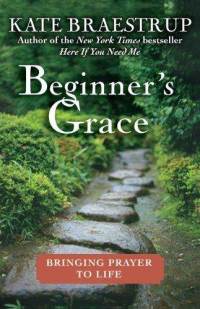
beginners-grace-prayer-for-late-blooming-belivers-atheists-kate-braestrup-hardcover-cover-art.jpgBeginner’s Grace: Bringing Prayer to Life  Kate Braestrup (Free Press) $25.00  We have said a few times that Kate Braestrup is almost as good as Barbara Brown Taylor, and is poised to become as beloved as an author as the extraordinarily gifted Ms Taylor. Whether I’m write about that, it does seem those that like BBT would like this author as well.  Kate’s first book (Here If You Need Me) took our breath away as she wrote about the death of her first husband, amidst her own work as a forestry and police chaplain in the rugged Maine landscape.  Her second book, Marriage and Other Acts of Charity again offers wise council, fine insight, w
ritten as a memoir, reflecting on her remarriage and ongoing ministry among this rough population of forest rangers, cops and first responders.  

Braestup is ordained to this taxing, adventurous and seriously compassionate calling through the Unitarian-Universalists, so her theology is decidedly liberal.  She’s a great story-teller–Phyllis Tickle, who raved about it, said it was “frank” which is a sturdy way of saying it.  And goodness, what stories she has— Braestrup has been through so much, seen so much, that she has earned the right to be heard.  

This book was written largely out of her own struggles with prayer, and a fairly regular need to pray with those in very hard places—with parents whose child is lost in the woods, with mourning spouses after a drowning accident, with fellow EMTs or cops when one of their own is fallen in duty.  This book will make you cry and a few parts will make you laugh.  (Those of us who have been through great trauma will understand the story of Braestrup crying with a young woman whose husband’s body was recovered from a frozen lake, who wanted to touch him one last time, and did so as they unzipped the body bag, only to then laughed through her horrific grief, blurting out that she never really liked that shirt her husband was wearing.)  Can tears be prayers?  Can laughter?  Can one learn to love God even if the words aren’t right?  My, my, this is sweet, good stuff.

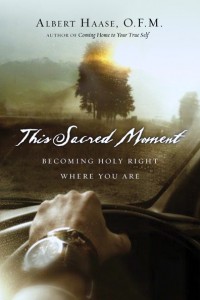
ThisSacredMoment-200x300.jpgThis Sacred Moment: Becoming Holy Right Where You Are  Albert Haase (IVP) $15.00 I have been so intrigued that InterVarsity Press, a solid, thoughtful, favorite evangelical publisher has been releasing more books by Catholic writers in the past decade, especially in their spirituality-focused imprint formatio.  This is a good thing, of course, and important.  I hate to show too many of my fussy evangelical cards (as I did in my admission of having some concerns about McLaren’s theological shifts) but in a way, it is helpful to have books from the Catholic and monastic tradition considered, vetted and published by one of the most reliable and thoughtful evangelical publishers.  There is, within Catholic presses, not unlike liberal Protestant houses or fundamentalist and charismatic publishing firms, all manner of weirdness.  So helping get some of the very best spiritual formation stuff from Catholic retreat leaders that might be most useful for Protestant readers is quite helpful.  So kudos to IVP.  And kudos to whoever chose this title as it is delightful, sharp, nicely written, and realistic in our hope to find deeper intimacy with God. Haase is obviously a good guy and a fine writer.

“What does it mean to be a holy person,” the back cover asks.  The answer might surprise you.  Father Haase tells us it is the ordinary stuff of life that is the crucible for increasing holiness.  “Any and every situation holds the grace for the transformation called holiness.”  He invites us to imitate Christ and empty ourselves for the benefit of others. 

Besides the shout-out there to the classic Imitation of Christ you may hear shades of another influential classic Abandonment to Divine Providence (also published as Sacrament of the Present Moment.) Yep, this is basic stuff, and yet his guidance–and he offers concrete practices that helps us learn how to wisely discern what God might be calling us to in any given situation–allows us to take commonly accepted faithful ideas and helps us learn to live it.  I suppose it is fair to say that Haase writes as a Franciscan (that is, with simplicity and charity) and yet despite the short chapters and practical application stuff, it is significant and profound.  The discussion questions are great and could last a year; if you have a trusted spiritual companion, it would be ideal to work on them together.

Fr. Haase has been a missionary to China, hosts a weekly radio show, and has authored Coming Home to Your True Self and Living the Lord’s Prayer.  Very instructive, encouraging, and a real blessing.

The last few pages are an appendix of nearly two dozen “summary
principles” which are explored in short chapters through-out the book. 
Here are just three:

God’s call in the required duty
or unmet meed of this present moment is an expression of God’s will for
me. Consequently, every moment is sacred.

All creation exists for
Christ’s glory.  Alienated creation comes back to harmony with God and
is reconciled through Christ’s self-emptying on the cross—his selfless
openness and response to the present moment. This is God’s will for the
world.

The ego’s obsession with self-concern, self-image, and
self-gratification and self-preservation is the primary obstacle and
hindrance to selfless openness to God’s call in this sacred moment. 

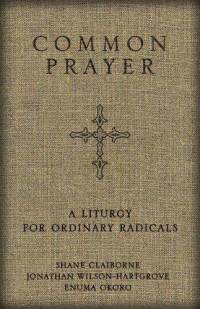
common-prayer-liturgy-for-ordinary-radicals-shane-claiborne-hardcover-cover-art.jpgCommon Prayer: A Liturgy for Ordinary Radicals  Shane Claiborne,  Jonathan Wilson Hartgrove, Enuma Okoro  (Zondervan) $24.99  I discussed this remarkable resource at great length when it first came out early in Advent of last year, reviewing here it in BookNotes.  If you don’t know about it, I hope you click back to our previous review, which explains it all pretty nicely.  In the winter months we have come to hear of a number of groups that are using it, and loving it. 

Now, in Lent, it dawns on me that I should suggest it again, as it is truly a great prayer book, with interesting sidebars, some nice woodcut touches, a ribbon marker and–obviously, most importantly—substantial prayers that are both historic and very contemporary, ancient and a bit future, with cadences of the older prayer books and yet designed, mostly, for folk who aren’t quite use to the rhythms and disciplines of praying out loud from a common prayer book.  This is rich and good.  It would aid  your prayer life these important next days, I’m sure, and would make a very nice, lasting, gift.

Well, there they are.  Nearer the final leg of our Lenten journey, maybe these would prove helpful along the way.  We can send ’em out right away, of course.  Hope you appreciate the suggestions and the discounts.  It is our joy to offer these diverse kinds of resources.  Peace.

BookNotes

SPECIAL
DISCOUNT
 – any book mentioned –
20% off
order here
takes you to the secure Hearts & Minds order form page
inquire here
if you have questions or need more information

Hearts & Minds 234 East Main Street  Dallastown, PA  17313     717-246-3333


The Poetry of William Carlos Williams of Rutherford by Wendell Berry

In my last post, naming books about reading, our technological culture, media and so forth, I was happy to announce the paperback release of the fine bit of literary criticism (such a stodgy word for it) by Wendell Berry, Imagination in Place.  It was all I could do not to mention his brand new one, which is oh-so-similar, one that I am prepared to rave about.  I didn’t want such an important revelation to get lost in that paragraph.

WB-WCW.jpgSo, now, a proper announcement.  Wendell Berry has a brand new book, and its first half, which I have read, is clear as a bell and as solid as Kentucky limestone.  It is truly fascinating, especially if you like Wendell talking about his own life as a writer, or if you like the poetry of William Carlos Williams.  It is called The Poetry of William Carlos Williams of Rutherford (Counterpoint; $24.00.)

The title itself is revealing and significant.  Any high-school kid should at least know the name William Carlos Williams and those who have followed our blog know that we have promoted the wonderful essays on literature and character and social change by the Harvard professor, Robert Coles, and how Coles holds up Williams as a great writer who related literature to his day job, being a family doctor, in his urban setting.  You can see where this is going—imagination in place!  William Carlos Williams of Rutherford New Jersey?  Berry has the eyes to see (and apparently those schooled in mid-20th century poetry know this) that WCW was, in fact, an oddball of sorts: he wrote about common people in a real location, allowing his participation in the local neighborhood–his work, his friends, his neighbors, his church–to influence (indeed, to become to subject of) his extraordinary poems.  He was belittled for this by the hot shots, and this is, of course, a part of the story.  Berry took great inspiration in this (I wondered, to be honest, why William Carlos Williams wasn’t in Imagination in Place as he seemed to exemplify that book’s thesis. Now we know—Berry was doing a whole book on this same theme that structures Imagination in Place, using WCW as the great example.)

 I should say that it is only my lack of vocabulary that causes me to say Berry is “using” WCW as an “example.”  Berry is more subtle than that, more nuanced and insightful and kind.  But, still, the Borger short-hand being what it is, I’d explain the book like this: he illustrates how a sense of place (in this case Rutherford and Paterson NJ) shaped and influenced and became fodder for the great work of this too often misunderstood poet and doctor, the fascinating William Carlos Willliams.  And how Berry himself does that in his own Kentucky homeland, drawing inspiration from Dr. Williams.

It hasn’t directly come up yet in the book but it is obviously significant that both of these poets are bi-vocational.  Both Berry and Williams have other jobs, working with their hands, in farming and pediatrics, respectively. So not only does their place in a locale shape their poemsWilliamCarlosWilliams-150x150.jpg and stories, but their day jobs do, too.  (This is one of the matters explored by the aforementioned Robert Coles, in Call of Stories: Teaching and the Moral Imagination and Handing One Another Along: Literature and Social Reflection and in his Lives We Carry With Us: Profiles of Moral Courage. Somewhere he tells of using William Carlos Williams in his own work teaching med students. Do any ag schools use Berry’s poems or short stories, I wonder?  One can hope.)

And so, The Poetry of William Carlos Williams of Rutherford is a book- length treatment, in short, wonderful chapters, of Berry’s own appreciation and analysis of Williams, and his writing about his place.

Did you know that many of the most prominent professional poets of his generation moved to Europe, or at least traveled there much, reveling in their leaving.  In a related corner of the zeitgeist, it was said that the only poetry that matters was that of the city; Berry was seriously warned that his literary career would abort if he returned to Appalachia. This has been reported in other Berry books  how he himself was discouraged from moving back to Kentucky (see the chapter “My Friend Hayden” in Imagination in Place about the New Hampshire farmer-poet who was an example to Berry that one could be a successful writer and not live in the urbane and sophisticated circles of New York or New Haven.)   Well, leaving was the thing, and they mocked Williams for staying.  Berry explains it well, and it continues to be an important matter, and will continue to be so for many of us.  

Similarly, and perhaps of interest to some some BookNotes friends who work at colleges or in college ministry, Berry notes, without much judgment, that most college professors have, in fact, needed to leave their own regions and kin to take up careers in the modern college town, which has an effect on the kind of research and work they do.  He notes that most professional poets these days are hired at universities, and he writes,

Unless university poets are actually from some place in particular, and unless they have the good fortune to be employed somewhere near their homes, they tend to be careerists and migrants, without local knowledge or affections of loyalty, like their professional and specialist colleagues.  They are therefore under pressure to conform to, and they have no immediate reason to resist, the industrial order represented by their university.  They, like their critics, are inclined to think that the arts are under obligation to keep up with the times, and to conform to industrial values and advances in technology.  This is not a quarrel I wish to bring against anybody in particular, and I know there are reasons and also exceptions…What I am describing, however, is too easily possible in the modern universities.  The tendency is toward careerism, personal displacement, scientific reductionism, and technological determinism.  Williams saw this tendency, understood it, feared it, and resisted it.

wendellberry.gifOne of the ways he did this, of course, is he stayed put, did his work, wrote his stories and poems and essays, situated.  Berry puts it simply, ” He lived, practiced medicine, and wrote his poems in the same place all his life.  He lived by the terms of a community involvement more constant, more intimate, and more urgent than any other notable poet of his day.”   He continues, “He watched his neighbors and his patients, who often were the same people, with the keenest interest, affection, and amusement, and often enough with dismay.”  (One hears echoes of Eugene Peterson, here, even how he learned to be a better pastor by reading about the ordinary people in novels.)

This is the kind of doctor and poet William Carlos Williams was, and the kind of poet and citizen Wendell Berry is.  And it is, apparently, more rare than you might think. (Come to think of it, I wish
I had a doctor—let alone a poet—who watched me with “keen interest, affection, amusement” and, heck, I’d even take dismay.  I don’t think our current doctor remembers my name and sure doesn’t write any poems about me.  But that’s another story.)

Berry writes,

William Carlos Williams “was a poet determinedly and conscientiously local. Some writers, comparatively few, have assumed the burden both of local subject matter and local stewardship, and some–most–do not. Thoreau did, Henry James did not; Faulkner did, Hemingway did not; Williams did, Elliot did not.  By noticing this I mean to imply no blame.  The difference is nonetheless significant, and it must be taken into account if we are to deal justly with William’s poetry.  As Booker T. Washington counseled his own people to do, Williams cast down his bucket where he was.

larsen-lisa-poet-william-carlos-williams.jpgWell, I could say more.  There is a chapter called “The Problems of A Local Commitment” and another called “Local Adaptation.”  And–you should know as you consider if this book will fully interest you–there are a dozen short chapters, each about an aspect of Williams’ poetic styles.  There are chapters called “Line and Syntax” and “Measure” and “The Structure of Sounds.”  I am not schooled in poetry at all and frankly am not as interested in it as you might suppose.  But this book is already important to me, a tutorial by a master poet with values I trust, using a fine and important writer as an example of these word-smithing details.  Consider this new book another Berry-esque essay about much that is wrong in our culture, or much that is right about his faithful, populist/agrarian vision, which I suppose it is.  But it is, also, a rare study of a particular poet, and a mini-course on poetry, what it is, how it works, and how it is situated, at least in American culture. (There is one fantastic chapter—I jumped ahead to read it—called “Williams and Elliot” that is really thought-provoking, especially showing how both poets concluded that their times were “wastelands.”)  I think most of us could use the refresher course in poetics, and who better to teach us?   

Look.  I know some of my readers, like myself, value Berry’s wonderful stories (Hannah Coulter may be an all time favorite novel of both Beth and me, as is Jayber Crowe.)  And, even more, I appreciate his social vision as worked out in his careful, studious essays.  The man did a sit-in to protest mountaintop removal at the Kentucky governor’s office last month (at my facebook, I linked to a youtube interview with the tired protester, saying he should have done it years before.)  I am mostly drawn to his call to care for land, to reject government shenanigans, to live as God’s steward of creation.  His wonderful essays on food have been brought together in a profound collection called Bringing It To The Table: On Farming and Food, mature writing that is just so relevant for all of us.  He attends a small country church, has been shaped by Methodist hymns and his King James Bible, and he makes tons of common sense, following the teachings of Jesus as best he can. Sex, Economy, Freedom and Community is a fabulous starting anthology, so I’m not always a quick to think about his poetry.

But this, this poetry, this is what sustains and shapes the man.  If you care about Berry, really, you should be interested in this book.  He tells us, movingly, I think, on the very last page, once again, what has been the theme of the book about this poet from North Jersey:

It has been so important because Williams’ place was as marginal in its way as my own, and he devoted his life and art to it, not looking away or yearning toward some “better” place.  Of all the writers known to me, Williams dealt most directly and explicitly with the complex cultural necessity of an ongoing, lively connection between imagination in the highest sense and the ground underfoot.  Nobody had confronted more steadily the difficulties of such an effort in the face of the encroachments everywhere of industrial values, industrial exploitation, and the consequent loneliness of industrial individualism.  For half a century his example has been always near to my thoughts, his poems always
at hand.  I have taken from them an encouragement and a consolation that I have
needed and could not otherwise have found.

It may be a bit incongruous, but now seems a great time to celebrate two other recent and much-commented upon poetry volumes, by poets whose writings are not at all like Mr. Berry’s.  One is rather unknown, released by an indie press started by a dear friend.  The other was just released by a very prestigious press after having garnered an important award.  I do not know the first poet, but the second is a long-time friend.

Both deserve huge accolades and we are happy to promote them.

9780984553129.jpgContingency Plans  David K. Wheeler (T.S. Poetry Press) $14.00  Wheeler has quite a gathering clan of fans and his work shows up at cool places like the Burnside Writer’s Collective, TheHighCalling blog, and has been included in an important regional volume (The Pacific Northwest Reader, published by Harper/Delphinium.)  He blogs at davewritesright.blogspot.com and, as you’ll discover, he is a fascinating fellow, a musician, essayist, and a very wonderful poet.  Contingency Plans is a great book at a great value—lots of solid poems, on all kinds of topics.  Poet Oliver de la Paz writes of it “These are poems of great spiritual crisis and consequence, where the dark night of the soul is a rugged rucksack shouldered by the poet.  But the wilderness resounds with the voice of a choir and the wearying road can always beckon you home.”  How can you not want to read something described like that?  

Comedian and memoirist Susan Isaacs–whose book Angry Conversations With God you really should read—has observed that she is confounded by great poets (can you relate) since they use the same materials she does: words. About David’s book she says,  “But where I’ve built a fort, he has erected a cathedral.  Wheeler has revealed “the space behind our ribs” and I must remove my sandals.”  

Space doesn’t permit me to cite a few of my favorites, but know that these are accessible, very interesting, fun, mysterious, and usually quite lovely.  There is a sense of Christian spirituality here but they are not usually overt and certainly not sectarian. For what it is worth, Wheeler was mentored by a guy I love, Jim Schmotzer, one of the great leaders in campus ministry from The Inn (at Bellingham, WA) and he nicely thanks in his acknowledgments a batch of indie-owned bookstores (and indie singer-songwriter and H&M pal, Justin McRoberts, for those that like to connect the connections dots.) Wheeler’s a good guy, and his work indicates a maturity beyond his years. They could be read aloud on a variety of occasions, used as discussion starters in small groups or classes, or might inspire you in something like a daily quiet time.  The poet writes that “My hope is that my poetry serves as a temporary testament to how grace has made right wha
t I have gotten wrong.”  Not bad, believe me.

cloud-of-ink1.jpgCloud of Ink  L.S. Klatt (University Press of Iowa) $17.00  You may recall how I raved and raved about the odd-ball work of this Calvin College literature professor, the wondrously playful words and syllables, the artistically rich array of poems found in his first prestigious volume, Interloper (winner of the Juniper Prize for Poetry.)  About half of those are so over-the-top creative that folks just love ’em for the sheer joy of messing around with what words can do.  A few are very serious, one, in fact, somewhat about the death of my own father, killed in a tragic car wreck.  That one, or so it seemed to me, was poetically rich but very evident.

This new work, pulled together after being awarded the 2010 Iowa Poetry Prize, earning the exceptional privilege of being published by this high-end poetry publishing legend, has some of the same edge as his first mind-boggling work.  And, yet, this one feels a bit different.  There is some greater clarity, some light, lots of truth, I’m sure of it.  

Like Klatt’s previous one, there is a great little bit in the back, noting some of his allusions andlew-klatt240.jpg inspiration, not unlike as in liner notes when a songwriter tells something about the meaning of a song. And what fun it is!  For instance, Klatt notes,  “Several of the titles in the book are modifications of lines from the journals of Ralph Waldo Emerson…” and offers hints such as “‘Aeronautics’ borrows a line from a letter of Herman Melville…” or “‘Darwin’s Mouth’ refigures a story from Charles Darwin’s autobiography…” and “‘Lines of Motion’ is suggested by Flannery O’Connor’s reflections on her own work in Mystery and Manners.”  ‘For Lack of a Better World,’ Klatt tells us, is inspired by a painting of Joan Miro. You get the idea.

Despite these fabulous clues, the reader has to be warned: we must puzzle out the meaning, entering in to how the poet sees the world, and it takes some work.  Good art and slow reading is like that, of course, so I’m saying nothing new;  just some hint that this is not the easiest sort of book to work on, but perhaps is less cryptic than the first.

Am I being critical?  Not at all!  Lew is beloved amongst his students, esteemed amongst his colleagues, and remembered by many as a great campus minister, back when he served with the CCO in Pittsburgh much more than a decade ago. (No wonder he has a few lines about Pittsburgh icons, steel-workers, and Heinz ketchup!)  His poems have been published in some of the most classy lit journals around, and this is, I must underscore, serious stuff.  One prominent reviewer, Kazim Ali, said they are nearly “un-quotable” which is the highest compliment—they are “so tightly joined…of languages variously plainspoken ad wildly swooping.”  Ali continues, “Klatt’s seemingly spare and diffuse lyrics artfully assemble a complex and rich vision, generous in intention, provocative in enactment, ecstatic in spirit.  A wild and welcome collection of poems from an exciting and dynamic thinker.”  Yes, indeed, Dr. Klatt is rich… generous… provocative…ecstatic.  I can vouch for that.  You can hear two Christian leaders, more thoughtful and learned than I, discuss his book at the Books & Culture podcast, here.  And, read this nice story from his college, including some good quotes about his work and some invaluable background.  Enjoy.  

I love these three very different books, Berry, Wheeler and Klatt.  I hope you consider buying them, maybe sharing them with those would might appreciate them.  Here are, for what it is worth, just a few more recently release poetry paperbacks we endorse.

0802827497.jpgIncarnality: The Collection Poems (with audio CD)  Rod Jellema (Eerdmans) $28.00  This is a nice new collection of the works of one of the great Christian poets of our time, professor emeritus at University of Maryland, and a CD tipped in the back of him reading. There are ample selections from his four earlier volumes, and some new material.   Barbara Brown Taylor wrote of a previous collection (A Slender Grace) “these poems find good news in the dark. Whether he sets us down in front of blind Willie Johnson playing the blues or asks us to spend a night on the bare floor of a church in Nicaragua, Rod Jellema teaches us to see what he sees—slender revelations flung toward us by the veiled but gracious God who means to lead us home.”  This would make a spectacular gift for any poetry lover, any fan of Jellema, or for someone wanting to discover the joys of poetry anew.  Very well done.

lovely-raspberry-poems-aaron-belz-paperback-cover-art.jpgLovely, Raspberry  Aaron Belz (Persea Books) $15.00  I suppose this may not be the ultimate compliment but it matters to some of us: this is published by a serious and mainstream general market publishing house, with a huge endorsements by a giant in the field of contemporary poetry.  Belz is a thoughtful, Reformed evangelical, and is obviously taken seriously by the broader community of poets.  John Ashbery says joyously of this new one, “reading it is like dreaming of a summer vacation and then taking it” although the stern picture of the author on the inside makes me wonder what kind of vacation that would be. Which is to say these are upbeat, lovely, approachable, but not cavalier or light-weight.  Most of these were previously published in obscure and literary journals with hip and bohemian sounding names, only two of them I’ve even heard of: The New Pantagruel and The Washington Post.  There ya go.

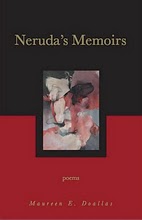
nm-kindle-cover.jpgNeruda’s Memoirs Maureen E. Doallas (T.S. Poetry Press)  $15.00  This is another fine work published by this indie press edited by L.L. Barkat.  This is not exactly about Pablo Neruda, nor is it a memoir.  Much of this is about the perplexing beauty of nature, how the author grieved the loss of her brother, and a heart-filled, lyrical take on life which transcends the ordinary. 

The volume is meaningfully arranged around four main sections, entitled Enter,  Listen, Exit, and Remember. A great collection by one whose work has been anthologized and well-reviewed.

Read her
at writingwithoutpaper.blogspot.

BookNotes

SPECIAL
DISCOUNT
 – any book mentioned –
20% off
order here
takes you to the secure Hearts & Minds order form page
inquire here
if you have questions or need more information

Hearts & Minds 234 East Main Street  Dallastown, PA  17313     717-246-3333

Tolle Legge. Because books matter.

How many a man has dated a new era in his life from the reading of a book?    
books.jpgHenry David Thoreau

When you sell a person a book you don’t sell him just twelve ounces of paper and ink and glue—you sell him a whole new life.  Love and friendship and humor and ships at sea by night—there’s all heaven and earth in a book, a real book, I mean.
Christopher Morely

…I myself was getting wild.  I wanted wildness, originality, genius, rapture, hope.  I wanted strength, not tea parties.   What I sought in books was a world whose surfaces, whose people and events and days lived, actually matched the exaltation of the interior life.  Those of us who read carried a secret around with us like martyrs a secret knowledge, a secret joy, a secret hope: There is a life worth living where history is still taking place; there are ideas worth dying for, and circumstances where courage is still prized.  This life could be found and joined, like the Resistance.  I kept this exhilarating faith alive in myself, concealed under my uniform shirt like an oblate’s ribbon; I would not be parted from it.
Annie Dillard An American Childhood

The thoughtful reader surrounds himself with inducements to substance
.
Aldous Huxley

I don’t know how Dallas Baptist University has done it (well, I have an idea and it has to do with the extraordinary professor there, Dr. David Naugle) but they nurture some of the most remarkable students and alums I have met.  I mentioned in my last post that I had been invited to address the annual Paideia Society and Honor’s College conference there, speaking on the role of reading in the life of the believer, and the future of the book in our increasingly fast-paced/digital/virtual culture. I had the great privilege of taking my place behind previous speakers from other years, speakers and authors as prestigious in the thoughtful evangelical world as Nigel Cameron, Os Guinness, Steve Garber, James K.A. Smith.  They’ve had Polanyi scholar Esther Meeks and Mars Hill Audio founder Ken Myers and Citizens for Public Justice Director Gideon Strauss and Grammy-winner, music producer (and founder of ArtHouse) Charlie Peacock.  In a week or so, the college will host poet Luci Shaw.  I really was nervous speaking from the same podium as had eminent scholars such as historian George Marsden and world-class philosopher Alvin Plantinga.

Doc Naugle, mentor of philosophy students and friend of nearly everybody, hosted me well, and the students and alum of Paideia and of the Honors College (under the leadership of Dr. Philip Mitchell ) were very impressive. Since this was party an academic conference, serious papers were delivered on all sorts of obscure scholarly topics.  And they were excellent including some done by undergrads.  I took in papers comparing the way Aristotle is used in N.T. Wright’s book on character (After You Believe) and Naugle’s own Reordered Love, Reordered Lives and another on the role of fairy stores, and yet another on strategies for guidance counselors for responding to youth violence.  I learned much about Augustine’s view of reading in one, and picked up the copy of one comparing Tolstoy and St. Luke.   There were papers on Dylan, another comparing Springsteen and Flannery O’Connor, and a few whose topics I didn’t even understand. It was especially gratifying for me to see how God has been faithful in raising up young scholars—a few of the presenters are themselves now professors  at other schools in Texas, mentoring undergrads in the way that Naugle and others at DBU so shaped them.  To see how the vision for distinctively Christian scholarship can take hold and unfold as young scholars stay faithful to Christ in the academy is very exciting.  Talk about taking your faith into the work-world to be agents of influence in a difficult career area!

Our Hearts & Minds friends sometimes like to follow our work, so rather than announcing new books we’ve received here at the shop, I’ll share just a bit about my time in Texas and hold up some related books for your consideration.  I’ve been pondering this reading stuff for years, you know, so was delighted to have such a friendly crowd to whom I could preach.  I do think I was pretty much preaching to the choir, but I carried on nonetheless.  I thank them for their patience and good humor.  And the tacos.

The title of the event was tolle lege, which, you should know, is the Latin phrase (perhaps a playground rhyme or jump-rope chant) that the hung-over Augustine heard in his garden one bright day.  He did, indeed, “pick up and read” and was famously converted after his eyes fell on the first book he found (a Bible.)  Dr. Naugle had buttons printed up with the line–“tolle lege: take  up and read” as a reminder of the importance of not only knowing Augustine but of, as folksinger Kate Campbell drawled in an evening concert, “Just pick it on up and read the thing, yall.”  Right on, sister.

I often start my talks on this topic with an episode in a Chaim Potok novel where a Jewish boy and a Catholic kid watch a Hasidic ceremony where exuberant men dance with the Scriptures.  “Don’t you dance with your book?” the Jewish boy asks his friend.  Do we dance with our Scriptures, our words, our books?  It is a good question.  I am afraid a few of us still do, but we are becoming a real minority.

What does it mean to dance with books in the digital age?  How can we promote a culture of bookishness?  This is not a problem only for intellectuals and it is not new, brought on by the dumbing down caused by the habits of skimming and scanning caused by our immersion in the distractions of Web 2.0.  (Ken Myers wrote years ago of a conversation he had with a friend who worked for NPR who had moved to ABC news.  He reported that his friend spoke almost wistfully of the conversations he routinely had back at NPR because the staff there read books and the busy workers at ABC largely did not.  Neil Postman’s must-read Amusing Ourselves to Death: Public Discourse in an Age of Show Business was written in the last century, about television, not twittering.)

 Allow me to refer you to a piece I wrote for Comment magazine a few years ago called “Learning to Love Good Books.”  I wanted it said, if only in passing, that I do not quite buy the presupposition that there is a huge dichtomy and battle between the word and the image, between books and screens.  I had this passed out on Friday at the DBU event, too, because I did not want my passion for the printed page to lead us to needlessly dis God’s good gift of image, screen, and internet.  Films and TV shows and video games are all valid and good things; they are different than books, and are at times needlessly played off against one another (as Postman does.)  To affirm the roles of music and movies is important.  We do not need to affirm the importance of reading by demeaning the fine arts of images, moving or otherwise. And certainly many of our most loyal book lovers, those who understand the tactile and aesthetic dimension of reading, do travel with a e-reading device.  As usual, things aren’t quite either/or, are they?

The Dallas Baptist University Paideia conference models this as they usually have a concert experience alongside
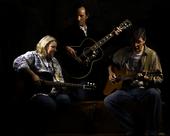
theirm.jpg academic papers and speeches and heady intellectual discussion.  I was nearly jumping out of my seat with joy anticipating the show put on by an occasional band called The New Agraians (their name a hat tip to the mid-twentieth century writing tradition of Southern populist literature.) I love all three of these folks as solo recording artists and hearing them do songs about the southland—capturing a sense of place and localism and specificity that is important for good writing—was an incredible treat.  Check out Pierce Pettis, Kate Campbell, and Tom Kimmel, who do some of the finest singer-songwriter stuff I’ve heard. There are some youtube clips of a bit of the show and you could check those out.  And start praying for them so they can get a New Agraians recording thing in the works!

Still, there is something slow and interior and formative about books, at least books that are taken seriously.  Unlike pixels where blocks of text can be eliminated in a moment, with the tap of keypad, where content has an “unbearable lightness of being” giving it the air of the ephemeral, there is something more weighty about a book in the hand.  Can blogs and reading on iphones carry the necessary gravitas that paper and ink can?  Can we take reading and learning seriously in our distracted age? What are the implications of 2 Timothy 4:13 for our own lives these days?  These are huge questions that I meandered through, and I invite you to think about them too.

For what it is worth, in three presentations I suggested that we should, indeed, “pick up and read.”  Books matter, and I gave (at least) three reasons. 

PEOPLE MATTER
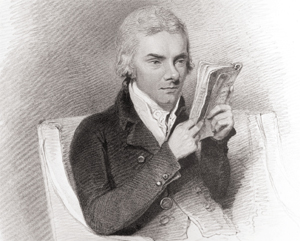
Firstly, books matter because people matter.  Books have changed lives in large and small ways for centuries and if we love our neighbors we will want them to have experiences that can be transforming.  Great ideas and stories and teaching come packaged in books and it is our Christian duty to share them—hoping for the sorts of changes that we’ve seen down through redemptive history.  I shared about a dozen episodes of how somebody loved somebody else by sharing books and reading.  I told of Saint Patrick’s ancient language work with the Celts and John Newton’s conversion by reading The Imitation of Christ and his influence on Wesley–whose carriage was fitted with bookshelves!—and Williamolasky22.jpg Wilberforce to the spiritual renewal God gave Abraham Kuyper when a wise laywoman gave the liberal pastor The Heir of Radcliffe, a novel that changed his soul.  We know of the thoughtful conversations about the essence of story between Roman Catholic J.R.R. Tolkein and the atheist C.S. Lewis (and how his imagination was baptized by reading fairy tales by George MacDonald and how he found his way to Christ finally by studying The Everlasting Man by G. K. Chesterton.)  We know Watergate bad guy bawled as he finished Lewis’ Mere Christianity, finding Christ on his way to prison and how he later learned to think more structurally about prison reform and cultural renewal after reading Kuyper.  I told a few stories of the not-so-famous whose encounters with books made a difference in their lives. 

Can new technologies do that sort of things, transform lives?  Can we share books, pass on the wisdom of authors, invite people to read with us, to join a reading club, can we do the sort of bookish ministry that has changed others if we all read on line?  If we lose real texts and download whatever amazon has for your kindle? I don’t know, but books matter because people matter and our human-scale, communal use of books is a pattern and habit we must encourage. 

WORDS MATTER
189770_10150212292537166_62060382165_8989090_141697_s.jpgSecondly, I explained some different sorts of reading, appropriate for different sorts of texts.  I held up the little article that I wrote at TheHighCallings blog called “Style Matters” which celebrated not just the content of books, but their style, their art, their passion.  Content and style combine in the best authors and wise readers will allow themselves to be taken in by the experience.  Not only do different books, though, take different approaches, we need some different sorts of motivations for reading—to remind us, but also to share with others, to encourage and give a plea for others to see reading as a Christian duty.

I love doing presentations on this sort of thing and described reading as an act of worship, reading as an act of discipleship, reading as an act of spiritual formation, and reading as an act of contextualized mission.  How can we learn to read worshipfully?  To acquire content, as life-long learners?  To have that information form us, to read deeply and, as Peterson’s book puts it, to “eat this book”?  And, in our post-modern culture, how can we read missionally, learning about our world, engaging the important books and authors and themes of the world?

IDEAS MATTER
In my third presentation I told some sad stories about those who do not seem to read much, whose faith appears shallow and lacks integration or coherence–significant folks in key occupations who have little desire to think and live as disciples in their given callings. How damaging to our Christian witness it can be when leaders teach such foolish things and act without regard for occupational integrity. How do we connect Sunday and Monday, and what principles and practices might facilitate a more robust community of discourse?  How has dualism crippled our Christian witness, especially in the public square?  Why do we seem to not be terribly aware of the implications of, say, Romans 12:1-2?  That is, what can we do to help people live lives of whole-life discipleship, thinking Christianly, taking up our vocations to be agents of God’s reign in the world?

This Paideia Society group understood well the need for a uniquely Christian worldview that would generate
worldview-history-concept-david-k-naugle-paperback-cover-art.jpg distinctively faithful ideas about each and every thing in life.  Ideas about developing the “Christian mind” and the scandal of the lack of an evangelical mind was not knew to them–after all, their teacher literally wrote the book on the history and significance of the notion.  How books might call us to deeper thoughtfulness, to slow and careful–and bold and audacious–efforts for social reform in every zone of life, well, this was my big final push. We need bookish guides (booksellers, even?) to help the community of faith get the resources they need for personal and social transf
ormation.  Do you have bookish mentors, guides, reliable sources?  I sure hope your bookish mentor isn’t a faceless order-filler at some on-line place that cares little for your soul or God’s work in your life.  This is too important, I suggested, to not have bookish relationships with people you trust.

I think we need small groups, intentional community, friends and mentors, colleagues who do life together, even in their thinking and studies (not unlike Wesley’s culture-changing bands with their method of reading classics, or not unlike Wilberforce’s Clapham group, friends for life who took up the cause of social reform together.) Such groups should read together, and encourage each other in developing a way of life guided by the best principles and practices.  If we believe that books matter one of the reasons will surely be that ideas matter.  Ideas grow legs and some take traction, making a difference in the world, for good or ill.  Readers become leaders and with the right sort of vision and institutional support, our books will shape us in ways that may allow us to be faithful in small and big things.  Perhaps we will, truly, make history.  Who doesn’t want that in our time?  May God be pleased as we do good works for the common good, inspired, perhaps, by good habits of reading good books.

group_bible_study.jpeg 
So, as I was spending time with folks in Texas I thought of books to share, some following up the list from the last post (The Shallows: What the Internet Is Doing to our Brians, The Gutenberg Elegies: The Fate of Reading in an Electronic Age and so forth) and some others only somewhat related.  Here are some more or less random suggestions to carry us further into this important topic.  In no particular order.  Enjoy.

Large.9781608993994.jpgGod and Gadgets: Following Jesus in a Technological Age  Brad Kellenberg (Cascade) $22.00  This author has been an engineer, a theology prof, and has written a wonderful book on postmodern evangelism.  This new work raises the huge question about our relationship to our stuff, especially the technological sorts of stuff of our hot-wired age. He’s a bit of a Wittgenstein scholar, too, but don’t let that scare you aware.  Very provocative and very important.

Technopoly: The Surrender of Culture to Technology Neiltechnopoly.jpg Postman (Penguin) $14.00  You most likely know–and should own--Amusing Our Self To Death, and this is in some ways a companion volume.  I love this book, a easily read overview of how submission to technique and the gods of efficiency have reduced us in many ways. He calls us to be “loving resistance fighters.”  Is it to late to join the resistance?  Read this book and be inspired to make new choices with a new vision.  And, while your at it, his End of Education is a wonderful read, too.

The Technological World Picture and the Ethics of Responsibility: Struggles in the Ethics of Technology Egbert Schuurman (Dordt College Press) $9.00 I really want to promote this very important author—an important neo-Calvinist and engineering professor in Holland.  We have several of his other heavy books, including his magnum opus, Technology and the Future, recently re-issued.  Highly recommended for those seeking a serious, somewhat philosophical survey from a viewpoint that resists either demonizing nor making an idol of the good, but always distorted, gifts of technology.

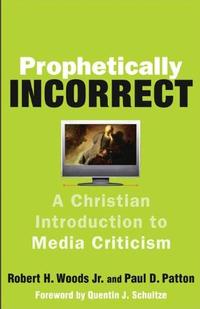
Prophetically Incorrect: A Christian Introduction to MediaphpThumb_generated_thumbnailjpg.jpg Criticism  Robert Woods & Paul Patton (forward by Quentin Schultze) $19.99  You’ve got to look closely at the cover—the monitor screen has a picture of Jeremiah!  Yep, this includes some pretty serious prophetic imagination–with a rave review from Walter Brueggemann, it should!  With close readings of pop icons like Lady Gaga and serious Biblical vision, this offers us important guidance in learning the art of cultural criticism, with no glib answers or simplistic reactions. Excellent!

How to Read Slowly: Reading for Comprehension  James W. Sire (Waterbrook) $13.99  Everywhere I go, and DBU was no exception, I’m asked about speed reading.  I always suggest this slow antidote to the foolish idea—learning to read carefully and taking up the joys of truly appreciating “where the author is coming from” by an author who has very special gifts, seen in his classic worldview handbook, The Universe Next Door.  This shows how to be discerning about what is “between the lines” and invites a deeper appreciation of all we read, fiction, non-fiction, poetry and more.  Very nicely done, highly recommended.  After this, go for his weighter books like The Discipleship of the Mind and Habits of the Mind: Intellectual Life as a Christian Calling.  By the way, his reflection on his changing understanding of what we mean by worldview and why it is important, Naming the Elephant, Sire jokingly calls “Naugle for Dummies” as it was inspired by DBU prof David Naugle.  How ’bout that?

eat-this-book.jpgEat This Book: A Conversation in the Art of Spiritual Reading  Eugene Peterson (Eerdmans) $16.95 At an epic post at the end of last year when I was naming the best books of 2010 we celebrate the completion of Peterson’s profound five-volume set of spiritual theology.  Interestingly, this second volume, on the practice of meditative reading lectio divina, seems to be the most popular.  This is just a wonderful, wonderful, book, and we cannot recommend it enough.  By the way–DBU Paideia students—the quotes I read in my first talk from Peterson about pastors and novels, and how his own ministry was transformed by reading about Leopold Bloom in James Joyce’s Ulysses, is from a chapter in Subversive Spirituality, a book of random essays, interviews, sermons and occasional pieces from Peterson.  There are several chapters in there where he writes about books, novels and his love of the written word.


caring_for_words.jpgCaring for Words in a Culture of Lies Marilyn Chandler McEntrye (Eerdmans) $18.00  This is a truly rewarding book, deserving of a slow an
d open-hearted reading. It is wonderfully writtten, really, but one must pay attention, taking in the serious prose.  McEntrye is a fine poet with a keen artistic vision and here she writes with depth and elegance.  At times passionate and heartfelt, she calls us to recapture a care for words, especially in our public conversations and civil discourse.  Like other life-sustaining resources, we are called to exercise stewardship and care. In this handsome paperback McEntyre gives us twelve “stewardship strategies” ranging from “love words” to “don’t tolerate lies” to “stay in conversation” to “practice poetry” and “cherish silence.”  She has a chapter on play and a chapter on prayer. And of course a chapter on reading well.  What a lyrical, wonderful, wise and extraordinary book.  Highly recommended.

Imagination in Place  Wendell Berry (Counterpoint)imagination-in-place-wendell-berry-hardcover-cover-art.jpg $14.95  At my DBU talks I mentioned in passing Berry’s Standing By Words (and recounted an episode from the novel Jayber Crowe.) This is a fantastic collection of essays united mostly around the theme of place—Berry discusses writers known for the keen sense of locality.  For Berry fans, a few will be expected—Wallace Stegner, Gary Snyder, Donald Hall, poet Hayden Carruth.  A few pieces are on large themes (“Against the Nihil of the Age” and “God, Science, and Imagination.”) God has given us this great ability to use our imaginations, to conjure and suppose.  Berry’s own stories and social imaginary are stellar.  His description of others he esteems are not only informed and helpful, but much needed.  Now out in paperback, this is a great example of a rare kind of literary criticism. 

Literature and Theology  Ralph C. Wood (Abingdon) $11.00  Don’t let the small size and inexpensive price of this paperback fool you–it is one of the best in the excellent “Horizons in Theology” series.  Wood is renowned for a magnificent work on Flannery O’Connor and a very good book on Tolkien, amongst others.  He’s a Texan, too, teaching both literature and theology at Baylor.  Here, he offers exceptional (and really fun) insights as he explores certain authors, even certain scenes in specific novels, highlighting the theological insight of, and power of, the stories.  You’ll enjoy these very winsome analysis of O’Connor, Walker Percy, Tolkien, Eliot.  The piece about doubt and God’s goodness in Lewis’ Til We Have Faces is excellent.  And he has a chapter on the classic sci-fi book by Walter Miller, A Canticle for Leibowitz.

sweetest.jpgThe Sweetest and the Meanest: Poems  Tom Kimmel (Point Clear Press) $15.00  One of the great parts of my trip to Dallas was hearing (and the privilege of hanging out and talking books with) three great Americana singer songer-writers in their own rite, playing under the name The New Agrarians.  Tom Kimmel is highly regarded as guitar player, tunesmith and lyricist, and he also has a wonderfully fun poetry volume. He read from it on occasion throughout the show, in that very southern accent, reading conversations between relatives about life and times, race and religion, in the new south.  This is fun, good stuff. almost like short stories.  Some will make you smile (I guarantee it) and a few might make ya cry.  Enjoy!

The Yellow-Lighted Bookshop: A Memoir, A History  Lewis Buzbee (Greywolf Press) $14.00  For those who just love books and bookstores, this is a beautifully crafted small work, spending much time on the history of the book industry—yes, truly starting in antiquity.  Throughout, Buzbee tells of his own passion for books, his work in a bookstore, and his years as a publisher’s sales rep (calling on booksellers, promoting forthcoming authors and titles.) What lovely fun–history, business, and the celebration of the reading life.

Mysteries of the Middle Ages And the Beginning of the Modern World  Thomas Cahill (Anchor) $22.00  This large paperback is a treasure to behold, with full-color reproductions and a breezy style that makes this compelling reading even for those who don’t typically enjoy history.  In my book lectures I noted How The Irish Saved Civilization, the story of Patrick going to Ireland and creating a historic writing, reading, and book-loving culture.  This is another of Cahill’s fine “Hinges of History” series.  I mention it here in part because I realize that I often (and passionately, for instance in my five part Rob Bell essays) blame monastic culture for helping to dig us into the ditch that suggests prayer is more important than more ordinary human activity or that missionary or priestly callings are higher than the vocations of commerce or farming or politics. That sacred-secular dualism stuff that blends neo-Platonism with gnosticism.  I realize I have only told half of the story, and this wonderfully affirms the other part—the high middle ages were a time of beautiful art, incredible architecture, expanding knowledge (including great love for manuscripts and codices, the forerunner of books.)  One reviewer called the book “intoxicating” and I suggest it now at least for how it illustrates the intellectual richness that foreshadowed the Renaissance.  For a more studious, and highly regarded work on the monastic culture, specifically, see the intellectual tour de force by Jean Leclercq, The Love of Learning and the Desire for God (Fordham University Press.) I’ll also offer a fine shout-out to the latest John Piper, Think: The Life of the Mind and the Love of God which I really, really liked for many reasons.

besides-the-bible-large-cover.jpgBesides the Bible: 100 Books that Have, Should, or Will Create Creation Culture  Dan Gibson, Jordan Green, John Pattison et al (Biblica) $14.99  Despite the unwieldy and troublesome subtitle, this book is fabulous, so interesting, and really, really useful.  What fun, and how helpful!  These three guys are real readers (and their blog is spectacular for book lovers!)  Each have their own tastes and theological tendencies and they set out to name 100 key books that everybody should know about.  Alas, they drew in some others they respected and, if you follow BookNotes, you know that I was asked to contribute one review.  So did Donald Miller, Phyllis Tickle, William Young, Karen Spears Zacharias, Peter Rollins, Susan Isaacs, David Dark, Becky Garrison and several others.  Each review is brief, explaining why this book is a “must read.”  You won’t agree with them all, but that is half the fun.  And you know what, I love almost all of these and we stock most of ’em.  Are you desiring to read more, to be a bit better read, to slow down and take up a bookish life for a bit, but don’t know where to start? This book itself is an inspiration and a very helpful guide for further study.  I’m proud to be a small part of it, and happy to highly recommend it to you once again.  Tha
nks for caring.

BookNotes
SPECIAL
DISCOUNT
 – any book mentioned –
20% off
order here
takes you to the secure Hearts & Minds order form page
inquire here
if you have questions or need more information

Hearts & Minds 234 East Main Street  Dallastown, PA  17313     717-246-3333


“Pick up and read.” Absolutely fantastic books about books.

I am thrilled to tell you about two things, and then to share a few really remarkable books.  This is pretty vital stuff for us—on the joys of reading, the call to think seriously (and freely) and to relate essential core convictions of the faith to every thing we read and think.  We cover that last part a lot, here, the need for a Biblically-rooted Christian mind.

Reading, as I often say, is a spiritual discipline, so learning about how to learn, reading about reading, is helpful.  And if you love books and bookstores, such reading can bring you much pleasure.  So, some books about books and the joys and hurdles of reading in our hot-wired age.  I have been really moved by a handful of titles which I must commend to you.

But first, news:  I am very glad to share that I am speaking at a conference in Dallas this weekend hosted by David Naugle, of the honors college at Dallas Baptist University.  David is  a man I admire, whose two books I love (each in different ways–Worldview: The History of a Concept and Reordered Loves, Reordered Lives.)  If you are curious, or want to pray for me in an informed way, check out this overview of the Paidieia conference.  You can see my three keynote talks, all around the famous Latin phrase that Augustine heard Tolle Legge, or Pick Up and Read.  I shall make a case with stories, Scripture and lots of book quotes, that we should care about books and reading because people matter (and sharing books is an act of love), because words matter, and because ideas matter.  We will celebrate reading, the book, and maybe good bookstores and libraries, a bit, too.

And, I’ll get to hear the New Agrarians (Pierce Pettis, Kate Campbell and Tom Kimmel, who once quipped they are like a redneck Peter Paul and Mary.)  I’ll be in the presence of some of the finest lyricists around—you can’t imagine how nervous I am.

In the middle of my preparations for the Texas event, praying and pondering and reading on the run about this looming topic, why reading still matters and the future of the book, I was asked to write a short blog piece for the prestigious The High Calling website.  You should get their stuff—and join in their virtual community.  Good writers and thoughtful folk gather there to reflect on how faith relates to all of life, especially the work-world.  It is hosted by the Laity Lodge, a good group, also in Texas.  

Please check out my column there which they titled Stylelogo.jpg Matters, where I write about the first book that really captured me as a youth and why I didn’t tear it up.  I write about how style matters, how different folks want different sorts of things from books, but we all, usually, use both sides of our brains—we want content and lovely prose, truth, well told.  I mention the important (heady) book, now out in paperback, Proust and the Squid: The Story and Science of the Reading Brain (Harper; $14.99), by Tufts University developmental psychologist, dyslexia expert, and historian of language, Maryanne Wolf,  which you ought to know about.  I hope you enjoy my little essay—I’m happy with how it turned out.  If you click on it now, be sure to come back.

Six great books I’ve recently read about books and reading.  I’ve been up late lately, that is for sure. And it was worth it.  I am so, so excited about each.

carr-the-shallows.jpgThe Shallows: What the Internet Is Doing to Our Brains  Nicholas Carr (Norton) $26.95  Stop the presses!  I’ve always wanted to shout that and need to mean it.  I was way wrong.  This was one of the top books of 2010, but I hadn’t read it when I did my best of list so it didn’t make my cut. I really was remiss in not awarding it.  Why hadn’t I gotten around to reading it?  What was I thinking?  Now, I want to name it as one of the best books in years.  I guess I thought–yeah, yeah, internet is bad, Web 2.0 is dumbing us all down, shimmering pixels re-wire the brain.  Got it. I knew about the famous piece Carr wrote “Is Google Making us Stupid?” in a 2008 The Atlantic Monthly.  I had no idea—no idea!— how engaging and powerful and insightful and beautiful and provocative and important this was. I apologize to my readers: this should have been on the top of the list.  It is a must read.  And if you are following me, here in cyberspace, distracted by hyperlinks and pop-ups videos and all manner of neurological shenanigans, maybe you and I need it more than others.  Really.  (And did you notice I drop it into my call for civility in the Rob Bell debate?  Somehow, this erosion of clear-headed thinking may have lessened our capacity for calm, ratcheting up the volumes in the culture wars.  Can deep reading help?  Can love of literature make a difference?  Can we be engaged readers if our temperaments and synapses are firing in new ways?)  This major book is not coming out in paperback soon, so spring for it now before your brain cells erode even more.
 

6a00d8341cbf9a53ef0148c87ecb95970c-200wi.jpgThe Gutenberg Elegies: The Fate of Reading In An Electronic Age  Sven Birkerts (Faber & Faber) $16.00
This is one of my all time favorite books, and I am reading portions for a third time.  Birkerts’ call to deep reading, his memoiristic reflections about loving books (and working in a bookstore) and his fears about “electronic” culture all are so very interesting, very compelling, evoking all kinds of thoughts, memories and feelings.  He’s a serious reader, of course, and he names a lot of authors and books, but his main concern is whether this style of engaging the world through some consensus about the importance of careful reading can endure amidst the fast-paced and hot-wired world of the Net. (And all this before facebook and twitter and the 2.0 interactive stuff–how very prescient!) Very elegantly written. The new preface and final coda (written when the second edition came out in 2006) are worth the price of the book.  Wise, thoughtful, mature and literate.  (And how about that mouse as a book-marker on the cover?  Nice touch, eh?)


reading lolita.jpgReading Lolita in Tehran: A Memoir in Books  Axar Nafisi (Random House) $16.95  How does reading Western literature, from Nabokov to Fitzgerald, effect a small group of Muslim women meeting in the author’s Iranian home?  As one rave reviewer put it, this “reminds us why we read in the first
place.”  The New Republic called it “anguished and glorious” and Margaret Atwood said of it, “Stunning…a literary life raft on Iran’s fundamentalist sea.  All readers should read it.”  Not only does she talk about reading great literature, and how it effects us, she portrays the indignities–and worse!—of the repressive regime.  Nafisi comes from hundreds of years and over a dozen generations of scholars and her father was for a short time the mayor of Tehran.  (He was imprisoned by the Ayatollah K.)   Her own role in leftist revolution is explained and her years as a college professor became harrowing.  Her descriptions of the jockeying for power between various factions of the Leninist left and the  several sorts of radical Islamists is striking (and helpful for those who aren’t aware of these groupings within the revolution.  And it got ugly—people disappearing for the smallest infractions, professors being executed, books being banned, bookstores burned.  The chapter where she has a mock trial putting Gatsby on the stand made my draw drop in near disbelief.

I have to note, here, by the way, that although the fascists there—radical leftists or radical religionists—are not like those who smugly call me “heretic” on the internet because I suggested people at least appreciate some of Rob Bell, or read him earnestly for yourself, the spirit of book banning, of discouraging intellectual curiosity, of moralistic judgmentalism, is too similar not to be named.  I get word from friends that people are speaking dishonestly about BookNotes, and while I do not fear, really, Ms Nafisi’s brave commitments to teach stuff that could get her killed brought a large lump to my throat and a bit of resolve to my work to encourage thoughtful engagement and civil discourse, even regarding books with which we disagree.  This book couldn’t be more timely for me to read and if you haven’t read it, you really should consider it.  I’m almost done and am very moved by it.

(By the way, I have never read Lolita, and I guess I thought it glorified the awful child molester.  This author makes the obvious connection that the women in this repressive country are much like Dolly (her real name in the novel) and they must find ways to subvert the sexual and political violence against them.  Powerful, urgent, stuff, well told. The deckled pages and french-fold cover makes this a very lovely book to hold, for which I am grateful.

wordbook.jpgThe Word: Black Writers Talk About the Transformative Power of Reading and Writing  edited by Marita Golden (Broadway) $16.99  I simply could not stop reading these excellent interview with African-American authors, about their earliest memories of reading, their favorite books, their writing habits and how the traditions of black intellectual life was shaped in the 20th century.  It is stunning to think of Nobel Prize winning historians, say, whose own parents could not read or write.  The struggle for blacks to get library cards, the lack of awareness, for some, that there were books by people of color, the up-hill struggle to learn in less than easy situations.  (Nathan McCall’s awareness of literature, and black literature especially, happened in prison.)  These good interviews are just fascinating, every one of them, and we get to listen in.  Kudos to Golden for seeking out the right folks, and asking them the right questions.  I believe any and everyone would benefit from being inspired by these stories.  It reminds us of a whole lot of very important stuff, about learning, gaining one’s own voice, the cost of serious reading, and how to value the tools, and develop the habits of being a life-long learner.  Love it!

27276422.JPGHow to Read Novels Like a Professor: A Journey of the World’s Favorite Literary Form  Thomas C. Foster (Harper) $13.99  I have been meaning to read this, and will certainly now read his earlier one, How To Read Literature Like a Professor.  I loved this—almost every chapter was a sheer delight, fun and witty and learned.  My, my, this guy knows his novels.  He has chapters on voice, viewpoint, character development, theme, even on on chapters (he likes them, especially with names, not just numbers.)  He explains the differences in Victorian writers (Charles Dickens, say) and the weirdo modernists (well, that is my word, not his, but he does note that Joyce’s Finnegan’s Wake may be the hardest book ever to follow!  And Faulkner?  Whew!)  Foster’s book does not describe many very new writers, but he is a great teacher and his verve and insight is here in buckets.  My summer reading list is larger now, and I’m going to have to get to some of those classics.   I’ve never had such fun reading lit crit. 

ulin-book.jpgThe Lost Art of Reading: Why Books Matter in a Distracted Time  David Ulin (Sasquatch Books) $12.95  I’ve commented on this short, dense, and richly written book before.  It starts out when this literary critic’s son says that nobody reads anymore, that he can’t stand The Great Gatsby which he is studying in school.  Them’s fightin’ words to the man who just lost his job as editor of the prestigious Los Angeles Times Book Review (which was shut down—another casualty of the internet culture and “the shallows” of our times.)  So he ruminates on books he loves, his earliest obsessions with the printed page, authors he loves (and there are plenty) and what happens when we are lost in books.  In this “distracted age” Ulin wonders if that can even happen any more.  What a good, if serious, bit of memoir, reflection and criticism.  A small-sized hardback that is great to hold, nice to read, important to slowly, slowly, consider.

BookNotes

SPECIAL
DISCOUNT
 – any book mentioned –
20% off
order here
takes you to the secure Hearts & Minds order form page
inquire here
if you have questions or need more information

Hearts & Minds 234 East Main Street  Dallastown, PA  17313     717-246-3333

Connecting the dots with graced serendipty: books that come to mind…

Maybe I inherited my father’s gift and am a salesman.  (He, among other things, ran a grocery store in the 50s and then became a life insurance salesman, which he practiced as a good and honorable calling.)  Or maybe–again, as he was–I may be a born teacher.  I love to add to a conversation, help people find stuff they need, invite them to life-long learning, encouraging them to read and think and talk and care.  So I like to connect the dots.  I can hardly listen to a sermon or read a book or essay and not think—“Oooh, she ought to read…” or “Oh, man, I bet he’d love to know about….” or, sometimes, if I’m in a cranky mood, “Well, they wouldn’t say that if they had just read…”

After the loud and widespread debates about the Rob Bell Love Waits book I felt like I should ramble on about a batch of stuff and found myself citing titles, referring to other books, and bringing other authors into the mix, sometimes authors who may not enjoy being found on the same list. (In our store on the new book display we have Bell right next to a new John Piper, in fact.)  Sometimes, as in the fifth and final BookNotes column about Bell, I list books that are exactly pertinent— other books on the questions of hell, annihilationism, everlasting life and so forth. I hope that serves as a good resource of various titles in this area.   (Yesterday, I got a lovely phone call from the notable Dr. Edward Fudge, whose work on annihilation in the Bible is important, formidable, and respected even by his opponents. The first edition of The Fire That Consumes, by the way, had a forward by F.F. Bruce; an updated, third edition will come out later in the spring.  He told me that expanded edition he will interact with 17 critics and their views and will carry a forward by Richard Bauckman; we’ll be sure to tell about it later.)

This list, though, is different. Not all of the books that come to mind have direct application or specific connections.  Maybe I’m a bit too stream of consciousness or to profligate with my dot-connecting.  Still, I trust that the Spirit is at work–I regularly pray that it is so—and the titles that come to mind seem like a grace-filled serendipity.

So, here are a handful of random, miscellaneous titles that seem somehow distant cousins to the posts lately.  Maybe some of these will inspire you to dig a bit more deeply or tunnel over a bit to a near-by parallel topic.  Enjoy.

DB_Will_I_See_My_Dog_In_Heaven.jpgWill I See My Dog in Heaven?  Jack Wintz (Paraclete) $14.99  You know that people ask this, that you have wondered, and if our preaching about the redemption of the whole cosmos, Christ’s healing power to forgive and redeem and restore the creation is even close to being true, the role of animals in the New Earth is a good one. (And, the matter is simply sidelined by the dumb question of whether animals have souls or not, as if that is all that heaven entails, souls. Some who commented against my admittedly too brief tirade against Plato may be correct that the ancient teacher was smart.  And maybe it isn’t Platonism that wants to keep animals away from God.  But this is a very common and practical application of my concern about dualism.) This is written by a pet-loving Franciscan and the editor of St. Anthony Messenger.  Friar Jack lives in Cincinnati.  This is a lovely little book.  As a gift for those in sorrow over the loss of an animal friend, they did two gift book editions, one for dog lovers and one for cat lovers.   For what it’s worth, we have a nice selection of inspiring pet-related gift books, a few on mourning the loss of a pet, and some heady stuff on a theology of animals.  (For those that care, we’ve had a Newf, and now a Bijon Frise, and a python named Sid Vicious.)

pure-pleasure.jpgPure Pleasure: Why Do Christians Feel So Bad About Feeling Good?  Gary Thomas (Zondervan) $14.99  I love books that are meaty, thoughtful, ecumenical, and easy to read.  Thomas fills the bill with his wonderfully serious evangelical vision, his insights about the interior life.  Read anything he write!  This was a touch surprising when I heard it was coming, yet makes good sense and is very nicely done, very thorough and useful.  I admit that I am challenged by it–to live into it, that is, even though I agree with it all.  In last weeks’ posts I referred to the way neo-Platonism deformed our view of creation and how Gnosticism taught us to devalue the things of Earth.  We aren’t suppose to like this world much and God, or so the hymn goes, draws our sight towards Him and away from creation.  This book on pleasure is a mighty antidote to this commonplace problem.   As Dr. David Jeremiah says in his rave blurb, in saying how this book helps us understand the John 10:10 abundant life, “And here is the good news: it is not life after death, but life after birth!”  I think he should have said “rebirth” but you get the point.  I really recommend this and am sure it will make you think.  And, I bet, if you like to read at all, you will really enjoy it.  Bookish pleasure.  Yay.

promise-of-despair.jpgThe Promise of Despair: The Way of the Cross as The Way of the Church  Andrew Root (Abingdon) $18.00  When I used the phrase “living theology” in one of my Bell posts, I had forgotten that that is the name of a series of books edited by Tony Jones and the emergent village.  There are about five so far in the set and they are all good. (I have highlighted before The Community of Atonement by Scot McKnight which offers an excellent survey of various views of the atonement and invites us into a community that understands, proclaims, lives and struggles with the implications of them all!)  So talking together about doctrine, living into it and reformulating old truths in new ways, is a fine project, and this series is one example of how it sometimes get done.  This book, by a professor at Luther Seminary, is exceptional.

In it, Root invites us to realize that we need not be (dare not be) stoics–those darn Greeks again!—and that there is gospel hope for those struggling with death and despair in their many forms.  Who doesn’t have broken relationships, sadness about the state of the world, frustrations about the meaning of our faith in our contemporary context?  This is serious stuff, insisting that God shares our pain, that Christ’s passion is deeply relevant, and that our darkness, while real, can be understood in helpful spiritual ways. And, that we are a community, in this, being church in the deepest way.   It is really creatively written, too, with some wit and verve.  Provocative and very important. 

holinessgod-sproul.jpgThe Holiness of God 
R.C. Sproul  (Tyndale) $13.99  This is one of the most influential books for me in my journey and while I sometimes took exception with Sproul’s views (ahh, how young and foolish I was, to argue with the rigorously Reformed theologian) I was decisively influenced.  These lectures taught me that in Hebrew they didn’t yet have italics of exclamation points so to underscore the importance of something it was just repeated.  A deep pit was called a pit pit.  Christ used this teaching tool by saying Verily Verily.  Only once does an attribute of God get lifted to the third power: Holy. Holy. Holy.  This is a life-changing teaching and I am not alone in naming it as one of the most important books of our generation.  If he hasn’t, I wish Rob Bell would read it.

Holy Holy Holy: Proclaiming the Perfections of God  edited by R.C. Sproul (Reformation Trust) $18.00  RT is a publishing ministry of Ligonier and they publish classy hardbacks of serious Reformed thinking, by some of the best leaders in this conservative theological tradition.  These were first offered as talks given at the 2009 Ligonier Ministries National Conference and includes excellent messages on the importance, relevance and application of the holiness of God, how it has been obscured and why it central for Biblical religion.  And what it means for us.  Chapters by Thabiti Anyabwile, Alister Begg, D.A. Carson, Sinclair Ferguson, Robert Godfrey, Sproul and others. 

Lectures on Calvinism Abraham Kuyper (Eerdmans) $16.00  I often say I am mostly aabraham_kuyper.jpg Kuyperian, drawing on the powerful themes of these lectures delivered famously at Princeton Seminary in 1898.  Kuyper makes the case that Calvinism ought not be reduced to merely systematic theology, but that the themes of the sovereign reign of God through Christ must be worked out in all spheres of life.  Instead of fixating on typical doctrine, let alone arcane battles about the fine-points of that doctrine, let’s explore the implications of our belief in God for politics, economics, art, science, commerce and the like.  Few theologians have as much experience as pastor and social reformer, professor and parliamentarian, Prime Minister and beloved reporter of his world travels.  A bit dry and deep for me sometimes, but this is a true classic.

Four Views on Divine Providence series edited by Stanley Gundry (Zondervan) $19.99  I mentioned this “Counterpoints” series as a commendable way to study and learn about different views and that they have them on more than a dozen topics.  This is a brand new one and raises this huge question about God’s rule over the world, one of the key questions as we reflect on the heartache of theodicy.  Four evangelical authors are included and they each respond to the main chapter of the other three.  Included are views that they describe as “God Causes All Things” “God Directs All Things” “God Controls by Liberating” and “God Limits His Control”  This not only is an example of meaty theological and Bible discourse but, of course, it is immensely significant for our prayers and praise, our confidence and doubts and how we talk about grief with others.  Highly recommended, even if it may be that no one is fully right. 

Rediscovering the Church Fathers: Who They Were and How They Shaped the Churchrediscoveringchurchfathers.jpg  Michael A.G. Haykin (Crossway) $16.99  Rob Bell noted that some of the earliest church fathers grappled with what some now call a Christian universalism.  Others rightly retorted that they may have, and they were roundly criticized for it.  Who were the often-cited church fathers? We have a handful of books old and new, complex and basic, and this new one stands out as one that is said to be wonderfully written and quite interesting.  Paul Hartog of Faith Baptist Theological Seminary says, “This gem of a study sparkles with polished clarity.  Haykin has skillfully unearthed buried treasures among early church leaders.  As an experienced guide, he has drawn from his own personal journey and decades of scholarly research.”  Never heard of the patristics?  Wondering how those early guys might be understood for those of us who desire to be Biblically-faithful in the 21st century.  This is a very user-friendly and helpful place to start.

Tmelody-of-faith.JPGhe Melody of Faith: Theology in an Orthodox Key Vigen Guroian (Eerdmans) $14.00  Guroian is a contemporary orthodox lay theologian and a writer of wonderful clarity and grace. We just adored his two books on liturgical gardening (Inheriting Paradise and The Fragrance of God) and his robust and kindly ways are very attractive to me.  Here he does theology—living, to be sure, but yet deeply ancient—using the metaphor of music.  As it says on the back, “In the Orthodox Christian faith, the elements of liturgy, scriptures, hymnody, and iconography are the instruments or “voices” of a melody of faith.”  Orthodoxy clearly has a dogmatic foundation of a rich faith, and he explores their multi-faceted expression in six “movements.”  A lovely idea.  As Stanley Hauerwas notes of it, “Guroian helps the reader understand, see, and sing the Christian mysteries, for Creation is a Trinitarian love song that envelops us all.” 

Image.ashx.jpgLove as a Way of Life: Seven Keys to Transforming Every Aspect of Your Life  Gary Chapman (Waterbrook) $13.95  We used to use the phrase “love wins” when exploring the power of nonviolent direct action to protest war and nuclear power in the 70s.  Going to jail like the civil right marchers, loving the cops who’d stomp us and the judges who’d mock us was truly part of the vision of the power of Love, the essential hope that good can overcome evil (just like the Bible specifically says) Christian discipleship as resistance to the principalities and powers.  Radical writers like Jim Douglas and Dan Berrigan became long-distance mentors and we insisted on what Gene Sharp called The Power of Love, not to be confused with a song by Huey Lewis and the News. 

The subtitle of this wonderful, readable Gary Chapman book isn’t completely right, as it doesn’t cover “every aspect” (it is not, shall we say, Kuyperian.)  However, this does take us a good long way, and for all our talk about love, we don’t really do it very well, in personal or public affairs (or am I the only one?)  Chapman became justly famous for The Five Love Languages, a book that is wise and useful if perhaps a tad overstated.  This has life stories, personal assessment tools, practical exercises and a ton of inspiration for unlocking the power of authentic love.  Good questions for book clubs, adult classes or small groups.  Would that we’d apply
even a portion of this—we’d change the world, or our little corner of it.  Nice.

Humility: The Journey Toward Holiness  Andrew Murray (Bethany) $7.99  This little book by14535569.JPG the famed 19th century evangelist is a rich and thoughtful read, good for the soul, and helpful for our ruminations and behaviors these days.  Murray, of course, would not have cared for the liberal, progressive or emergent wing of the church these days, but, if this book is any indication, his firm rebukes would have been offered with gentleness and a lack of arrogance.  This is good Bible teaching and Christian living instruction that we truly need, even if the language is a bit arcane.  Or, maybe that is good, helping us slow down and pay attention and ponder the meaning.

Ha–is it pompous of me to say so?  I hope not!  Still, we think it is to be highly recommended.

Christ Among the Dragons: Finding Our Way Through Cultural Challenges  JamesChrist among the dragons.jpg Emery White (IVP) $17.00  I said a month ago that White was one of my favorite speakers at the CCOs Jubilee conference and that his passion, great speaking style, knowledge about the world and Biblical fidelity was just spectacular.  This book should not be ignored—he is really talking about so much of the stuff I alluded to, without going into the details, but living into a broad vision of culturally engaged wholistic discipleship, making a difference, being both generous and non-compromising.   I like a chapter called “The World Without Us: Renewing Culture with the True, the Good and the Beautiful.”  Another chapter is on evangelism, making a clear case that it is an act of love.  There are dragons–what he names as “the loss of absolutes in a wiki world” and he makes a passionate plea for orthodoxy. “The dogma is in the drama” you know.

Christ-honoring reformation for the common good is one of the large challenges of our time. And we need to live this out in ways that both the more liberal and the more conservative wings of the church haven’t quite gotten right.  How did we get into the mess we’re in?  (Well, I already told you that if you read my long essays, but White offers some other insights, well written and true.)  I so enjoyed this, appreciate the few illustrations and art pieces, and am glad for his dramatic visions and sensible evangelical summons.  There are a few chapters that seem very germane to the Bell conversations including some stuff on the unity within the church, a great chapter on “polarizations” as “misplaced missional energy, and a good teaching on the church as our mother: holy, catholic, apostolic.  Right on!

Large.9780732404307.jpgA Gentler God: Breaking Free of the Almighty in the Company of the Human Jesus  Doug Frank (Albatross) $25.00  Well, you can see the (troublesome) way this author pits the humanness of Jesus with the nature of God, so I smell something wrong.  Yet, this line of reasoning simply must be at least considered if we are to understand our Lord Jesus. And at 475+ pages (in an easy-on-the-eyes font) and lots of footnotes (ranging from poets to philosophers, Bible scholars to historians) this is a large contribution.  Actually, the portions that I read are as much about evangelicalism and how we are or are not welcoming, how we’ve talked about the character of God and the nature of faith,  than they are the Scriptures.  As I said last week, the conversation about the Bell book, especially within evangelical circles, is as revealing as the book itself. How we get at these theological quandaries (and how we handle disagreement, various interpretations, and the anxiety of contested truth) is itself part of the “living theology” process.  Brian McLaren notes that this is “the best and deepest diagnosis of what’s wrong with American evangelicalism I’ve ever read…This book will stay with me for a long time”  Historian Randall Balmer writes, “A wonderful, troubling book that offers a gospel for the disenchanted, for whom the church is just another dead building and God a nagging presence of a painful absence.”  He notes that “No one has shaped my understanding of the gospel more profoundly over the years than Doug Frank.”

Novelist David James Duncan, who is not known for endorsing Christian books, writes that it is “a labor of love…Welcome to the masterwork of a huge-hearted, evangelical son.”  A blurb from the author of two of my all time favorite novels does not make it correct.  But it matters, if a sensitive and passionate author/activist like Duncan cares about it.  And, Rob Bell has an endorsement of it, naming it as a rare book that he loves.  So it gives you insight into Bell, at least. 

BookNotes

SPECIAL
DISCOUNT
 – any book mentioned –
20% off
order here
takes you to the secure Hearts & Minds order form page
inquire here
if you have questions or need more information

Hearts & Minds 234 East Main Street  Dallastown, PA  17313     717-246-3333
 

I did a vlog, a real video podcast. Live from Hearts & Minds.

Our youngest daughter, a cyber-schooled senior, is soon on her way to China
for a 5 week intensive language course.  You can’t imagine how excited
we are all as she prepares to graduate this spring and head off to
Calvin College in Michigan.  She got her graduation present early: a new
camera.  To mess around with it, she recorded a spur-of the-moment summary of
our five part Rob Bell Love Wins BookNote blog series. 
She gussied it up with one of our favorite Sigur Rus songs, and here it
is.  Our first  video podcast.  When she gets back next month, maybe we’ll do
it again.

I can’t believe I didn’t introduce myself or say the name of our book
store.  And I skipped the important stuff about civility and being
ecumenical.  Or the benefits of reading widely.  Didn’t mention Plato.  I
didn’t cite the books from our review by Mouw or Walsh or McLaren, let alone John Piper or
Bell’s critics or the strengths of their arguments.  I gave a
shout out to the Nooma Trees.

I wish I would have said “creation-fall-redemption-restoration” but I
wasn’t thinking.  I should have included something about Bell’s very
orthodox and serious Christology.  I mentioned the restoring reign of
God over all things.  And that we have the book; I didn’t mention the previously listed BookNotes blog special discount. (What kind of businessman am I?)

May Jesus Christ be
praised, to the glory of the Father, in the power of the Spirit for the
sake of the world.

Thanks Marissa.  This is way cool for an old guy like me.


Love Wins by Rob Bell. One More Time.

love-wins-home.jpgI’ve written more about the new Rob Bell book Love Wins: A Book About Heaven, Hell, and the Fate of Every Person Who Ever Lived (HarperOne; $22.99) and the controversy around it than I have about any other book I’ve described here at BookNotes.  I’ve done a few serious reviews over the years (my strong critique in 2002 of John Eldridge’s Wild at Heart still gets forwarded around sometimes) and a few of the monthly columns get pretty lengthy, but most often we just highlight, announce, celebrate and ruminate a bit on new titles we have here in the shop.  And, we love making lists, bibliographies, answering questions.  So in a way this epic article and review isn’t characteristic of our work here, and I’m not sure why I got so involved, writing so much.  It just seemed like what I should do.  I’m glad some of you found it interesting.  A few even found it helpful.  Thanks be to God.

I have just a few more comments and I’ll be done.  Thanks for following along.  You know we make our living selling books and we hope that if you found any of the titles that I listed, mentioned, referred to or cited to be interesting, that you’ll order ’em from us.  I tell you about the books that have been influential and the books that seem pertinent because I guess I’m a sort of a teacher at heart.  But I can’t tell you how jazzed we are when one of these books mentioned in passing shows up on our website’s order form page.  We truly appreciate and value your support.

I hope you didn’t give up with my round-about essay, daunting as it was.  In it, I attempted to touch base on a variety of key topics that are important to us.  My thesis was that a few background ideas, if properly understood, will at least help you understand the way Bell pitches his vision, in all of his books, and in the new Love Wins, which suggests a view that God’s love wins all people into His new creation; that is, it seems close to what some call Christian universalism.   Getting where he’s coming from (discerned in some of the Noomas and reading that I suspect he’s done and authors he knows) may help you at least understand more of his approach, and that is always helpful for fair and fruitful consideration and debate. Then, when you read the book itself (the only reliable way to hear him out) you’ll be better prepared.

I realize I could be wrong, and there are others ways to tell this story.  For instance, I do not think (but many do) that it is best to recall the old modernist/fundamentalist debates of a century ago, and pitch Bell as nothing more than “souped-up Schleimacher” as one clever critic put it.  I don’t think that is accurate and I don’t think it is fair and I don’t think it is that helpful, finally.  But I could be wrong… 

IT IS WHAT IT IS
rob-bell-150x150.jpgBell is not a systematic theologian, but an artistically-gifted pastor, of a community of faith that has an ethos of open dialogue and authentic seeking and social action,  with a decidedly contemporary (postmodern?) style.  He “tells it slant” to use the Emily Dickinson allusion. He loves questions and he invites us to think. He doesn’t like easy answers (even if it could be countered that he offers a few himself.)  His style frustrates some who are pretty right-brained and used to systematic, logically arguments, points, outlines and organized cases being made for this or that coherent position.  His free-flowing style—his writing sounds just like his edgy short-form Nooma videos—is adored by some others. They like his writing style, the allusive punch, the honest invitation to be provoked.  I think this is important to realize, and we ought not accuse him of failing to use a style that he doesn’t intend to use, or for not having written the sort of book we expected.  It is what it is, and it is not a seriously thorough study, systematic and comprehensive.  It is a sermon or two, a polemic, a piece of performance art, almost.  This is not to say it ought not to be critiqued, but it doesn’t even have footnotes (as I never tire of complaining about.) 

It is what it is, which may not be what you wanted or what is needed.  Some think it is very exciting to hear, and helpful.  People I admire and trust, like Richard Mouw and Eugene Peterson, have recommend that it be read and considered.  Please see my list below if you want something more detailed and studious, a slow gaze under the microscope rather than an exciting look through a telescope.

DO YOU LIKE THIS FROM THE PREFACE?
I know that the emergent folks and those moving away from evangelical certainties and the supporters of iconoclasts like Rob Bell often say that they have come across churches that don’t allow questions, that demand conformity, and they know folks who have been spiritually abused. I don’t doubt it.  But I sometimes wonder how common this is.  Maybe guys like Bell and McLaren create this tableaux, this picture of rigid fundamentalists that stomp on any free spirit that is a bit overstated.  And I’m not so sure that’s fair.  Ahh, but then I realize that the other Christian bookstore in our area had little warning signs against the last Donald Miller book and can’t stomach selling books by Catholics. And I hear of somebody who was ridiculed by her youth leader for asking a deep question.   So, the lock-step enforcement of orthodoxy may be a bit heavy-handed at times.  (And don’t get me started about how political or theological conservatives feel if they are a part of largely liberal parishes or judicatories. You have to know this stuff cuts both ways, and we find as much bigotry on the left as we do the right.)

So Bell has this on the second page:

Some communities don’t permit open, honest inquiry about the things that matter most.  Lots of people have voiced a concern, expressed a doubt, or raised a question, only to be told by their family, church, friends, or tribe, “We don’t discuss those things here.”

I believe the discussion itself is divine.  Abraham does his best to bargain with God, most of the book of Job consists of arguments by Job and his friends about the deepest questions of human suffering.  God is practically on trial in the poems of Lamentations, and Jesus responds to almost every question he’s asked with…a question.

“What do you think? How do you read it?” he asks, again and again and again.

The ancient sages said the words of the sacred text were black letters on a white page—there’s all that white space, waiting to be filled with our responses and discussions and debates and opinions and longings and desires and wisdom and insights.  We read the words, and then enter into a discussion that has been going on for thousands of years across cultures and continents.

My hope is that this frees you.  There is no question that Jesus cannot handle, no discussion too volatile, no issues too dangerous.  

A GOD WHO CRIES—BRILLIANT OR EVASIVE?
I’m not sure why so many were angry when, being interrogated by a remarkably rude MSNBC interviewer, Martin Bashir, Bell pointed out that he is not a theologian, but a wo
rking pastor.  I do not think that was disingenuous of him; he is not an academic (and he has not claimed his book is a scholarly treatise, or even his last word on the subject.) Bell has written an easy to read book full of invitations to think things through, offering plausible Christ-centered, Biblically-oriented answers to what he suggests are concerns that many have, and that have been voiced often throughout church history.  He is replying to felt needs of his tribe. I do not think he is merely trying to “make the gospel palatable” (which may be an insulting accusation as if he is knowingly fudging the facts; Bashir could have asked it in a much more fruitful way instead of how he did which was professionally inexcusable.)

Love Wins attempts to point towards a vision–God’s love is more than one attribute but his most defining essence—and that love is wired into the nature of things, and will be effective to inaugurate redeeming goodness—which he thinks may resolve huge human tensions, contradictory Bible teaching, and allow him to proclaim the gospel (as he understands it) both faithfully and fruitfully.

To make these sorts of judgments of him–he’s disingenuous, he’s intentionally evasive, he’s making stuff up, he’s sneaky—isn’t my read at all. 
(This does not mean he is right, of course, or couldn’t do a better job of articulating the basics of the book.)  Making these sorts of observations come close to maligning his character and verge on judging his motives and heart, a move that is forbidden by Jesus.

MSNBC AND THEODICY
In that interview the very bluntly asked first question was the unanswerable quandary of the mysteries of an all good and all powerful God allowing the horrors of the sort that we just witnesses with the earthquake in Japan.  Rob answered—excellently, I thought—that we start that conversation (trying to wrap our minds around paradoxes and mysteries and sorrows) with the assumption that God weeps with us, that God has deep empathy for human suffering.  He avoided the dead-end debate and asserted something profoundly true and pastorally helpful on national TV.  The interviewer was irritated, implying he wasn’t answering the question, asked him again.  And many have accused Bell of equivocating, being evasive, and knowingly provocative.

Well, if I were caught off guard on national TV and asked first off one of the most complicated theological questions one can ask, I’m not sure what I’d say or how good I’d look.  Bell’s answer was true and rooted in the goodness of God and the uniquely Christian insight about incarnation: God cares.  God gets involved and His love is empathetic. It is the starting point for him and he said that. 

I once saw an hour long debate once between two exceptionally thoughtful, passionate, respected evangelical leaders on this very matter.  One insists that God’s sovereignty is such that the question must be resolved in a way that highlights God’s control over all thing.  This is a pastor who believes it is pastorally irresponsible to say that we don’t know about the why: we do know and should tell the suffering that God allows all things to happen for our good and His glory.  So horrors like that are easily named.  God rules everything.  It wasn’t an accident.  God is good and has the whole world in his hand.  Trust him and find joy in all things.  As when they asked Jesus about whose sin it was when there was a disaster Jesus said just be glad it didn’t happen to you.  That’s what we should advise folks who wonder about the horrors of this world.

 â€¨â€¨The other rigorous, evangelical leader, himself no stranger to global suffering and the problems of evil, wasn’t buying it.  He took a very different approach.  He cited a verse that suggested it was wrong to even hint that God might be behind what we simply have to call evil.  No, God is not to blame.  And on the conversation went between to men I respect.  The first, with tons of Scripture on his side, nonetheless seemed really weird to me.  Who says these kinds of things?  Is that what Bashir wanted out of Bell? 

CREATION UNTAMED
Recently, an entire book came out on this, especially on the topic of natural disasters.  (We know there are many on theodicy, and practical ones for individuals like C. S. Lewis’ Problem of Pain, or, more interestingly written, Phil Yancey’s Where Is God When It Hurts?)

319sj5CL7oL._SL500_AA300_.jpgLutheran Old Testament scholar Terence Fretheim has pondered these things his whole life, it seems, and has written Creation Untamed: The Bible, God, and Natural Disasters (Brazos; $19.99.) I don’t think it resolves all this, but it is a mature study of all kinds of Biblical texts.  It has gathered rave reviews from the likes of Dennis Olson (Princeton Seminary) and Walter Brueggemann (Columbia Theological Seminary) and Tremper Longman III (Westmont College.)  It certainly would resonate with Bell’s convictions about the goodness of creation, the unleashing of creation-wide disturbance, and God’s loving purposes as the forces of chaos are conquered by Christ.  It would also resonant with his sense that there dare not be easy answers or glib rebuttals…this is vexing, untamed stuff.

Maybe the TV guy should have Terry Fretheim on and as him that question.  To say that Bell was wishy washy because he said that we must start with a God who sheds tears along with us seems to me quite unfair. But, anyway, this is the book to read on this exact question, written by somebody who knows the Biblical material about creation and chaos well.

I have very good friends that think Bell was evasive and weak in that interview and do not share my frustrations with Bashir, the host.  There is very interesting to me, this diversity of dispositions, I guess, to interpret this in very different ways. But there ya go…

THIS IS WHAT ECCELESIA REFORMATA SEMPER REFORMANDA LOOKS LIKE
There is, it seems to me, a lot of anger about Bell, anxiety about evangelicals who, from within the movement, ask questions that others (especially mainline pastors and thinkers) have asked for a century or more.  I wonder if he is a bit of a symbol of theological drift, and he’s being treated as a bit of a case study, or a scape goat.  I think this theological confusion matter is of great importance, and on one hand I really understand the angst about it. I share some of that angst.  But this is the way it works–we all get to share in this “priesthood of all believers” stuff, offering our views and submitting to each others ideas as we struggle to grow in faithfulness and wisdom.

 There is, or so it seems to me, a pretty intense mistrust in this process, an unwillingness to listen, a drawing of lines, a choosing of sides, a quick jump to nail the other. Or to even think or read a book that might be “bad” or unpopular with certain gatekeepers.  I almost fear it could lead to a disinterest in what I take to be a staple of Christian living: ecclesia reformata, semper reformanda.  I understand, of course, that the reformation plea that the church always be maturing and changing and reforming herself isn’t an excuse for weirdo theological experimentation or for allowing any old idea to get equal play or be seriously considered.  Of course not.  But those of us who are Protestants, especially, are drawn to movements that are dynamic, not static.  Right?  Or, are the Catholics right, and th
at is the undoing of things?

We have reason to be concerned about the tendencies within church bodies and as my own denomination falters and evangelical churches get weirder by the year, who knows where it will lead.  But I am not so sure that nailing down the hatches and ramping up the loudness of the critique is helpful.  I’ve said before that I have concern about the ethics of reviewing, about playing fair, about civility as a requirement for Christian engagement.  But I’m also wondering what is going to move the conversation and the church forward.  Inviting everyone to think for themselves isn’t quite right–the apostolic tradition has been handed down and the Bible does have some pretty non-negotiable teachings.  I’m just not always sure which of those teachings are the non-negotiable ones.  There is tons more against social injustice, say, but those who feel the strongest about rebuking doctrinal missteps seem to be much less willing to respect the range of opinion on, say, economics or creation-care.  Why is that?

IN CONVERSATION ABOUT WHOSE INTERPRETATIONS?
You recall that I’ve foisted upon you, dear readers, many mentions of the book Colossians Remixed: Subverting the Empire by Walsh & Keesmaat (IVP; $23.00.)  One of the great features of that book is the rather traditionalist conversation partner that appears–an interlocutor–in italics, in every so many chapters.  This turns their unique (and they think deeply Biblical) interpretations into a discussion, and their critic is right there in the book. 

Brian and Sylvia wisely anticipated what more traditionalist readers might say—theologically, philosophically, socially, politically—and made room in the book for those conversations to be hosted.  It was a way to advance the themes and methods of the book by way of hearing and addressing the typical arguments from typical (evangelical) readers.  I note this not only because it is ecumenical and hospitable and just but because it works.  That italicized pesky fellow keeps coming in and holding their feet to the fire, asking good questions, and they end up having large and terribly important discussions about whose interpretations counts.  Why some views or approaches are privileged over others.  Who gets to say what fruitful practices emerge from a reading and why?  These are the sorts of questions floating just inches below the Rob Bell controversy and Colossians Remixed is an example of how to have this kind of conversation.

Another resource I might mention here is one we have promoted before, a great book called Free for All: Rediscovering the Bible in 9780801071478.gifCommunity by Tim Condor & Daniel Rhodes (Baker; $16.99.)  It is a call to wrestle with texts in a local, honest, supportive community.  It seems to me most of us don’t really have people “doing live together” in intentional and vulnerable and accountable friendship who can do this sort of experiment in communal discourse.  But this is the Bible as it is meant to be studied/debated/lived.  Very highly recommended.   

I AM SORRY
My first two pieces, before the two-part review, were mostly about the state of the art of the debate, advocating for this kind of convicted debate, conducted with civility and kept in perspective. I gather that most BookNotes readers appreciated that, more or less.  You read widely and make up your minds (hopefully in conversation with a local faith community) about what you are reading, but always want to be kind and good. I admire our audience and am proud of our circle of friends and fans.  But some have suggested that to even ask for “niceness” is itself a compromise.  I do not think that.  I think that we are called to be kind no matter what.  And there were times in my last several posts where I have not been.

I have made some digs at dualists and those who are not interested in the ways and reasons the faith has become dysfunctional and confused, or at least not in my particular analysis.  I have implied, perhaps, that those who have serious doubts about Bell are not really thinking very deeply, missing the big picture. Even if I didn’t say ugly things (I don’t think I did) at least one friend observed that my heat was coming on pretty strong, giving the impression that I was pretty mad.  I did not intend that, but my cadence and tone and passion may have made me sound a bit dogmatic and unwilling to admit there are different takes on all this.   I am sorry.

READING ECUMENICALLY
As one whose future is dependent upon selling ecumenical resources to a wide variety of readers who have an ongoing commitment to reading widely and thinking deeply and enjoying the give and take of what I called a “living theology”  I am worried when folks just simply don’t want to allow for many different ways of expressing faith and the deepest questions of life.   I don’t want to think that we are losing at our attempt to nurture a movement of open-minded readers,  happy thinkers, eager learners, evangelical readers who read mainline scholars and mainline pastors who read evangelical authors, Protestants who read Catholics and–I believe in miracles—Catholics who read Anabaptists and Mennonites who read Pentecostals.  I hope we aren’t just stuck in our own small ruts, echo-chambers of our own perspectives.  I think this is the way of wisdom and learning, and it is a large part of what we do here, selling a real diversity of books to a wide diversity of friendly customers. 

We have on occasion lost customers and friends because we carry this book or that one. To be honest, the books they disapproved of weren’t that bad, either.  Sigh.

GLAD FOR SO MANY BOOKS
I do not agree with all of Bell (or McLaren) and I said so.  But I am delighted to have a mind (such as it is) and the freedom to read and the ability to buy books and engage in these sorts of learning opportunities. 

We once hosted some folks from the Soviet Union back during the cold war.  We spirited a lady from their group away from the hotel (watched by KGB we had reason to think) at 3:00 am so she could see a real American bookstore. It was fun showing her books in the middle of the night, with this (very real) sense of danger around us.  I will never forget my realization that we live in a culture that has allowed for the development of freedom of the press and the ability to buy books and the cool amount of publishers and bookshops here and there.  I hope we do not squander that.  And I hope the kind of thinking that goes on in a culture when there are a wide array of bookstores supporting a wide variety of publishers can be sustained in this internet, amazon world of ours.  I guess–as Bill Mallonee says in the middle of one of his songs: I guess this is where the strings come in.  And I give my pitch for indie bookstores.

So.  I am glad that there are interesting, passionate, upbeat writers with their particular gifts, like Bell, despite my dissatisfaction with some of his method and some of his conclusions. We are happy to promote them and glad for the chance to talk about them.  Buy ’em if you want to  or save you coins for something more useful for you.  But let’s do think about how we talk about the book, and think about the idea. 

 I understand those that think Bell is outside of the standard, orthodox tradition in his claim that there could be chances after death for people to accept God’s great love that he has for them.

 And I understand those that think Bell is simply inadequate in dealing with the many Bible verses that say there is a literal hell and it will be populated.

 And I understand those that say if one does away with the notion of sinners who end up estranged from God it most likely illustrates an understatement of the significant teachings of the attributes of God, God’s own self-revelation as One who is holy.  

And I understand those who say that any such equivocation will surely lead to a radical shift in how the cross is understood; it will necessarily erode the most salient facts of the Christian faith, that Christ came to the world to offer His life as a sacrifice for many.”

And I can understand friends who will make fun of me for having

one-sentence paragraphs

like

Rob Bell.

Does.

But I do find it hard to understand those that meanly mock him, that demand simple answers, that confuse nuance for equivocation, who wonder if he’s in this for the money, as if he loves the anguish of the controversy, as if this isn’t painful.  I have a heavy heart about it, that is for sure.  I think there is some mean-spiritedness out there and it makes me a little sad. And I can’t quite agree with (as I said in my second piece before my reviews) that it matters as much as some suggest.  I don’t think that one loses one salvation for moving towards wrong views.  We aren’t graced by God in Christ because of our articulation of the process of justification.  The gospel is a gift, not earned or deserved, not even by understanding it very, very well.  We do not need to be spot on about much of anything.

* * *
I was going to note a few specific concerns I have about Bell’s case, listing a few less-than adequate notions and a couple of Biblical texts he seems to miss.  I can like where he’s going for a few pages, and then fine considerable disagreement with how he ends the section.  But I think there has been plenty of that, tons of close readings, many critics and defenders.  I don’t think I would say anything else of much worth, so I’ll summarize my lengthy essay by saying it quickly one more time.


ONE MORE SUPER SUMMARY
Bell rejects the weak-kneed, culturally-irrelevant, and sometimes toxic formulations of faith that seem to have been influenced in their understanding of the faith by a version of Christianity that has been enmeshed for centuries with a Western worldview that may have been influenced by the assumptions of Plato in the first century.  Neo-Platonism, especially, separated God and life, by utilizing Plato’s assumptions about the badness of material things (“matter” he called it) and the ideals of spiritual things (what Plato called “forms.)   The form/matter split evolved into the body/soul dichotomy, which was translated into the huge gulf between the so-called sacred and profane.  Church and theology become more important than ordinary life and other topics, faith was reduced to the affirmation of intellectual propositions and most of the rest of life—science, politics, business, university education, art— was considered unrelated to the real concerns of the gospel.  As the church argued amongst itself, the culture moved on, we ended up with a largely idolatrous society, reeling under the weight of Western modernity, secularized science, faith in technology and the gods of nationalism and empire. I didn’t say this, but there are both liberal and conservative political and cultural ideologies that have emerged from the thought world of the 1700s. 

53446268_b.jpgThe best book on that, by the way, is by David Koyszis and is simply brilliant.  It is called Political Visions and Illusions: A Survey and Christian Critique of Contemporary Ideologies (IVP; $24.00.)  This is, as I have said, a study of political ideas, but it gets at how both the left and the right have their ideological roots in some of these same dilemmas construed by the Enlightenment because of the older influences of the Judua-Greek worldview.  Yep, things really do go back to the Greeks, and this analysis could not only help us see the world that Bell is trying to step into in a new way, but help us somewhat understand the ways cultural progressives and traditionalists tend to see things like this.  There are some exceptions (I’d like to think I am one) but by and large most critics of Bell and conservative and most supporters are liberal.  This book helps in very profound ways get below the surface of some of that… 

(Residual Christian values have indeed shaped much good in the West—think of religious freedom, literacy, notions of human rights, hospitals and orphanages and reforms that fought slavery and stood for women’s rights.  No small things, to be sure!) 

Still, a sacred-secular dualism, as described, for instance in The Transforming Vision: Shaping a Christian Worldview by Brian Walsh &The-Transforming-Vision-9780877849735.jpg Richard Middleton (IVP; $16.00)  one of my all-time favorite books, has left a legacy of the irrelevance of the church to much of public life, and our doctrines deeply disconnected to the ordinary lives of most ordinary people. People are confused because they don’t have a Christian worldview and can’t inhabit the world in a sane and sustainable and coherent way. Francis Schaeffer’s admittedly overly-simplified overview of Western civ, How Should We Then Live: The Rise and Decline of Western Thought and Culture (Crossway; $19.99) is well worth considering.  I doubt if Bell would like it much, but, more than he may know, its tracing of the geneology of ideas from the pagan Greek dualism to the Renaissance Christian humanists to the secularized Rationalists of the Enlightenment to the rise (in reaction to them) the Romantics and the bohemian counter-culture—whose children so love the Noomas—it’s all there.  Very interesting, and almost relevant, I’d say.

That overview has shaped some of Nancy Pearcy’s views, too, which is why I so, so commended her interesting, passionate take on the rise of modern art and pop culutre, Saving Leonardo: A Call to Resist the Secular Assault on Mind Morals and Meaning (Broadman; $26.99.)  You may recall that we named it one of the best books of 2010, suggesting that even if you disagree with some of her assessments of some particular modern art or films, say, her overall attention to the way dualism has shaped the rise of rationalism on one hand and romanticism on the other is brilliant.

Huh?  So now I’ve gone and linked up the analysis of conservative art critic Nancy Pearcy to my effort to understand the secularizing deformation of our culture that animates Rob Bell, who wants to affirm the real, real goodness of creation (and culture.)  I am sure Nancy would disagree with Rob’s heterodox view of hell.  I wouldn’t know if Rob would agree with the thrust of the argument in Saving Leonardo.  But I’m telling ya, here in Dallastown, tonight, I see a connection.  She is one more powerful voice exposing the problem with a culture that has a twisted view of truth and a broken worldview which has born bad fruit in our congregations and mission.  Bell gets that, and he realizes that an all encompassing vision of God’s reign on earth, th
e spirituality of everything, is the alternative script.  All of life redeemed theology and the hope for new creation trumps dualism any day.

Yes, I think these things are connected.  Even if Bell’s (admittedly large) detail about hell is still hugely contested. 

Bell proclaims and invites us to live into a counter-narrative to that sort of Greco-Roman, dualistic faith, or the modernist versions of it Ms Pearcy grapples with, replacing it with one that I sometimes call, borrowing the phrase from Tom Sine “whole life discipleship.”  That is, creation is being renewed in all ways because God’s Kingdom is bringing heaven to Earth.  The Bible promises that Christ is reconciling all things to Himself and this means we are not destined to be ethereal souls evacuated to another place popularly called heaven.  Our lives can become avenues for daily spirituality and God is glorified in our ordinary work, vocations, careers and callings.  Which takes us to Bell’s insight about the Bible.  

CREATION-FALL-REDEMPTION-RESTORATION
161979_115589248458408_608655_n.jpgThe great story of the Bible, from Genesis to Revelation, is that God is rescuing his good but fallen creation and turning it into His Kingdom.  The Bible says that those saved by Christ will live forever with God in a redeemed and glorified cosmos.  I mentioned a forthcoming book and it will open our eyes and hearts to this in ways that will be incredibly good: Art That Tells a Story compiled, edited and designed by Chris Brewer (published by The Gospel That Tells a Story; $24.95. Due April 2011.)  The brief text by Michael Witmer will explore this “counter narrative to dualism” by commenting on the wonderful array of contemporary paintings that illuminate “creation” “fall” “redemption” and “restoration.”  I have seen most of the art for this and know of most of the painters (who are involved in reputable Christian art organizations such as CIVA or IAM.) The painters and Mr. Witmer and the designer Chris Brewer most likely do not know anything particular about Rob Bell, and he may not know about this coffee-table project yet, so don’t misunderstand.  Bell has no connection to Brewer.
 
Although it is not released by a major publisher, this forthcoming book—combining artistic innovation and reliably solid Biblical commentary—may, in many ways, be more important than Love Wins.  It certainly would at least get at Rob’s interest in how God is “making all things news” and Christ’s work is wide in scope and the way the Bible holds together as a narrative.

TREES
Rob Bell has taught us that we live in a time “between the trees” as he poetically describes it in the Nooma DVD called Trees.  He shows us (by literally planting two trees, and then finishing the talk by standing between them) that we are in the time between the goodness of the first trees (the garden of Genesis 1-2) and the last ones (the trees in the urban garden of Revelation 21-22.)  Faith is trusting God for the journey, realizing that our past and future impact how we live now, and believing that God’s great love will guide history towards its final disclosure.
003.pngThis is fantastic stuff!  Bell reminds those who have ears to hear that our lives do matter.  And, as he said emphatically in the controversial MSNBC interview, what we think about Jesus matters.

Through no particular work or virtue of our own, God in God’s love is victorious over the dysfunctions and brokenness of the cursed creation (Romans 8) and this is the broadest way to understand the full scope of the impact of the Resurrection.  Bell recommends N.T. Wright’s excellent book Surprised By Hope which in great detail explicates the implications for our views of heaven, and our mission today, if this notion is correct.  We are not bound for heaven but we are bound for a new creation where all things are redeemed.

Within that counter-narrative—a new creation theology of all of life redeemed as Christ’s victory breaks into the sorrows of this world–we then can see that the old Platonic ways of asking the questions (do all souls go to heaven) is itself not particularly helpful.  The questions of judgment and renewal are to be framed by a good God who wants to and intends to remake His whole world.  Whether the huge facts of how God’s love gave human’s freedom, and whether that freedom allows for ultimate autonomy is a paradox within a mystery.  Does God’s redemptive love “win”?  Does God get what God wants?  You can read the book for yourself, but Bell’s speculations about the compelling and effective nature of Divine love is not as troubling as some make it to be.  I do not think he is fully correct, but it is position worth considering.

* * *

WE HOPE FOR GRACE & MERCY
The other day, when I was writing at my local coffee-shop—the time that attractive and composed woman offered support to a troubled dad, which was an epiphany to me that this debate is pretty arcane and uninteresting to most ordinary folks—I had another conversation.  (Why do I go out of the bookstore to read when I know I’m going to bump in to as many interesting people there as I do here at the shop?  Ha!) I was telling a customer what I was working on, a pastor of a conservative denomination and a strictly traditional theologian himself.  I was a bit embarrassed to have him see me with Love Wins, since I assume he had followed the early days of the dust-up.

This fine pastor, with his orthodox and rigorous Reformed theology blurted out that he sure wishes Bell was right.  He did not imply that he thought Bell had much of a Biblical case, but he says he knows many non-Christians, even family members.  It is laudable and natural, even loving, to wish for their best.  He is a passionate evangelist, too, so I am sure he is doing what he can to give mature testimony to “the hope that is within you.”  But, at the end of the day, as a decent fellow who has good relationship with unchurched folk, he hopes for extended grace.  We are all sinners who receive undeserved mercy.  We trust in God’s goodness.

He was surprised when I complimented him; he said he figured everybody certainly would wish for the best for their loved ones.  I replied that I had gotten more than one recent email, and read more than one blog post, where it seemed to me that the historic orthodox view had become grounds for seeming to delight in the lostness of sinners.  For being glad that “we” have the truth and “they” don’t, glib (at best) about the fate of the damned.  I don’t know if some of these critics of Bell have hard hearts towards others, but these few sure seemed to relish in the goodness of the idea of hell.  They’re all about it, and (or so I seem to gather) they it isn’t just that they feel they must hold to this view because the Bible seems to teach it, but they are eager and happy to affirm it.  I think that is odd.

And so, I commend to you again, the book Uncommon Decency by Richard Mouw (IVP; $16.00.)  He believes in hell, and has a chapter about it, in fact.  And he has some chapters about how to converse robustly but fairly on disagreements about theology, doctrine, sexuality and such.  He a
dvises us to be civil and gracious in our congregations, church bodies and in the public square.  And he invites us to a regimen of spiritual practices–Mouw likes the word piety—that create in use a civil spirit.  We love because He first loved us, John tells us. Uncommon Decency is a fine set of guidelines for living that out, for learning to be people of great grace. 

One chapter is especially important to me (and some of my fellow Kuyperians) and I have mentioned it often.  Although Mouw is Dutch Calvinist who like’s Kuyper’s pushy vision of proclaiming the rule of Christ over “every square inch” of creation, he worries that those of us in public work, wanting to be ambassadors of transformation or agents of influence, forget to be humble.  We need to serve others, and not just argue about our good ideas.  That chapter is worth the price of the book.  It is called “Abraham Kuyper, Meet Mother Theresa.”  Pretty nice, eh?

Another book that has been rolling around in my heart and mind every since I started typing51MPO4TV-ZL._SL500_AA300_.jpg these long reports is one of the best books I have read in years.  I named it so a year or more ago when it was released but I think we should all think about it again.  It is called Reordered Loves, Reordered Lives: Learning the Deep Meaning of Happiness by David K. Naugle (Eerdmans; $17.00)  He writes both as a good educator and fine philosopher, but also as a deeply Godly man, balanced and kind and deep.  He basically says that we need to do more than get our ideas right, our worldview lenses polished.  God must do a work in our hearts.  We have to want to be faithful, want to be civil, want the right stuff (in the right way, no less.)  In other words, the work of the social change activist, or any serious Christian, must begin inside and our inner longings–our desires–indicate more of who we are than merely what we claim we believe.  Amen and amen.  This is a really, really wise book and I think all of us who tend to get fired up about ideas and enter debates of this sort need good guides to how to be the sort of people we should be.  I like books on character development (The recent After You Believe comes to mind by N. T. Wright) but Naugle’s book is so much richer than most.  Highly recommended.

THE OTHER BOOKS ROB BELL WANTS YOU TO READ

These are the ones that are listed in the back pages which he recommends for further study.   

Bell is a very interesting guy, with diverse reading tastes, and is more ecumenically inclined than many evangelicals, or so it seems.  He’s known to be very smart, and he is able to be pretty inventive since he serves at a non-denominational church which, I gather, has an ethos of being open-minded and wanting to explore serious questions of real discipleship.  So he recommends some books. 

Proclaiming the Scandal of the Cross: Contemporary Images of the Atonement  Markproclaiming-scandal-cross-contemporary-images-atonement-mark-d-baker-paperback-cover-art.jpg Baker (Baker) $22.00  I described this a bit in yesterday’s post and noted that it is pretty important if this is the one book he chose to reflect on the nature of the cross, justification, atonement and such.  He has a whole chapter on the topic in the book, and although I highlighted some unusual academic resources that show how some are re-thinking the nature of the work of Christ, those (that I showed) are not the ones he cites.  This one is.  It includes a diverse array of thinkers, short pieces, articles, essays, poems and readings.  I agree with him that it is highly recommended.

He invites us to explore (as he puts it) “Christ over every square inch of creation” (a line he surely knows comes from Kuyper)  by listing the remarkably interesting The Mystery of Christ…and Why We Don’t Get It by Episcopal priest Robert Farrar Capon (Eerdmans) $20.00 . Right on.  We have any books of Capon that are still in print and regularly sell his renowned reflection on food and eating, Supper of the Lamb.  

Image.ashx_.jpegOn hell, he suggests the classic novel by C.S. Lewis’ The Great Divorce, (HarperOne; $13.99.) An interesting call, and safely provocative, for sure.  You might know that this is something like an allegory, a fantastical novel about a bus-ride from hell to heaven.  Those who have found themselves disinterested in the things of God seem well suited for hell, and, frankly, would be woefully unhappy in heaven.  Bell seems to resonate and draw upon this general line of thought and it doesn’t surprise me that he commends it. I hope you know it.

On the two sons in the story Jesus tells (which takes up a chapter of Love Wins) he recommends PCA pastor Timothy Keller’s fabulous little book The Prodigal God (Dutton; it just came out in paperback; $14.00.)  Excellent.  The DVD of Keller lecturing on it is fabulous. This is one of the finest little books on the Bible I’ve read in years and I’m glad he borrows from it and we should be glad Bell is recommending it. 

On “growth and change and all that” he says to see Fr. Richard Rohr, naming Everything Belongs: The Gift of Contemplative Prayer (Crossroad; $17.95) and The Naked Now: Learning to See As The Mystics Did (Crossroad; $19.95) both are popular books of fairly generic spirituality.  I said in my piece yesterday that I like the first better than the second as it don’t seem Christological enough–and is overpriced! Still, Rohr is quite prolific and usually pretty great.  I am deeply drawn to contemplative resources but worry if they promote only a vague mysticism.  

On “who and what God is” he recommends the interfaith scholar, Methodist theologian and true gentleman Huston Smith and his book The Soul of Christianity which is the oddest book on the list; it does do an interesting job doing some broad-brush strokes about modernity and the mess we’re in, and since I’ve made a big deal about Bell’s all-of-creation-restored, stuff as a counter to the history of dualism and the rise of secularized modernity, I suppose this fits.  But it is a pretty standard liberal view of the Bible and faith; Publishers Weekly called his interpretations idiosyncratic.  This choice is a puzzlement and not a great sign, in my book. What was he thinking?  He recommended this for the nature of God.  Go with Tozer, or Packer, I’d say.

On resurrection and new creation, as I’ve earlier said, he properly points us to the must-read N.T. Wright’s Surprised By Hope: Rethinking Heaven, the Resurrection, and the Mission of the Church (HarperOne; $24.99.) Great. This is the most important book on the list, and in many ways one of the most important books on this entire topic.  I’ve mentioned before the great DVDs that are available of Wright lecturing.  Ex
cellent for adult ed classes or a small group study or book discussion group that doesn’t want to wade through the entire book.

Love-Wins.jpgAnd that is how the Rob Bell book, Love Wins: A Books about Heaven, Hell, and the Fare of Every Person Who Ever Lived, ends.  Suggesting further study, more reading, thinking and living differently, in conversation with that wide stream he talks about. I think he’s made some fine recommendations, and it is clear that he wants you to take up your calling to grow in a variety of ways, not just by thinking about hell and judgement.  The breadth of his suggestions is interesting and mostly pretty good.  

\


A FEW OTHER BOOKS ABOUT HELL FROM VARIOUS VIEWPOINTS
The Last Word (and the Word After That): A Tale of Faith, Doubt, and a New Kind of Christianity
Brian McLaren (Jossy Bass) This is the third in a series of novels where one of the leaders of the emergent conversation is hoping to illustrate his shifts in thinking about faith and Christian discipleship.  This fast-paced, quick read is a story about some “new kind of Christians” that are researching and defending a more expansive view of God’s grace.  You learn a lot in the setting of a novel.


Razing Hell: Rethinking Everything You’ve Been Taught About God’s Wrath and Judgment Sharon L. Baker (Westminster/John Knox)  $17.00.  While it deserves a longer review, it might be helpful to know Baker, a pleasant professor at an evangelical college,  spends most of the time in the book trying to understand and re-frame violent images of God, including vengeful images that are sometimes taught by those with a strictly penal substitutionary view of the atonement.  It is upbeat and interesting, covers a lot of ground about wrath, encourages us to read the Bible through the lenses of Jesus and his Kingdom ethics, but really doesn’t study the texts about hell very much.  She posits at the end a quick argument for a postmortem purifying fire,  the possibility of a second chance and even, for some,  they are extinguished in a limited annihilationism view. Whew.  

Crucial Questions about Hell  Ajith Fernando (Crossway) $9.99  With a forward by J. I. Packer, you can be assured this is classic, solid stuff.  I do not think it struggles hard with hard-ball questions or the anguished concerns of those dissatisfied with the traditional view, but it is, nonetheless, the best, basic study of the traditional position, plainspoken and crisp.  As Packer says, “When the badness of the bad news about Hell is unmuffled, the goodness of the good news about Christ and eternal life shines brighter.  Very clear and Biblical. This is out of print and we only have a few left.

Hell Under Fire: Modern Scholarship Reinvents Eternal Punishment edited by Christopher Morgan (Zondervan) $19.99  This may be one of the very best semi-scholarly collections by evangelical scholars making a strong case for the traditional view.  There is a chapter by J.I. Packer against universalism, a piece by Sinclair Ferguson on how to preach about hell, Christopher Morgan critiques annihilationism, Douglas Moo, Greg Beale , Daniel Block and other esteemed academics offer valuable studies making this a must read for those seriously interested.

Hell: The Logic of Damnation  Jerry Walls (University of Notre Dame Press) $24.95  Walls is Professor of Philosophy of Religion at Asbury Theological Seminary and brings a philosopher’s expertise to this serious study.  He maintains that some traditional views of hell are defensible and can be believed with intellectual and moral integrity.  Some views, he demonstrates, are compatible with traditional notions of God’s omnipotence and omniscience, but also with a strong account of God’s goodness.  And, of course, he attends to questions of human freedom and the consequences of evil.  This is careful philosophical theology, with reliable Biblical research.

An excerpt from his conclusion states,  

…the burden of proof clearly rests on those who take this option (universalism.) The fact remains that the doctrine of eternal hell has in its favor an impressive consensus which outweighs the universalist strand in theology.  In view of this, the traditional doctrine of hell should not be abandoned unless the case against it is clear and compelling, both scripturally and philosophically.

Four Views on Hell edited by William Crockett & Stanley Gundry (Zondervan) $16.99  This is another in the popular “four views” point/counter-point series.  There are four views (literal, metaphorical, purgatorial, and conditional.)  Basically, two tend to favor more traditional views of hell, and two represent different alternative views.  Each offer their chapter and then the other three respond.  An excellent way into various views, options, explanations.

9780830822553.jpgTwo Views of Hell: A Biblical & Theological Dialogue  Edward William Fudge & Robert A. Peterson *(IVP) $18.00  This is an argument about annihilationism, the view that says that the notion of an immortal soul is inherited from the Greeks and never taught in the Bible.  Some who respond in faith to Christ’s saving initiative may join Him in everlasting life, but those who do not just die, without torment or consciousness.  This is a very interesting discussion.  Fudge has a bigger book on the subject, and Peterson has written widely on the traditional view.  Fudge offers some very, very good ideas and Peterson refutes them one by one. You’ll have to read this to decide for yourself who makes the most reasonable and compelling case.

If Grace Is True: Why God Will Save Every Person James Mulholland & Philip Gulley  (HarperOne) $14.99  This is a lovely essay, sweetly written and nicely thought-though with verve and hope.  Of course, most would say it is not faithful to all of the Bible, but these Quakers are well worth knowing about.  I think the more practical sequel, If God Is Love: Rediscovering Grace in an Ungraceful World is inspiring, and the next follow-up (If The Church Were Christian) is very provocative.  Not hard to read, and many will not agree, but we can at least ponder their simple faith and affirm their urgent call to take Christ seriously.
 
Universal Salvation? The Current Debate  edited by Robin Parry & Christopher Partridge (Eerdmans)  This is the best scholarly overview with a variety of pro-and-con perspectives and numerous other angles and nuances.  This includes several very well-argued essays in favor of a more universalist position written by a strong evangelical British philosopher, Thomas Talbott, with others offering critique and rebuttal. Serious, valuable, dense. A helpful forward by Gabriel Fackre.

The Evangelical Universalist  MacDonald (Cascade)  Gregory MacDonald What an interesting new case, made by someone with a pseudonym, apparently unwilling to allow his professional reputation to be attacked because of his floating this perspective. (Gregory, by the wa
y, is an allusion to Gregory of Nyssa and MacDonald refers to C.S. Lewis’ favorite write, the Scot George MacDonald.  There is a lot of Bible in here, and he shows how a Christ-centered universalism is, in his view, at the heart of the Scriptures.  This mystery man has also just edited a source reader examining Christian universalism in all sorts of historic figures called All Shall Be Well: Explorations in Universal Salvation and Christian Theology from Origen to Moltmann. (Cascade; $40.00) It includes some very sharp scholars (for instance, Robert Sweetman, one of our finest medievalists, on Julian of Norwich) and Jesuit Edward Oakes on Hans Urs von Balthasar.  Nik Ansell has a chapter does the chapter on Moltmann.  

BookNotes
SPECIAL
 DISCOUNT
 – any book mentioned –
20% off
order here
takes you to the secure Hearts & Minds order form page
inquire here
if you have questions or need more information

Hearts & Minds 234 East Main Street  Dallastown, PA  17313     717-246-3333

Love Wins Review: A Long Part 2

In part 1 of this review I suggested that Rob Bell’s controversial new book Love Wins

rob-bell-love-wins-book.jpg

can be understood as part of a larger project, Bell’s
disentanglement of Christian faith from the sacred-secular dualism
inherited by by the church years ago that too easily bought into assumptions
of the popular philosophers of the day, which is to say Plato,
neo-Platonism, and, later, Aristotle, which set up an historical development that led to all kinds of bad stuff.   I know there are tons of details
about how Bell views the cross, and God’s holiness, and details of hell and human freedom and so many more
truly important things, but I want to appreciate his work on its own
biggest terms. 

And my input is that its own biggest terms includes how the legacy of  secular modernity, the ideologies of economic growth and faith in
unrestrained science–can any one say nuclear reactor in Japan?  Or gas fracking in Pennsylvania?—and a host of contemporary confusions go back to
the synthesis of the early church and Greco-Roman thought.  It is no
wonder that too often good Christian folk haven’t been involved in being
agents of justice in the world—they thought that social involvement
was “secular” or that scientific discourse was somehow a threat to true
religion or that art was inappropriately fanciful.  This theological dichotomy between the work of “nature” and
the separate, special “realm of grace” leads to a lived practice of
thinking that God cares more about some stuff than other stuff—it is more
religious to read the Bible than take out the garbage, or more spiritual
to pray than to vote; it is not (oh how I wish it was) a cliche to say that some folks are (still) taught that it is better to be a missionary than a banker, say, better to go to a church Bible study than a professional seminar for your work.  This warped worldview is complicated, but very, very wrong and no
serious Christian theologian believes it, although many don’t seriously
protest it.  (I have one friend who likes to say he is, admittedly, a
“soft dualist.”)  Having reviewed a couple Nooma DVDs I sure don’t think
Bell would want to concede that!

I suggested that important books like Brian Walsh & Richard Middleton’s mid-80s classic The Transforming Vision
(IVP) gave a rough and ready historical overview of how the Christian
faith accommodated itself to Greco-Roman ways of thinking, opening the
door (in Francis Schaeffer’s important description) for  “nature to eat
up grace” allowing for a privitized and compartmentalized faith where the public
idols of the age given free range.  We see an increasing credence given to the power of human Reason and the inevitability of progress,  certainly from the from the
Enlightenment on.  Some prophets on the right and the left have seen that as an affront to a holy God and a detriment to human culture, but few get worked up about it much, so we live out the dualism, passionate about Christ, fussy about theology, but yielding large parts of our lives to a sort of modern Babylonian captivity.

Which is to say, Sunday-only Christians who
disregarded the real world of culture led to (bore the fruit of) serious secularization
which allowed for idols of Babel-like technical power and unrestrained
science, politics and Empire and all the rest.  Although a bit more
careful and restrained, the under-appreciated little book by life-long
missionary to India, Leslie Newbigin, called Foolishness to the Greeks: The Gospel and Western Culture
(Eerdmans) gets at this same concern. 

I think this rejection of
dualism’s legacy is one of the great contributions that Bell brings in
his books, his short form-Nooma videos and the longer-former lecture
DVDs, like Everything is Spiritual. He’s a preacher who has given serious thought about communication and staging and media, but he is not called mostly to be a scholar or sociologist, so he doesn’t name all this stuff which I have said he implies. But he explodes the dualisms with his vibrant call to believe that God’s hope leads us to live differently.  In a very real sense,
he says that “love wins” because God’s ways are like that, and they are
true to the way the world works.  We don’t see it fully, though,
because, well, we just don’t inhabit the world as Christians.  We go to
church and do our spiritual practices or read our doctrinal blogs but we
don’t live in the world as Christians.  Rob is trying to help us see
that. 

UNDERSTANDING THAT NEW CREATION IS A COUNTER NARRATIVE TO DUALISM
Unless one sees that Greco-Roman dualism, and the synthesis of the
medieval church with the spirits of the age–how how times don’t
change!—has severely deformed the Christian faith, one will not
appreciate Bell’s gutsy and notably creational vision. He affirms life in this world as we should if we are Biblically faithful and we don’t get enough of this from the critics (even the Reformed ones who ought to know better.)  He’s about art
and science and creation care and sexuality and death and life and the
mundane things that give glory to God as we serve Christ in the quotidian.  From good and Godly common grace to the saving
forgiveness of God in Christ, it is this world–not pie in the sky or a
spacey heaven for ethereal souls—that Bell thinks God wants us to most
care about.  This should not be read (at least in theory, I don’t know about Bell’s daily life, of course) as being disinterested in the awesome greatness of God or the hope to glorify Christ or advance His reputation.  Such things happen just as we live our lives, not by a lot of sanctimonious religiosity.  Christ rules “every square inch” of this world, as His
Kingdom comes and heaven joins with earth, making all of life something akin to sacramental.  This new creation, paradise
lost-but-being-regained eschatological vision where the future breaking into the
here and now is the counter-narrative to dualism
that posits dirt vs spirituality, earth vs heaven,  bodies vs souls, time vs eternity.

Bell rejects Plato’s influence and seems to suggest that it is
unhelpful to debate if disembodied souls live on in another dimension
called heaven.  Rather, resurrected bodies glorify God forever by doing
what God always wanted humans to do: with Christ, rule the Earth. 
Forever.  Interestingly, Love Waits makes an observation
that in the important final chapters of the final book of the Bible (and
Bell notes that it may be a bit speculative because it is admittedly a
small detail in this epic apocalyptic book) the doors of the New
Jerusalem “do not shut.”  Can there be second chances for folks to get
in?  To live in the perfect new world God is bringing?  Some have mocked
him for even asking, but I’ve seen odder things drawn from small
details…

But my point is that this can hardly even be entertained as a question without the broader background that Bell is pushing us towards: all of life redeemed, heaven is coming into human history, love wins because God is reconciling everything.  Just like Colossians 1 says. 

HUBRIS?
So it is this framework, a new way of thinking about the end of the
Bible story, that so shapes Bell’s hunches about hell.  He does note in the book and in his interviews that we have to admit that all of this is speculation—we don’t have many post-mortem witnesses to what is on the other side of death’s door, let alone what will happen in the future.  So he is candid about that, in a way his critics ought to be too.  Some of the exceptional confidence of these critics just smells like hubris, or as one reasonable friend thinks, just silly.  Who knows for sure?  Not Rob Bell or Justin Taylor.

THIS FRAMEWORK CAN GET YOU KILLED
This background stuff is
the real contribution he makes, and one of the values I see in all of his work. 
Bell insists that heaven is coming to Earth—creation regained is one
way of saying it, or new creation, or Kingdom come.  God is bringing
renewal and life to the planet Christ died for, so our faith is oriented
towards being agents of God’s transformation rather than declaring that
we agree with a certain dogma that assures us of salvation. 

We follow a
Jewish Messiah, not merely agree with the proposition that he died for our sins, because He inaugurates heaven on Earth. It is no accident, many have
observed, that Jesus’ very first sermon identifies
Himself as the Messiah and insists that He is bringing to reality the Year of
Jubilee, with its stunning multi-faceted call to shalom and human
flourishing.  Forgiveness of sins and forgiveness of debt, release for
the poor and for the prisoner, healing for the land and for their
systems of economy.  This is good news, indeed, and it is Jesus’ first
sermon!  Mennonite scholar John Howard Yoder was correct to link Leviticus 25 and Isaiah 62 and Luke 4 and call it “the politics of Jesus” (although I heard this first from some Orthodox Presbyterians, I think, showing us how to read the Bible in the “historical redemptive” style.  It got some of them, as conservative Calvinists, to protest oil pipelines messing up the Canadian environment in the mid 1970s, and it got pretty controversial, this Jubilee vision for creation care.  But I digress.) 

Of course the rest of the story is part of the Jubilee inauguration, too.  Jesus goes on to teach at the end of Luke 4 that
non-Jews—outsiders and enemies—may be getting in on this, too, and
when the good church-going folks who were so happy to hear his words
of hope (for them) realized what he was saying, they turned on him.  They wanted to kill him!  I guess I’d
say, Watch out Rob Bell—this generous vision of an inclusive Jubilee
year of freedom for all creation which might include God’s enemies could get you in bigger trouble than
some bloggers calling you cranky names.

SOULS?
A  detail emerges from Bell’s rejection of Platonism and embrace
of a new creation ministry: the very notion of an eternal soul
disembodied from humans made in the image of God is itself a troublesome
construct, owing more to the body/soul dichotomy of Plato than any
seriously Biblical vision.  He doesn’t say any of this directly, mind
you, and I am doing a bit of midrash mash-up, I guess.  

You know the word in the Bible for “soul” is the same word as “guts” or
“bowels” or even “corpse” so while we certainly can talk about the deep
center of a multi-faceted person made in God’s own image, it is best
translated  “heart” and we should not see ourselves as “having” a soul,
as if there is some ghosty thing bouncing around inside somewhere
between your ribcage and your kidneys (let alone in your frontal lobe, as some are saying.)  The Bible simply does not teach
that.  

So God is not in the business of saving souls, but of forgiving
and healing people who are invited into union with God in Christ–his righteousness imputed and God’s
image restored to us.  God does the saving work to rescue his planet, and us, and
we are those who proclaim it, even to “all creation” as it says in Mark
16:15—ahh, St. Francis had it right, somehow, in talking to the
animals, eh?  What would his critics think if Bell did a Nooma video on that? 

Perhaps the most serious and most significant book about the meaning of the imago dei, that allusive phrase about being made in the image of God, by the way, is by Richard Middleton (yes, the co-author of Transforming Vision and of Truth Is Stranger Than It Used to Be), The Liberating Image: The Image of God in Genesis 1 (Brazos.) 
It is exceptionally scholarly but one of the richest works of Biblical
studies I’ve ever waded through. And very germane to this topic, if in a
somewhat behind-the-scenes way.  Wanna bet that Rob Bell has read it?  I am positive, if you are serious, you will understand this whole conversation better if you were to read it, even though it isn’t simple to connect the dots between this properly Hebrew view of the person and Bell’s speculations about heaven and hell.

EVERY BODY GETS IN BECAUSE OF GODS BROAD REDEMPTIVE PURPOSE
Bell’s claim that all people get to get in on this great, gracious accomplishment
of God’s redemptive acts can best be understood in the context of
this broad vision inspired by the claim that Christ is reconciling all
things to Himself.  His revulsion of the notion of a vengeful God
torturing people while happy souls float in heaven is not only a sense
of God being more loving than that, but it is rooted in his
understanding of the gospel news of God’s work being bigger than that. 

This is controversial, but scholars and solid leaders like Eugene
Peterson and Richard Mouw, as I’ve noted, but not sure I’ve agreed with,
assure us that in their estimation, even if they disagree with some of
his more flamboyant ideas, they think he is within the bounds of
historic, Christian orthodoxy.  Still, it is pretty clear that even if
Bell gives us a broader, more Biblically-driven reason for God’s
inclusive purposes (yes, he trots out the legitimately perplexing verse
where Jesus says he has “sheep in other folds”) Bell’s hope that love
wins over everybody is not based on any one proof text but dozens of
verses that say “all things” “all creation” “all nations” “all people”
all, all, all. This is no meager “oh God just has to be nice to people” or
“come on, sin isn’t that bad” but a full-on admission that there is hell
on earth, evil, brokenness and great, great pain.  We are sinners and sinned
against, things are foul and we hurt and creation groans and God weeps with us.  And intends to rescue
us, all.

The point here is that it is this sweeping
understanding of the full comprehensive impact of Christ’s cosmic
redemptive work that leads him to reject notions of
irreversible, eternal damnation for most of humankind.

So.  I’ve insisted that knowing this background–rejecting dualism and
embracing an Earthly Kingdom come–is the key to appreciate
his newly framed discussion about heaven and hell.

Read this lovely interview with Bell by
his friend, writer Cathleen Falsini and see if my thesis rings true to
his own description of the book and how it came about. Is my midrash getting at something?  He doesn’t say
it the way I do, but I hear shades of my description between the lines. 

BRIAN McLAREN
Brian McLaren has been under the same sorts of attacks as Bell by those
who find his views to be heretical and he has been called every name
under the sun.  This is not the place for a full survey of Brian’s
theology, but he has been working on a theme that is quite germane to
this conversation, and really unpacked it in his last book, A New Kind of Christianity: Ten Questions That Are Tranforming the Faith (HarperOne.) I have read all of his books and count him as a friend and I think it would be fruitful to compare his journey with that of Bell’s.  McLaren has worked on the same important conviction that Bell speaks of in the very beginning of Love Wins,
where he says that some who tell a bad or unfaithful version of the
Christian story have “hijacked” it, taught it and confused many about
essential things.  (Ahh, the ironies are thick here, since that is
exactly what their critics say about them.)  Hang in there with me as I do a little more midrash, discerning some connections between the two authors/storytellers that might be helpful to consider.

I do not know if McLaren and Bell are friends, and Bell
has not identified himself with the emergent village, the ooze, or other
emergent conversations that Brian has been a midwife to.  They are not at the
same theological place these days, but their concerns are similar and
their analysis of Western culture and the church’s accommodation
overlap.


They both use the language of story, and telling a better sort of story about the gospel.   Bell and McLaren believe that the reduction of Christianity
to a “fire insurance” policy to “evacuate us to someplace else” (even if
that is called heaven and is given a happy or weighty reputation because God is
there) is simply not what the Bible is about.  In different ways and with different nuances, all sorts of moderate
evangelical scholars would agree;  this isn’t that
outlandish—consider N.T. Wright,  Leslie Newbigin,  Francis Schaeffer, Os Guinness, John Stott, Ronald Sider, Nicholas Wolterstorff,  Dallas
Willard, Alister McGrath, Eugene Peterson, Tim Keller, James Houston, Scot McKnight, Tom and Christine Sine, Tony Campolo, Shane Claiborne, Chuck Colson, Andy Crouch, Phil Yancey, and nearly all the missional leaders writing these days.   Or recall the great thinkers from our past, from Augustine to Ignatius to
Luther to Calvin to Wesley to Kuyper to Edwards to Bonhoeffer to Martin Luther King to Billy Graham or Rick Warren.  (Catholic and Orthodox thinkers have yet
another nuanced take on this but are certainly close to this “new
creation” Kingdom-on-Earth” eschatology that I’ve described and their influence on Bell is evident, too, I think.)  So the move to reclaim broader notions of discipleship and cultural engagement or “waiting around until the rapture” is reputable and good

Fire-insurance assurance so you can avoid hell when you die is not what
Jesus’ gospel was  and, again, all serious Bible scholars observe that
whenever Jesus said “the gospel” in the synoptics, it was linked to that phrase, the Kingdom of God, which was at hand.  McLaren
explicates all this nicely (with some provocative suggestions) in The Secret Jesus Message of Secret: Uncovering the Truth That Could Change Everything
(Nelson.)  So far, I think they are on to something huge—Dutch
heavy-weight scholar Hermann Ridderbos wrote a massive, tedious volume
that influenced me years ago called The Coming of the Kingdom (P&R) and Wesleyan scholar and missionary Howard Snyder works with it very nicely in The Community of the King, a book that we still vigorously recommend.  Do you know Kingdom Come: How Jesus Wants to Change the World
by Alan Wakabayashi (IVP)? Alan was a para-church
evangelist for years when it dawned on him that Jesus was always talking
about the Kingdom, it was near, within, close at hand, and his parables
were often illustrations of what the Kingdom was like.  He realized he
never told anybody about God’s reign breaking into history and set out
to do a study of the theme of the Kingdom and how it might influence his
ordinary life and ministry and evangelism. 

I do not mean to say that
McLaren and these authors are similar, or that Bell has been influenced by them directly; not
at all.  I am making a collage, showing recent work being done on this vital theme that can be arranged together. 
And that is a very big piece of the background in order to understand–really
understand–Bell’s popularity amongst younger evangelicals who are also
learning about missional, Kingdom visions and Kingdom approaches to
cultural reform and actually inviting people to accept Christ’s cross
and enter the Kingdom.

FOUR CHAPTER STORY
Many evangelicals are increasingly talking about the overarching and inter-connected
Biblical themes, the chapters in the Story, as
creation-fall-redemption-consumation/restoration.  That is, the gospel
is not only about knowing God, making much of God, as if that will be what happens in
eternity in a creation-less context, like in some beatific vision (as John Piper’s The Gospel is God: Meditations on God’s Love as the Gift of Himself (Crossway) seems
to suggest.  Still, though, it is a very inspiring book, asking things like
“would you want to be in heaven if Jesus were not there?” It’s just out in a paperback edition and I intend to re-read it this Lent.)  Well–I’ll
say this to see if your following: thankfully, that isn’t a question we
have to worry about since we and Jesus will not be “in heaven.”  Jesus
is returning to Earth and God will dwell with us once again.  (Yes, it’s
that restored creation of the new city in Revelation 21 and 22, again.)  It is fair to say, I’d say, that I hope I’m “left behind” since the end of the Bible teaches that Jesus is on his way back, to establish His throne on a (renewed) Earth.

Further, this four-chapter version of the full gospel is not mostly about being forgiven of our
sins, although we must be forgiven and justified through the death of
Christ on the cross in order to enter the Kingdom and be able to know God.  The shape and
flow of the story in the Bible–the narrative that God has given to us
in the shape of the canon and the chronology of the history of
redemption—includes more than the middle two chapters–fall and
redemption, guilt and grace.  That is, the Bible is not just about sinners who need justified
or guilt that needs removed.

As Bryan Chapell puts it in the new Gospel Coalition booklet What Is the Gospel (Crossway)

The Bible uses the term to refer to the message that God has fulfilled his promise to send a Savior to rescue broken people, restore creation’s glory, and rule over all with compassion and justice….God’s rescue, restoration, and rule apply to our spiritual condition but are not limited to spiritual realities.  Through Jesus Christ, our God delivers his people from the eternal consequences of human sin that have touched everything.  Our salvation includes us, but it’s also bigger than we are.  

 The gospel is about a good world that has gone way wrong and how God’s redemptive
purpose is to call a people to Himself and send them forth to be agents
of the news that He is going to redeem the planet at His own great
initiative and cost.  It is not incidental that many people’s favorite
verse (John 3:16) speaks of cosmic salvation: for God so loves the
cosmos
, the whole created order, and yet most people see it as a verse
about their own personal relationship with God.  Ahh, the old Platonic
dualism—that God isn’t really interested in the stuff of Earth and our
faith is mostly private and personal and the cross is mostly about
sinners getting saved—plagues us still.  It is exactly why I scolded Max Lucado
(use the search feature at the blog if you want) for his study 3:16 which misses this entirely!  And it is why I am so pleased to be [soon] stocking the forthcoming art book Art That Tells a Story
edited by Chris Brewer (Gospel Through Lived Experience) that uses
contemporary artists and wise commentary by Michael Witmer to explore
this four-chapter overview of the Bible.  What a wonderful coffee table gift book this is going to be!

 We are passionate about helping people understand the scope of the gospel, and it is clear to me that we must frame it the way the Bible does, starting with the creation, exploring the vast consequences of sin and dysfunction, celebrating the vast and costly work of redemption in Jesus killed and rise, and hoping with all our might—hungering and thirsting for–the full restoration of the planet with the gospel’s promises are finally consummated.   Do you know any evangelistic tracts that say that?  Churches that preach that?  No wonder Bell is so controversial; most Christians simply don’t even know what the gospel really is! 

McLaren, by the way, in his novel The Story We Find Ourselves In,
offers maybe 8 “chapters” to the story, each starting with the letter
C, as I recall.  Sean Gladding in his very, very creatively written Bible overview with lots of first-person, fictionalized conversations, The Story of God, the Story of Us: Getting Lost and Found in the Bible
(IVP) also offers chapters that all start with C.  Creation, Chaos,
Covenant…you know, Christ, Community… The connection between “this
world and the next” as we sometimes say, is Biblically described as the
relationship between creation, covenant, Christ and consummation. 

Rob Bell and McLaren expose as Biblically unfaithful this other narrative of
evacuation, of souls getting saved, and the planet being burned as we fly to heaven. They are right to do so.  This
does not underestimate the role of the cross, but heightens it.  Jesus
is not a personal buddy of your little Platonic soul but the King of all
creation, the Lord of Lords, the Risen Victor and Reigning King.  We
must reject the “evacuation” version of salvation—“This world is not
my home, I’m just a-passin’ through” as the old spiritual puts it or
“I’m only visiting this planet” as Larry Norman and DC Talk sung it or
“the things of Earth will go strangely dim” as the old hymn
re-popularized by the Passion worship leaders strangely puts it.  I am astonished when I ask “which parts of the Earth do you think Jesus wants you to see more dimly–the mountains, the poor, your marriage, your work?  What should we care less about once we ponder God’s glory?” and people are shocked that I dare criticize the nonsense in that bad line. 

Bell seems to remind us to read the Bible on its own terms and not super-impose Platonic,
Western or evangelical biases onto the narratives. As I understand it,
this is a good part of the question about what some call “the new
perspective on Paul” that attempts to read Romans, for instance, as a
narrative, communal and written to Jews and Gentiles fuming in Rome, and
not isolated texts about personal salvation, no matter how useful the
“Romans Road” verses have been in personal evangelism. I do not know
enough to affirm all of that, but the concern it raises is a good
one. (In his new book Brian McLaren explains that he was shocked to realize he may have misunderstood this central book of the New Testament and re-read it, using it in his daily devotions, with a paper and pad, reconsidering it in light of Wright’s important Romans commentary. He notes that it seems Romans is less a proclamation of the gospel as an answer to a problem caused by the gospel–how can Jews and Gentiles get along in the re-united Romans church after the Jews, who had been exiled from the city, came back a few decades later and wondered why the Gentile Christians had changed everything. Other commentaries miss that, reading it in light of certain medieval and reformation era legal understandings and ignoring the social context.  Fascinating!)


McLaren’s recent New Kind of Christianity: Ten Questions
(HarperCollins) makes a larger case about the Bible being hijacked and I do not know if it has
influenced Bell or not.  Brian, in a long footnote, cautions himself
that he ought not to overstate or oversimplify this exciting new
discovery, so he is aware that he may be making a bit too much of it. 
But his larger case is not just that Greek dualism of a neo-Platonic
source (where the body is bad and the soul lives on without it) has
perverted a proper reading of the Bible, but also that Roman imperial views of conquest, violence, vengeance and
retribution deformed our thinking.  Views of what is static, what
creation was–perfect in the sense of Greek philosophy?–what the “fall” was, what is meant by redemption, the
nature of eternity and and so forth are grounded in presuppositions that
need themselves to be re-constructed, interpreting them in light of the
Bible, not the other way around.

I need not explain his full case, but he shows how a Greco-Roman
fascination about eternal perfection and violence (Mars was the god of that) really did allow many earliest believers to weirdly
misconstrue much of the trajectory of the gospel story.  Jesus, as you
know, was frustrated by his disciples latent violence (he calls them
demonic for wishing fire on their enemies and rebukes Peter for that
damnable sword wielding in Gethsemane.)  McLaren documents that this
admixture of Greek dualism and Roman rationalism and imperial power
shaped the theological imagination in late antiquity.  Although McLaren
doesn’t go into it much, Constantine’s 4th century role in this is
legendary (although contested; see the brilliant Defending Constantine: The Twilight of an Empire and the Dawn of Christendom
by Peter Liethart (IVP) which helpfully explores the implications of
the edict of Milan in 313.  It would take a less critical view than
McLaren and Bell would, and offers a serious corrective to the currently
favored critique.)

Anyway, McLaren does show how philosophies, hardened into what we now
call ideologies, left their mark on the Fathers and the rise of the
church, through the reformation and into today.   And part of that mark
was their view of hell and judgment and the church’s expansion in terribly brutal ways.  It is easier, we all must agree, to brutalize others when we suppose they are brutes, and it is easier to treat people meanly if we think God opposes them.  It can be carried too far, and their are gorgeous examples of self-sacrificing missionaries who died bringing hope to the lost, but we must admit that our views of hell have sometimes been used to justify great terror.

THE LAST WORD AND…
Actually, Brian was struggling with this earlier in the last decade when
he wrote that trilogy of novels (each more interesting than the one
before) about a pastor grappling with the intellectual shift to
postmodernity.  The second, which introduced those “c” words, The Story We Find Ourselves In
(Jossey Bass) was really how a narrative-based progressive revelation
model of the unfolding story of the Bible makes sense of its
difficulties, inconsistencies and hard issues. The third novel, called The Last Word (And the Word After That) was on this large question, the one Bell takes up in Love Wins:
if God is indeed making all things (re)newed and has promised to mend
the cosmos, and the Bible is the great news of how the love of Christ is
at the center of this reclamation project, then what in the world do we
do with the notion of hell?  Is everything made new except most
people?  Does God heal the whole universe, except that dark spot where
the unrepentant live in torment forever?  Is that consistent with the
story (either the facts of the teaching about hell and the trajectory of
the narrative arch?)

In this creative novel format the college age students of the newly postmodern pastor raise

0470248424.jpg

this question among their evangelical fellowship group. (This is not
recommended, by the way, as it does not go well.) The facts about the
history of the ideas of hell are explored and explained. It is a clever
device, really, where the father and his young adult children have to
figure out, or at least try to, why this seemingly inconsistent aspect
of eternal anguish for millions seems so non-negotiable for so many;
like in the response Brian got from the book, and like Bell is getting
now, to even ask the question creates a lot of anxiety and controversy. 
In the novel the characters set out to study the topic, reading studies
from Mesopotamia, ideas about the afterlife from Persia, theories about
how the early church got hoodwinked into accepting Zoroastrians’ view
of eternal fire (a case that is fairly informed and compelling, by the
way.)  The novel, and the stuff the protagonists learn, is well
footnoted and makes for intriguing reading.  That was in 2004.  Now, in
his newest study, McLaren has added to this assessment that the early
church learned some assumptions about spiteful violence for the
conquered not from the suffering servant, the Lamb who was slain, but
from Mars and his Roman disciples.

Let me say, again, that I am not sure if Bell has bought any of this, or
if he has even read McLaren, the novel about hell or the new one that
addresses it.  Bell certainly does not say it just the way McLaren
does.  But they are following some parallel tracks.

ANOTHER PIECE OF THE PUZZLE: A SUBVERSIVE BIBLE
Brian Walsh and Sylvia Keesmaat wrote an extraordinarily important study called Colossians Remixed: Subverting the Empire
(IVP) about, among other things, how Greco-Roman presuppositions and
ideological values are deconstructed by the Christ-centered,
anti-imperial insights of the subversive Kingdom-of-God vision in the
God-written, Pauline letter to the Colossians.  You may know that I
endorsed it (alongside some serious scholars) and found it truly a
ground-breaking work of Biblical study.  Colossians Remixed may
not grapple with the questions of hell, but it exposes, though creative
exegesis and solid insight about Old and New Testaments, how in this
one example (contemporary Colossians commentaries and, by extension,
much of the whole enterprise of evangelical Bible study) the radical
anti-Imperial power of the text has been muted, how we’ve studied it
using methods more modernist than Biblical, and how Christ’s regime and
God’s Word through the text has been marginalized.

Consequently, in the academic literature on the texts (although it is
slowly changing) as well as in our typical preaching, study, worship and
devotional life, the Christian community has too often been co-opted by
the powers of consumerism.  (Have you seen the fascinating and
remarkable book on how we’ve even turned God into a consumer good, The Divine Commodity: Christian Faith Beyond Consumer Christianity
by Skye Jethanie (Zondervan)? Rob Bell endorses very few books (for
being such a popular author himself.)  He gives a nice blurb on this,
and it makes perfect sense.  Bell is sociologically savvy, he gets this
critique of consumerism as an ideology and worries about marketing. 
(They are a mega-church after all but, despite what I said the other
day, they do not have a light show.)

This stuff has been argued well by Walter Brueggemann in one of the top
handful of books I’ve ever read, one I’ve tackled three times, The Prophetic Imagination
(Fortress.)  Being in exile as a faithful counter-narrative to the
dominant ways of life around us is common fare for Brueggy, and grounds
it beautifully in his immense knowledge of the Hebrew Scriptures.  The
large portion of Bible teaching by Brian Walsh & Richard Middleton
in Truth Is Stranger Than It Used to Be, influenced by themes from Brueggemann, predated and in some ways predicted Colossians Remixed: Subverting the Empire—and
modeled radical ways to read Biblical texts in their socio-political
context and allow them to tranform us into agents of God’s work in the
world, even against idols and injustice.

51K25YHksPL._SL500_AA300_.jpg

The North American secularized consumerist way of life, coupled with
ecological disregard and support for nationalism and militarism has
consistently polluted a faithful understanding and discipleship and Colossians Remixed
powerfully illustrates how the Bible, properly unleashed to shape our
loyalties and lifestyles, can, as the subtitle says, subvert the
empire.  I know that McLaren and Bell have been influenced by this and
other similar new Biblical scholars (Chad Meyers who wrote a truly
outstanding and game-changing Binding the Strong Man: A Political Reading of Mark’s Story of Jesus (Orbis)
comes to mind.)  Many of them were influenced by older mentors like
Walter Brueggemann and Jorgen Multmann and N.T. Wright.

I name Colossians Remixed not at all because it deals with
the topic of hell and not because Walsh or Keesmaat agree with Bell (I
don’t know about that.)  I do know they have been guests at Mars Hill and–as with
McLaren’s novel about new ways to read the Bible, even–have helped
many of us approach the Scriptures in powerful and fruitful ways.  Not
unlike what the Beavers say about Aslan in Narnia—he is good but not
safe—it might be interesting to seek ways to help unlock the Bible’s
transforming power in our midst.  Brian’s chapters in the new book, New
Kind of Christianity were he makes the case that Greco-Roman readings
see the Bible as a “legal constitution” but his approach invites us to
consider it more as a “community library” is laden with problems but
surely an legitimate insight.

Again, my point in all this is to help you understand Bell’s view of the
Bible (and perhaps refute the goofballs on the internet who say he
doesn’t believe the Bible, blah, blah blah.)  I think reading the couple
of chapters of McLaren’s recent one, or enjoying his older novel, would
give some illumination to the matter.   I do not know if Bell has
worked out a coherent and faithful view of the Bible or what his
practices really are as a preacher of the Word, week by week.  But he is
on a journey.  These other authors are, too and they point us to stand
under the narrative and hear its implications.  Even if they are
provocative, subversive and, like Mrs. Beaver said, “not safe.” 

2008 AND THE MOVE TO JUSTICE
In 2008 both Brian and Rob released important new books, both which were
more politically engaged (and perhaps more rooted in Bible study, too)
than anything they’ve done previously.  They were McLaren’s Everything Must Change: Jesus, Global Crises and a Revolution of Hope (Nelson) and Bell’s Jesus Wants to Save Christians: A Manifesto for the Church in Exile
(Zondervan.)  The McLaren book, interestingly, was given a brighter
cover and a different subtitle when they released it in paperback (sales
were disappointing.)  It now carries the subtitle When The World’s Greatest Problems and Jesus’ Good News Collide. 

Both books move from this Kingdom-coming, creation-restoring,
generously orthodox view of living out discipleship in artful, upbeat
“heaven on Earth” ways to this fairly serious socio-cultural criticism,
breaking with the idols of the age, and reading serious social critics,
from Jacques Ellul to Bob Goudzewaard to Wendell Berry. They rejected
privatized faith and otherworldly piety (Greek-influenced) along with
their rejection of simplistic doctrinal systematic thinking
(Enlightenment-based) towards a more postmodern and evocative and
narrative approach, a way of living into faith that is less driven by
certitude than trust, more drawn to the person of Jesus than
propositions about Him. And they linked that to God’s liberating work in the world, especially in light of climate change, health crisis, war and global poverty.

Interestingly, McLaren wrote that he was less
interested in being seen as emergent or postmodern and seemed now to be
post-colonial. Brian says that about himself in an important essay in
the rousing Emergent Manifesto of Hope edited by Doug Pagitt & Tony Jones (Zondervan.)

There is no doubt that Don Golden of World Relief has been an influence on Bell; in the

jesus-wants-to-save-christians.jpg acknowledgments in Love Wins
he tells people to call him up and talk about stuff like
micro-financing and measurable development goals in the third world. 
You can see a bit about his excellent work at World Relief,  here.  Golden co-wrote Jesus Wants to Save Christians
which is, I think, the most Bible-centered of Bell’s work. Even there,
though, there are shades of a new kind of universalism. In contrast to
what he suggests are the ways of the old covenant he says that in Christ
we now have this new experience of God’s love.  “No more fear.  No more
terror. No more thunder.”   
Both McLaren and Bell both began to talk a lot more about social
justice, preaching from the prophets and reading global theologians, and
paying attention to issues like the debt crisis and AIDS/HIV and the
marginalization of the GLBT community. That they both spent time in
Africa and had their good hearts rent by the sorrows there at the start
of the century surely must have shaped their theological and pastoral
work.  This is understandable and good; theology must be contextualized
and if they are hearing the cries of the world, the earth, the poor, the
disaffected, and doing Biblical interpretation in ways that makes sense
in these situations, they are to be applauded. 

BY THEIR FRUITS REVISITED
In the first part of my review in the last post I cited Jesus’ line “by
their fruits you shall know them” and it bears saying again at this
point; Mars Hill has become known as a place that is involved in justice
advocacy on many fronts. Bell is passionate about the issues in Africa,
the campaign to stop the inhumanity of sexual trafficking, the effort
to get clean water to those who need it.  In more than one place he
talks about his trip to Rwanda and seeing the horrors there.  Brian,
too, has increasingly been writing for Sojo blog and is seeking to make a
contribution to the common good in the public square.  (And he
continues to volunteer caring for turtles, a favorite pastime of his.)

Are they going off the rails a bit, unmooring their ways of describing
their work in the Kingdom in a manner that is no longer essentially
related to the historic, orthodox faith?  Have they stayed theologically
impeccable in these things—like, say, Ron Sider or Gary Haugen or Lynne Hybells—or
have their awareness of the troubles of traditionally understood faith
lead them to renounce too much of solid standard theology?  I don’t know
but many thoughtful critics fear they have gone too far, generally. 
And certainly in both of their newest books we have reasons to think that.

PRACTICE THE PRESENCE OF GOD
I believe that it is good that these leaders have pushed us to reject
simplistic evangelical answers that may not be able to be sustained in
the face of the anguishes of our times. Bell and McLaren, despite
theologically concerns that I have with both of them, have deepened the
ways they understood the reign of God over all things, and increasingly
promoted ancient spiritual practices (indeed, Brian has written two
books about spirituality, Finding Our Way Again, the first in that lovely and diverse “Ancient Practices” series (published by Nelson) and the brand new Naked Spirituality: A Life With God in 12 Simple Words (HarperOne.)

It seems that McLaren is more articulate and interested in ancient
spiritual practices while Rob seems to be less so—he’s all about
connecting with the energy of God 24/7, not unlike the spiritual
classic, Practicing the Presence of God by Brother Lawrence. The 019 Nooma DVD, Open, is exactly about this, realizing prayer is more than just asking God for things.  (Indeed, an early Nooma, 005 Noise, is about silence, which was followed up by Nooma
006, Kickball, which was a excellent teaching on unanswered pray, clear and solid as can be.) 

This recent interest in the mystical path combined with the task of
social engagement is not at all a contradiction: bringing together
prayer and politics, so to speak, is wise and helpful and essential for
long-term social engagement, as our best faith-based activists have
learned.  That Bell has been in a rock band, loves music and artistic
culture, and has drawn many cultural creatives and bohemians to Mars
Hill is not incidental, either; he properly realizes that the arts can
play a large role in people’s spiritual lives.  In fact, even in his
first book (Velvet Elvis, a call to return to the origins
of an authentic and dangerous Jesus) he has a whole chapter rejecting
the [Platonic] dichotomy between the so-called sacred and secular.  

The
relationship between the “journey inward and the journey outward” and
an attentiveness to the ways God can be experienced in ordinary life has
been described many ways and some of the interesting and nourishing writers–Thomas
Merton, say, or Richard Rohr, Howard Thurman, Tilden Edwards, Parker Palmer— are not particularly evangelical or theologically clear-headed. 
Some of the best contemplatives writing today, though, are clearly
rooted in the evangelical tradition. Richard Foster comes to mind as a shining example here, of course, as done Ruth Haley Barton, Richard Benner, Gary Thomas, Lynn Baab, Eugene Peterson, John Ortberg and Dallas
Willard.  I name these authors not necessarily because they show up at
Mars Hill or are notable influences upon Rob Bell (in fact, Bell in Love Wins recommends only the recent mystical books of popular Franciscan Fr. Richard Rohr (Everything Belongs and The Naked Now which
I enjoyed but found perplexingly non-Christological, especially the
second.) This whole field, though, illustrates a robust tradition of
lived spirituality that Bell seems to tracking with.  

THERE ARE ROCKS EVERYWHERE
Some of his recent remarks sound a bit like the lovely An Altar in The World: The Geography of Faith by Barbara Brown Taylor (HarperOne.)  The chapter in Love Wins
where he talks about Paul in 1 Corinthians 10 saying that Jesus was the
rock from which water flowed in Exodus (you recall, when Moses whacked
it with a staff) is a creative exploration of how, if Christ shows up in
rocks, he can show up anywhere. The chapter is called “There Are Rocks
Everywhere” and I loved most of it.  The exegesis is fine and the logic
impeccable.

However.  I fear he verges on pantheism when he overstates things near
the end of that otherwise fascinating chapter.  I will cut him some
slack here since he is using words to describe the ineffable and because
the Bible itself sometimes takes some weird liberties (like the one he
mentions, calling Jesus the rock from that desert in Exodus 17) such as
the extraordinary statement that trees clap their hands or that God’s
character can be known through nature (Romans 1) or the appropriation of
pagan poetry (“in him we move and have our being”) to say something
true about Yahweh even though it was written about a false deity. 

God shows up in all sorts of ways in the
Bible—including a story in Numbers about a talking ass owned by guy
named Balaam, which I take to be true and the Earth is said to be charged with the glory of God—but the charge of pantheism still does worry me.  Get
a grip on this, Rob. It has been hinted at in each of your books and we
don’t want you dropping off that edge—there has decidedly not been
a conversation in the wide stream of orthodoxy about that.  Get God
that wrong–confused with the creation–and everything will head south.  Besides, vapid, new age advocates are big right now (like that guy Oprah loves)
and I think it would be wiser to be clearer.

In all of this, their understanding of the Bible, their subversive
politics, their social justice agenda, their prayerfully sacramental
view of spirituality in God’s creation, I think Bell & McLaren have been sometimes
misunderstood and the typical evangelical reaction has been to resist
these insights, sometimes in a mighty reactionary way.  Circle those wagons!  Denounce the heretics!   Now I think that each of these topics and the new ideas these two authors promote are laden with some perplexities and neither author has
been as theologically traditional in their approach as I might wish. 
But despite slippery slopes and a penchant (in Rob’s case, especially,
for equivocation and poetic license) I still think they are well worth
reading and helpful to the whole people of God.  I get the concern.  I don’t get the resistance. 

They’ve not been studied carefully enough on their own terms and few
have understood the stuff about the importance of creation and the way
Augustine and Aquinas (for instance) allowed Plato and Aristotle to
shape their views and writings, and how the Bible is not merely a set of
propositional truths but is, as one great intro to the Bible puts it,
the true story of the whole world.  Why haven’t those consider with gospel purity complimented them on this?  Are those most aligned with conservative theology also aligned with conservative culture and the latter blinds them to the questions?  Are some of those fighting about exegetical details so out of touch with the hurts of the aching world that they can’t realize the voices of pain that guys like Bell and McLaren represent, the disillusion and wounded and frustrated?  I wonder sometimes, although we may not make rash accusations either way…

McLaren calls for new paradigms (a pretty needed thing, in my book)
although some careful readers have suggested that his “new” answers are a
lot like the older liberal theologians of the 19th century.  That
didn’t work out so well, as we all know… still, it is my strong
conviction that reading McLaren or Bell as if it is the same old liberal
vs conservative, traditionalist vs progressive, evangelical vs mainline
debates is not as helpful, insightful, or honest as the conversation
should be.  I’ve explained why Bell ought to be considered within this
larger context of his (proper) shift to a “all of life redeemed” kind of
wholistic spirituality, a position that is Biblically-wise and generally a more truthful approach than the dualism and scholasticism of the critics.  Which is to say, they are rejecting stuff that
needs to be rejected, offering new dreams in place of some that,
frankly, were not authentically Biblical enough in the first place.  They are not simply 19th century social gospel liberals and it is a mischaracterization, I believe, to say that.  And, maybe, some of the insight of the 19th century social gospel liberals should be considered as part of what could be learned… (do I hear an Amen from my mainline liberal friends?  If  you’re still with me?)

CRITIQUE BUT LISTEN.
Still, yet once again, the call to pay attention to them generously and to appreciate their efforts does not mean that they are correct, either in their assessments or their new directions.  Being
dissatisfied with the past or seeing some legitimate weaknesses in the
faith does not give you warrant to conjure up crazy new ideas, or recycle
bankrupt old ones.  Here is one very useful conversation partner with
Brian, one who has been very critical of his last book, who fears he is doing just that. It is from Scot
McKnight.  See his serious critique here.)

On one hand, I wish they Rob and Brian were a bit more eager to name their journey
as essentially one of evangelical fidelity; that is my wish, but they
may feel less confident about the usefulness of that word or the
tradition it represents. Bell does call himself an evangelical, although he may stretch the definition a bit,  and
certainly insists his views represent a legitimate position within the
wide stream of Christian.

Either way, as a brief interview with Eugene Peterson (who says the book
doesn’t compromise an inch on orthodoxy) puts it, “Rob Bell and anyone
else who is baptized is my brother or my sister.  We have different ways
of looking at things, but we are all a part of the kingdom of God.”  He
continued, “I don’t agree with everything Rob Bell says.  But I think
they are worth saying.  I think he puts a voice into the whole
evangelical world which, if people will listen to it, will put you on
your guard against judging people to quickly, making rapid dogmatic
judgments on people.”  And, he reminds us—the point, I suppose, of my
long excursions—that we need to reexamine our doctrines of hell and
damnation.  Peterson says, “Yes, I guess I do think they ought to
reexamine.  They ought to be a good bit more Biblical, not taking things
out of context.”  

Or, Bell and McLaren might say, misinterpret the texts
because we have Greco-Roman bifocals on that have badly colored our
understanding in ways that are more from Plato or Caesar, Zeus or Mars
than from our first century Jewish rabbi who claimed to be the long-awaited
Jewish Messiah.

I’M WITH THEM IN MUCH
Much of this is is my own nearly four-decade learning curve since I saw the very first issues of The Post American (the edgier and more provocative underground paper that became Sojourners) that showed me that I was not alone in my Jesus-Freak anti-war efforts.  In the mid-70s I read Francis Schaeffer and later, a bit of Herman Dooyeweerd, the
Dutch philosopher who exposed intellectual synthesis with the Greeks as
the Achilles Heel of the roots of Western culture and the lynchpin of reformational renewal.  (That is, if we don’t get at
the alleged autonomy of Western thought and invite folks to a robust
understanding of the Lordship of Christ–even in our thinking—then we
will fail and God will not be honored and our culture will spiral
downward.)   My own journey as a reader has been diverse, and I really enjoy and learn from all kinds of authors, as I am sure you do.

My old hero Philip Berrigan wrote one of the most moving prison memoirs I have seen, although his poetic brother Daniel gave me a new view of the book of Revelation.  Beth had been reading Jacques Ellul and we both were inspired by the old anti-racist Baptist preacher, Clarance Jordon.  So I was naturally drawn to scholar, sociologist and anti-war political candidate, Tony Campolo as he combined the intellectual tools of Francis Schaeffer and the social justice rhetoric of Jim Wallis.  Ron Sider, a solid evangelical if ever there was one, has had a huge influence.  (Did you see his recent open letters to young evangelicals on the need to do evangelism alongside their passion for justice, and the need to hold to traditional sexual ethics?)  And these are just a few of my favorite, varied authors… 

I loved the Christian art world, too, Hans Rookmaaker and Luci Shaw and Madeline L’Engle, the ways with words of Frederick Buechner, books on worldview and writing like How To Read Slowly by James Sire. And life stories, memoirs and fiction, too.

 We have had an environmental science section in our bookstore since we first opened and happily there are now evangelical publishers doing some green stuff.  We love the “nature writers” like Annie Dillard or Terry Tempest Williams or Brenda Peterson.  And Wendell Berry, since the day we opened.

 You see, this rejection of dualism and this wide-as-life view of redemption–we can build an “altar in the world” as Barbara Brown Taylor’s book says—really has set us up to both care about good theology but to realize that theological formulation is only one (small?) aspect of God’s world and Christian discipleship.  That is, I think we can develop our doctrine from reading Piper and Bell, but it also comes from Makoto Fujimura’s paintings, and his writings about his paintings, or from Flannery O’Connor’s novels or from Martin Luther King’s first memoir, Stride Toward Freedom.  Scholars who want to parse the theological texts are right to do so, but let us realize that in this whole-life discipleship kind of vision, our worldviews and walk of faith are not essentially doctrinal.  We walk by faith, not by dogma.  We live into the reign of God in all we do, and that includes, but is not characterized by, theological precision.

 This worldview shapes some of what is behind our book
selection and tendencies here at the bookstore; it is no accident that
we are known for books on the arts, science, business, politics and
media studies, race relations and sports and technology studies; we care
about the vocation of the laity in the world because we’ve come to
reject this Greco-Roman worldview that leads to compartmentalized faith
and a merely churchy faith. We are not serious philosophers here, but do
want to promote this radical social critique based on a wholistic view
of Biblical discipleship, aware of the deforming influences of faith
that has been accommodated with the Greco-Roman and Enlightenment
presuppositions.  I am not saying that this is exactly what Rob or Brian
are about, far from it.  But I see in my own deepest convictions and
callings a similar set of concerns, and I see their insights as valuable
and a blessing to the world in may ways. 

This is not uncommon, really, to realize that there has been
inappropriate worldly influences upon church history and it is important
to try to think this through and ride ourselves of these notions that
are foreign to the Biblical setting itself.  Interestingly, this is a
large part of the fantastic book by Soong-Chan Rah, The Next Evangelicalism: Freeing the Church from Western Cultural Captivity. (IVP)  I implored college students at a large conference last month to buy Unfashionable: Making a Difference in the World By Being Different by Tullian Tchividjian (Multnomah) because it warns us not to take commonly accepted contemporary cultural assumptions to heart: the gospel calls us to be “non-conformed to the ways of this world.”  Whether we hear McLaren critique our acquiescence to the gods of Mars or Bell critique our sacred-secular dualisms or hear remind us that relevance and being cool is not where it’s at, we are prodded to think hard about the textures of fidelity.

Thanks be to God that Bell and McLaren have helped us search for a more
pure faith, disentangled from Western philosophy, militarism, and civil
religious ideologies.  And praise the Triune God for the way pastors
like Bell remind us that “everything is spiritual” and that we can find
God any and everywhere.  The Earth is, indeed, the Lord’s and the
fullness there of!   It is that way as created and made by Jesus (Bell
is absolutely unequivocally clear that Jesus is God, the Word, as stated
in John 1, for instance) and because Jesus is bringing heaven to Earth
through His Spirit and people.  As Bell himself puts it,

Jesus teaches us to pursue the life of heaven now and also then, anticipating the day when earth and heaven are one.

Honest business,
redemptive art,
honorable law,
sustainable living,
medicine,
education,
making a home,
tending a garden–
they’re all sacred tasks to be done in partnership with
God now, because they will go on in the age to come.
In heaven,
on earth.

This is, then, essential background for understanding Bell’s interest in the big picture of God’s healing work for the planet.  Love Wins
is as much about heaven, and heaven on Earth, and how the cross leads
to victory over injustice, and the ways Christ shows up in unexpected
ways and places as it explores the questions of hell.  Pondering how
Bell may have gotten to this broader picture—from Brueggemann and
Moltmann, and Wright and Walsh and maybe Brian McLaren—and then to
this specific question, could help us understand the context of Love Wins.  

HELL & THE NONVIOLENT ATONEMENT
I do not know if Bell has been involved in what is called the search for
a nonviolent atonement theory, but that is another movement of those
who are attempting to see the cross in ways that are consistent with the
nonviolent ethic taught by Jesus.  Mostly Anabaptist and pacifist, they
are often linked to the theories of theological psychologist Rene
Girard.

Razing Hell: Rethinking Everything You’ve Been Taught About God’s Wrath and Judgement by
Sharon Baker (WJK) is a recently released book which Brian McLaren
endorses, alongside some other rave reviews (Crystal Downing calls her
insight “brilliant” and Debbie Blue of House of Mercy says it is
“lively, immensely readable, reasonable yet revolutionary” for those
troubled by traditional view of hell.)  I found it really fascinating
and instructive, if at times glib and quite troubling with a few pretty
shallow arguments. As with everyone else in this movement, it seems,
there is scant attention given to the holiness of God, the notion that
God’s utterly holy character forbids any complicity with rebellion.  Now
is not the place to take that up, but certainly a book length treatment
should have.

This book comes down as clearly as one can suggesting that there are other plausible interpretations of wrath and hell; in a sense, this
is the book against traditional views of hell that people think Bell
wrote.  He has a broader agenda, uses his poetic style, and is,
honestly, a bit contradictory at times, apparently happy to live with
paradox and tension and unresolved questions.  Dr. Baker offers a much more comprehensive and
bold rethinking. If people were mad at Bell, they are going to go
ballistic about this, and yet, she covers the issues painstakingly, bit
by bit.  She is a theology teacher and her fairly traditional
evangelical students are intrigued by this notion and she uses their
questions and struggles as a way into the work.  It makes for a very
realistic read (even if sometimes I think the students pitched her some
pretty soft-ball questions, allowing her to convince them of new
interpretations pretty easily, without grappling with the major
objections to each argument as she would have if she were going
toe-to-toe with serious scholars.) 

Importantly, she links the project of dismissing typical views of
eternal wrath to the effort to refine typical ways of viewing the cross
and ways of articulating the atonement.   Like Bell, she sees as a
possibility that God is acting viciously, in painfully burning people
alive forever,  in ways that are not consistent with other things we are
told about God’s pure character.

She explains that this alternative understanding of the efficacy of the
death of Christ is related to her belief that the idea of hell, as
typically understood, is inconsistent with a redemptive, loving God and
the way some seem to describe substitutionary atonement sounds as if it
could imply the Father’s unholy spite.  It is not picky of critics to
ask of her (and Bell) how views of wrath, views of eternal punishment, views of hell and
views of the work of the cross may be related–does Christ pay a
penalty, avert wrath, serve as a substitute, shed his blood to pay for our sin?  And, again, how does the
holiness of God figure in; there is hardly any mention of this major
aspect of God’s self-revelation in Love Wins (which is a
remarkable weakness.)  I suppose I am not saying anything surprising to
note that one’s views of judgment and wrath and hell are intertwined
with one’s understanding of the work of Christ on the cross and the
meaning and means of justification. 

Baker, McLaren, and it seems Rob Bell do share an antipathy for notions
of hell and also de-emphasize penal and substitutionary understandings
of justification, leaning, perhaps, towards what is called the “nonviolent
atonement” or at least Christus Victor view.  There is not much of this in Love Wins, but it could be surmised.

In Kevin DeYoung’s analysis of Love Wins at the Gospel Coalition,
which I cited in the last post as essential reading, DeYoung
expresses his concern that Bell is avoiding the notions of penal
substitution, and recoils at how Bell characterizes how some might see
the cross as vicious, an angry father killing a son because somebody has
to pay.  Some think that voicing this kind of concern nears blasphemy.

I do not think so; it is a question most sensitive souls ask, and that
many who are newly studying atonement theory are troubled by.  It
surprises me a bit that DeYoung and others in his strict Calvinist
movement seem tone-deaf to the moral quandary this is for many.  It is
not horrible to wonder about the character of a God who would permit
conscious torture of unrepentant sinners, who expects us to inhabit a
new creation knowing (if it is so) that others are in severe anguish,
forever.  There are lines from some otherwise wise leaders in church history, and at least one sad phrase from hymn-writer Isaac Watts, who suggest we will enjoy the everlasting cries of the torment as part of the blessings of heaven.

So, to avoid such dilemmas, some think that we must not only alter our views of hell but we must rethink our views of the cross.  This is not the place to examine the different positions, but it is another part of what is in the air as folks talk about Bell’s book.   

To ask about how best to explain all this admits and realizes that Jesus
and Paul themselves used different ways to tell the story and our
redemption. For instance, the Prodigal Son story has no cross, no
payment for sins, only a runaway who comes to his senses with remorse,
and a religious brother who did not. This does not mean we must
eliminate traditional views of the cross, but it is not wrong to ask. 
Bell is right when he routinely says that God can take our questions. He
is a provocateur and relishes asking the hard questions, but it is my
sense that these are questions he knows others are asking.  He should
not be faulted for wanting to examine whether such a heavy thing—the
notion that Jesus’ death saves us from God—is a true truth and a
faithful way of understanding and describing the Paschal mystery.

One very important scholarly collection to explore these notions is Stricken by God? Nonviolent Identification and the Victory of Christ
edited by Brad Jersek and Michael Hardin (Eerdmans.)  It is a premier
anthology with provocative and important essays by all sorts of mainline
theologians, from Mennonites to Orthodox thinkers.  Well known names
are included—from Rowan Williams to Miroslov Volf to N.T Wright. 
Sharon Baker is here and so is the leaders of the nonviolent atonement
school, J. Denny Weaver.  There is an excellent peice by Robert Eckblad
on Isaiah 53  And don’t miss the excellent overview piece editor
Michael Hardin, a Jesus scholar and peacemaker who specializes in these
things.

For one very serious study of the nonviolent atonement theory by one of its key advocates, see J. Denny Weaver’s major work, The Non-Violent Atonement,
now out in an updated second edition (Eerdmans.) It is pretty academic,
but important; I suspect it will include some stuff you haven’t
considered before. 

For an engaged but critical discussion of it see the very helpful and gracious study Violence, Hospitality, and the Cross: Reappropriating the Atonement Tradition
by Hans Boersma (BakerAcademic.) I have recommended that in these pages, before.  Peter Schmiechen, a UCC scholar from
central Pennsylvania, former President of Lancaster Theological
Seminary, put together a rather progressive take on all of this, a rich
work called Saving Power: Theories of Atonement and Forms of the Church (Eerdmans.)  Saved From Sacrifice: A Theology of the Cross
by S. Mark Heim (Eerdmans) is not exactly using the “nonviolent
atonement” approach but is, as you can tell from the title, a major, and
serious, reformulation. Given that Bell uses Hebrews to show that Jesus
has done away with the sacrificial necessity, there might be some
resonance.

The Nature of Atonement: Four Views edited by James Bielby
and Paul Eddy (IVP Academic) is a fine resource to explore more of the
various approaches in a helpful “panel discussion” format. Here, four reliable, readable, and very Biblical
theologians reply to one another in a point-counterpoint collection.
This is the kind of life-long learning we should be doing if we are
eager to reflect on the deepest things our faith must grapple with.  If
Bell’s quick book pushes us towards these questions, I suspect it will
be well worth it.

THE ANSWER IS YES!
Please, though, understand this.  I want to be clear. When Rob Bell, in Love Wins,
names a variety of different theologies of the cross—penal
substitution, relational reconciliation, debt forgiveness, familial
adoption, victory over the forces of evil, the end of sacrifices—he
asks, in punchy, almost sarcastic fashion (is he expressing frustration
to those who would judge him? Expressing the frustration he hears from
sharp, young readers encountering the vast array of ways the Bible talks
about this?) Which is it?  This verse says it is a sacrifice. 
This verse says it is to pay a debt. That verse says it gets us
reconciled and brought near.  This one says it is for those who call on
Christ but that verse says it is for “all.”  Some texts tell us died for
some, some texts clearly say he died for all.  Which one is the right
one?  And what was going on at the cross–sacrifice, reconciliation, a
legal transaction, an economic transaction, an act of war against sin or
an act of love for sinners?  Come on, he wants to know, which version is the right one?

His answer is poetic and good.  He writes (on page 129),

Which perspective is the right one? Which metaphor is correct?  Which explanation is true? The answer, of course, is yes!

That is, yes to them all, as in “all the above.”  Bell leans into one
more than others, but didn’t Matthew, Mark, Luke, John, Peter, Paul and
James each have their own favorite metaphors and ways to tell the story,
each with a bias or tendency?  And there are a variety of
explanations—he just cites a few, but names Hebrews 9, Colossians 1,
Romans 3,  2 Timothy 1, John 5, and Ephesians 1

Bell says yes to them all, so he isn’t nearly as guilty of confusion on this as his critics claim.  I think some of the critics have verged on dishonesty at this point because they seem unable to imagine that he agrees with all, or that he means what he says, as nuanced as it may be.  One prominent critic said something to the effect that “I can’t even imagine a God like that” or something similar, as if the fault was in Bell, not in the critics feeble imagination.

I think it is irresponsible, for instance, when a popular leader says Bell “demeans the cross.”

proclaiming-scandal-cross-contemporary-images-atonement-mark-d-baker-paperback-cover-art.jpg

  Bell, in his brief list of books for further study (he only lists 7, one for each of 7 topics) recommends  Proclaiming the Scandal of the Cross: Contemporary Images of the Atonement
a moving work edited by Mark Baker (Baker) which is a great collection
of pieces by a wide variety of thoughtful evangelicals, theologians,
spiritual writers, pastors and poets.  You will find here contributions
by Richard Hays, C.S. Lewis, Frederica Mathewes-Green, Brian McLaren,
Luci Shaw, Rowan Williams, Curtis Chang and others.  As you should
realize, this is a pretty traditional gang (Mathewes-Green is a
wonderful writer, a conservative Orthodox thinker; Hays is at Duke, Luci
Shaw an outspoken poet and thoughtful writer within the evangelical
world. I think it is marvelous, diverse, moving, Biblically-based and
wise.  If Bell names one book on the cross and it is that one, this
speaks volumes about his desire to continue to honor and stand in a
creative, moderate, thoughtful, culturally-engaged, but clearly orthodox
view of an evangelical faith.

Shame on those who have misrepresented Bell’s view, which I quote, here:

The point, then, isn’t to narrow it to one particular
metaphor, image, explanation, or mechanism.  To elevate one over the
others, to insist that there’s a “correct” or “right” one, is to miss
the brilliant, creative work these first Christians were doing when they
used images and metaphors.  They were reading their world, looking for
ways to communicate this epic event in ways their listeners can grasp.

I think it is a fair critique to rebut Bell here by saying that these
mechanisms of what the cross accomplished—for our transgressions he
was pierced—seem to being minimized by Bell when he says they are only
“readings” of their world,  by saying they were doing “creative work”
done to explain stuff. Of course there is some truth to that, but I
think the Russell Moore’s critique that I linked to yesterday (on the
way Bell thinks blood isn’t so necessary to talk abut these days) was
very insightful and a very good warning. (Read it here.) 

SO THE STORY THAT WAS HIJACKED IS BEING RETOLD
 So, we’ve drawn some broad strokes of some broad backgrounds because I
believe that narrowing the debate about how Bell views “the fate of
every person” we must first appreciate his broader work and ministry and
why he is seeking a different way to talk about faith than, well,
different than both the so-called liberals and conservatives, most of
the mainline and the typical evangelicals.  He wants to do this because
of his love for the Bible.  In order to be faithful to the Bible and
caught up in faithful expression of its trajectory, we have to reject
the view that heaven is only “later” and that salvation is merely
“entrance” to the “afterlife” that is really a disembodied existence
lived elsewhere.  No, Christian discipleship is based on receiving the
mercy of God whose energy is at the very heart of things, as the Triune
God of the Bible, creator-redeemer-sustainer, whose Word for creation
stands, upholding all things, and uniting all things. (See Colossians 1
and Ephesians 1:20 for helpful summaries of this Christological
worldview; Bell is very big on an exalted Christ, and insists that what
we think about him matters greatly.)

 Many church folks fail to see this relevant and counter-cultural kind
of amazingly grace-filled kind of discipleship leading to the
spirituality of the ordinary, the politics of Jesus, the vocation to be
peacemakers in the world, the redemption of ordinary life, largely
because we are not missional, we are not engaged, we are not fully
committed to living out of this enormous love. And that is because the
story has been hijacked–starting a long time ago when Plotinas read
Plato and influenced Augustine, we might say, and the faith got tangled
up with the philosophies of Greece and the gods of Rome.  And we fail,
in part, because we’ve seen and experienced faith as doctrinal,
propositional, otherworldly—and, oddly, in the meantime culturally
conservative, and altogether safe.  Bell wants to change that, to have
our lives transformed by a very alive Christ.

After report on the gospel of John, he notes that “John is telling a
huge story, one about God rescuing all of creation.”  And he continues,

When people say that Jesus came to die on the cross, so that
we can have a relationship with God, yes, that is true.  But that
explanation as the first explanation puts us at the center.  For the
first Christians, the story was first and foremost, bigger, grander. 
More massive.  When Jesus is presented only as the answer that saves
individuals form their sin and death, we run the risk of shrinking the
Gospel down to something just for humans, when God has inaugurated a
movement in Jesus’ resurrection to renew, restore, and reconcile
everything “or earth on in heaven” (Colossians 1), just as God
originally intended it.  The powers of death and destruction have been
defeated on the most epic scale imaginable.   Individuals are then
invited to see their story in the context of the far larger story, one
that includes all of creation.

I think this is solid, orthodox, well-put and a fabulous reminder of the
nature of the Christian life. For critics to not see this is
unfortunate. Why haven’t guys at the Gospel Coalition, for instance,
noted that he affirms this stuff that they themselves surely must
believe? (Their recent booklet The Restoration of All Things
is edited by D.A. Carson & Timothy Keller and is written by Sam
Storms.  Is is calm and solid, but not that different, on this point at
least, than the man they declare to be a heretic.)  Why have the critics
been so one-sided?  Well, of course I know—they think his
deficiencies so outweigh his strengths and are on such crucial matters,
that it renders whatever good he says nearly useless.  I disagree.

I think to get Bell views of God’s redeeming everybody, which is the
most controversial part, one simply must grapple first with his
wholistic view of God caring about matter, and redeeming the stuff of
the cosmos, and how our story fits into this gospel work of Jesus to
reclaim His whole wide world. And that victory of God is not about anger
and blood as much as it is about victory and healing.  I think that is
how Rob would say it: Christ is central and the cross is key, but the
resurrection and ascension are of utmost importance as well.  It is all
part of the grand story, the news that is “better than that.” 

THE TEMPLE DESTROYED AND…

There is no better place to experience Bell’s teaching
on this than in last year’s stunning Easter talk, a visual and poetic
presentation that (I hope) will take your breath away.  Watch this as
soon as you can—it is magnificently done and a four minute example of
what I’d call “the full gospel.”  Bell gets it right here and you will
understand his deep faith in the goodness of God and the victory of the
resurrection and the relevance for daily life now.  Wow.

Once we get this—that Christ’s resurrection victory puts all evil on
notice and gives great hope for real life—then we can get to some
issues about Bell’s view of hell, the afterlife, and “the fate of every
person.”

I will write one more, somewhat more brief, portion of this essay about the Rob Bell Love Waits controversy.

For now, say a prayer, put on your seat belt, and hear this
21st century sermon announcing–proclaiming–that Christ is risen, proof
positive that “love wins.”   Do. You. Believe. This? 

Do let this fully load, if it has too, as you don’t want it to be jumpy or delayed.  Enjoy. 

Resurrection: Rob Bell from Rob Bell on Vimeo.