Medal Buzz: Newbery Award & Caldecott Award are Announced

Invention of Hugo.jpgIn what seems to be a bold and perhaps controversial move, a young reader’s novel—a darn good, really thick and very innovative juvenile  novel—was awarded, for the first time ever, the prestigious award for children’s book illustrations, the ALA Caldecott Honor medal.  The Invention of Hugo Cabret by Brian Selznick (Scholastic; $22.99) is a book we’ve stocked since it was released early last year, and the intricate pencil sketches are clearly a vital part of the book; they don’t just illustrate, but actually tell part of the story.  Still, book bloggers, reading teachers, and librarians all over are scratching their heads;  “Can they do that?” (Give a Caldee award for illustration to something other than a picture book.)  Of course they can, and this is a fabulously interesting choice.  We are fans of lovely children’s picture books, and usually applaud the Caldecott committee for even their more weird choices—and they’ve picked some doozies.  But this, it seems, reminds us that design and artwork and illustration are not only to be found in the picture book format.  Three cheers for the 2008 Caldecott choice, and three cheers for the Invention of Hugo Cabret which has lead to, apparently, a re-invention of the notion of the Caldecott itself.  Hugo…, by the way, has been published in 25 foreign editions, has garnered a Quill Award and was in the New York Times Best Illustrated Book list, and was a finalist of the American Book Award.  Check out the book’s website here. It is a trip!  If you still haven’t found something of this sort to read after finishing Potter last summer, try this!  It’s pure genius.

The coveted Newbery Award celebrates a book for distinguished writing, not illustration, and some wondered if Hugo…Good Masters! Good Ladies!.jpgwould win that, as well.  (Wouldn’t have that been something, with both awards going to the same book!)  This year’s winner caught many of us by surprise, and it, interestingly, is well illustrated (ahh, the postmodern, catagory-shifting going on!) This years winner is a colorful study of citizens of an Middle Ages English manor in the 1200s, Good Masters! Good Ladies! Voices from a Medieval Village written by Laura Amy Schlitz (published by the always top-notch, Candlewick Press; $19.99.)

Other books are named as “honor” books in both catagories and one, especially, stands out, as it is one of my favorite books of the year: The Wednesday Wars by Gary D. Schmid (Clarion; $16.)  Schmidt, wednesday wars.gifan English prof at Calvin College in Michigan, has been an author who books we’ve joyfully stocked for years—children’s Bible stories, a re-telling of Pilgrim’s Progress, and a Newberry Award honor book, Lizzie Bright and the Buckminister Boy. (A book, by the way, that our friends at Sabbath Time Ministries once fruitfully used with a clergy reading retreat.)   The Wednesday Wars is truly a must-read, a funny and very poignant telling of a year in the life of  7th grade boy in 1968.  He thinks his teacher is out to get him as she has him in a special project, learning Shakespeare.  Fabulous!

Speaking of honor books, also earning a Newberry honor is Elijah of Buxton by Christopher Paul Curtis (Scholastic; $16.99.)  Mr. Curtis was honored, also, by winning the wonderful Coretta Scott King Award.  He has won a number of Newberry and King awards and honorable mentions in past years, so you can be sure this is elijah of buxton.jpgwell-written and valuable children’s novel.
Hearts & Minds friend Nancy Pearcey on Prime Time America radio show this week

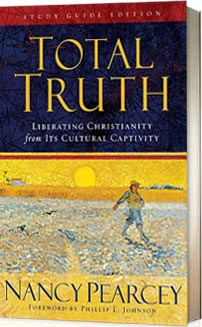
Nancy’s excellent 1994 book on the history of science and the rise of naturalism as a secular worldview, The Soul of Science (Crossway; $15.99) was the first book that mentioned our bookstore in the acknowledgments.  What a thrill for us as booksellers to be so commended—we are still grateful and proud!  Years later, she continues to write well, and her book Total Truth: Liberating Christianity from Its Cultural Captivity (Crossway; $25)  is one of the most fascinating and important books we’ve sold in recenttotal truth.jpg years. As the best-known proponent of the intellectual and spiritual orientation of Francis Schaeffer writing today, she is thoughtful, amazingly well-read, no-nonsense and, we find, quite charming.  Even if you don’t agree with her fully, she is a thoughtful Christian spokesperson who combines a rigorously intellectual overview of Christian faith and an astute, provocative, and, at least in the broad strokes, utterly compelling evaluation of the errors of the rationalistic, Enlightenment epistemology as well as the relativist strains with the postmodern critique. She desires to explore this intellectual history and debunk the subsequent “sacred/secular dualism” so that we might think more faithfully and engage the culture in transforming and renewing ways.  Her work is a great example of thinking deeply so we might act wisely, in our personal, family and church lives, but also in work, civic discourse, political action and across the spectrum of life.

If you “track with” that kind of stuff, you’ll want to tune in. If this doesn’t make much sense to you, or, worse, if you don’t care, please give her a listen this week.  Visit Prime Time America radio show at  www.mbn.org  here to locate a radio station in your area or to listen on-line.

BLOG SPECIAL
in honor of the radio broadcast series
with
Nancy Pearcy
we will offer her book
 Total Truth
for more than
25% off
 Order here and we will sell it for $18.
 The paperback will be released later this spring ($15 )but we will now sell the handcovers at this discounted price.


Hearts & Minds 234 East Main Street  Dallastown, PA 17313   717.246.3333


First great new books of the New Year on Faith and Politics

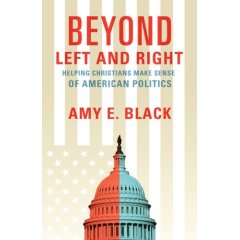
We’ve been waiting–well, some of us have—for some really thoughtful, readable, balanced, new books on thebeyond left and right.jpg relationship of faith and political life.  You know I’ve got a short list of our favorites over at the “Vocation” list at the website (along with helpful suggestions for books on most other vocations–science, art, business, education, counseling, etc.)  There are some standards that we most always recommend (like Paul Marshall, Alan Storkey, for more serious thinkers, David Koyzis.)  Now, though, there are fresh new ones, and we’re eager to tell you about them.  Not everybody cares about this stuff, so we’re glad for this extended circle of Hearts & Minds readers.

Baker Books continues to put out extraordinary books within the evangelical tradition, books that are a far cry from the simplistic, and too often mean, approach of the Christian right, but yet seemed rooted more firmly in the Biblical worldview than many anti-Christian-right books, that are often reactionary, shallow and more aligned with the secular left than serious Christian thinking.  Baker has done it again!

Want a balanced, thoughtful, non-aligned guide that not only argues for an independent, Biblical alternative but one that also explains American politics, examines the practices of good citizenship and could serve as a primer for renewed commitment to being good citizens?  Look no further than the brand new book by Amy E. Black, Beyond Left and Right: Helping Christians Make Sense of American Politics (Baker; $15.99.)  With endorsements from the likes of Mark Noll, Books & Culture’s John Wilson, The Christian Century’s Jason Byasee, and congressman both red and blue, the rave reviews themselves will make you happy to have this.  It explains all sorts of things that basic journalists and pundits and preachers too often do not;  for instance, the difference between a theological conservative and a political conservative.  What the Constitution says about church and state.  Why some people say that the U.S. is, or isn’t, a Christian nation.  There are bunches of side-bars, charts, boxes and quotes, making it a treasure trove of information and very useful as a study book.

This is an inspiring book, a call to take part in the process as Christians.  As Byasee puts it, “This call to temper political zealotry with love of God, neighbor, and enemy will be of use to churches and academics alike.”  It is clear, easily understood, and humble.  Ms Black is a professor of politics at Wheaton, and has written widely in her field.  Get this book.  Let people see the title.  I’ll bet that alone will generate some conversations, and maybe could be the inspiration to start a book club or study group.

Two more have come last over the last weeks, apparently being marketed together, rather a point and counter-point.  They both look good, although I’ve only read in the first:  Tony Campolo’s new Red Letter Christians : A Citizen’s Guide to Faith & Politics  (Regal; $19.99) sports an endorsing quote from his friend President Bill Clinton, and blurbs on the back from Shane Claiborne, Jim Wallis, and other “red letter” types.  You can imagine it’s basic perspective, and I applaud Tony for his gracious call to be faithful to Christ where it counts, following his ways in care for the poor.  He weighs in with powerful stories and good Bible study on all sorts of political issues and it is surprisingly moving at times.  The companion volume is called A New Kind of Conservative (Regal; $19.99) by Joel C. Hunter.  With a forward by Steve Brown, you can gather that this is a vibrantly evangelical approach, centrist and thoughtful, offering a traditional perspective that is both ethically conservative, Republican, and yet firmly committed to concern for the poor and policies that protect the Earth.  Ronald Sider observes that Hunter’s view is indicative of a shift to the political center among evangelicals, and that this moving towards a consistent ethic of life, while not pacifist, is similar to the  traditional Catholic social teaching.

There will soon be blockbuster books on this stuff;  Jim Wallis and Ron Sider and Os Guinness all have books coming soon.  These books which I’ve mentioned today may not be as well publicized, but I am confident that they will serve you well.   Ms  Black’s is very important and balanced and the other too are very nicely done, handsome, not toooo long, laden with Biblical insight, stories of public life, and passionate invitations to think and care and act.

We want to encourage political discourse of a uniquely Christian sort this season, so we now offer a good discount incentive to purchase them, now, through our mail order services here at Hearts & Minds.  Basically, you guy two, and get the third completely free.  God bless America and good ‘ol capitalism.  Just ask for the red white & blue blog special.

BLOG SPECIAL
buy all three books
$40
$15.99 savings

ORDER HERE

Hearts & Minds 234 East Main Street Dallastown, PA 17313   717.246.3333

The first great new album of the New Year: Brooks Williams

Time I Spent With You.jpgThe last few days I have have been driving around a bit, making deliveries, running errands.  In fact, I’ve looked for excuses to get into the car by myself and crank this up: Brooks Williams has long been a Hearts & Minds favorite, and his spectacular guitar playing is among the best I’ve ever seen.  (I’m not kidding, and if you are a serious acoustic guitar fan, you know I’m tellin’ it like it is!  Blues Review recently called him “astonishing” and his Guitar Player album was named as one of the top 100 guitar albums ever.)

 His brand new recording, The Time I Spend With You, released this week, has some great grooves, some amazing blues tunes, flat-picking and slide.  His voice is silky smooth as always–well, he growls a bit when he’s gettin’ down—and a few songs are sweet; one plays back and forth with a masterful mandolin player, giving it an old-timey bluegrass feel.  This isn’t a pop or neo-folk singer/song-writer album, nothing at all like the tender and gorgeous songwriting of his Inland Sailor, Winter Moon, Seven Sisters or Jubilee, some of his signature ballads.  Nope, this is all blues, almost all the time.  He uses mostly his beloved resonator guitar. Sometimes, he plays a groovy National Estralita, and, while I don’t know much about the luthiers and vintages, I know he has really good instruments.  And he deserves the best;  he is an amazing player.

The Time I Spent With You is the CDs name, and the title of the first track.  It reminded me a bit of an older tune of his, Dancer’s Delight, and has some great finger-picking and strong runs in between the vocals.  Other songs include more standard blues stuff or traditional tunes (Statesboro Blues, Beaumont Rag–a song he says he first learned from an old Doc Watson record.)  He revamps an earlier song of his, Rich Tonight, with even more of a jumpin’ vibe, and gives even a happy lyric a bluesy funky treatment.  He uses his acoustic slide guitar (played with a bottleneck slide) to offer his take on 61 Highway, another standard. For those who have been BW fans, you can detect the influences of one of his favorites, the old Bahamian bluesman, Joseph Spence.  And there’s some of that John Fahey/ Leo Kottke style.  This is sweetly-sung, rootsy and upbeat, not ragin’ Chicago blues or hard Delta stuff. 

One of the highlights on the disc is so classy, so sweetly rendered, understated with such a Brooksy feel, that I have to mention it: You Don’t Know Me, a song recorded by many jazz singers ( famously by Ray Charles in 1962—and, for those that care, recorded by Van Morrison, a few years back.)  There are other songs (is Martha inspired somehow by the Mary & Martha story in the Bible?) There’s a lovely instrumental tune he did for his old playing pal, Scottish fiddler Johnny Cunningham (which is, amazingly, a duet with an accordian!) and an homage to Lightning Hopkins (or, well, at least a statue of Lightning Hopkins, found in Crockett Texas, where he goes to sit, and then have some bar-beee-que.)  The album closes with a romp of a song about resolve to be a different kind of man, Same Ol’ Me which is the only song where his gifted guitar work is almost overshadowed— by a blazing harmonica jam.  Wow-o-wow, this is some really cool stuff.

Believe you me.  Listen often and loud, pay attention to the playing, give thanks for this good man, and another fine, real, batch of good Americana music.  We still have a bunch of Brooks’ older new folk albums, some fantastic all instrumental discs, and his previous recording from two years ago, Ballads and Blues. We are thrilled to stock this new one, and invite you to order from us.  Check out his very cool website here.

Order
 from
 Hearts & Minds
HERE

Order Brooks Williams CDs and we will pay the shipping.  Mention this special blog free freight feature.

Hearts & Minds  234 East Main Street  Dallastown, PA  17313   717.246.3333

The Second Great new Book of the New Year: a brief, new N.T. Wright

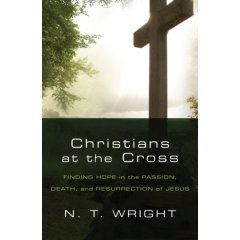
christians at the cross.jpgUnless you are a real N.T. Wright geek, you may not know that he published last year a book in England, with the oh-so-British title, The Cross and the Colliery.  A colliery, you may want to know (brother Harry: note the similar etymology to collier, as in the sites you are researching), is a coal-mining town.  Apparently, decades ago, the Easington Colliery had a terrible mining accident, and they are still in grief and recovery.  Wright spoke there, offering a series of Lenten meditations, which were then published by SPCK in England.

Alas, a lovely paperback edition just came out in the states, published by a thoughtful Catholic publisher, with the clearer title Christians at the Cross: Finding Hope in the Passion, Death, and Resurrection of Jesus.  You may know our fondness of the brilliant set of daily meditations for Lent by Wright called Reflecting the Glory.  That is spectacular, and packed, one of the best collection of short readings you could buy.  This, however, is brief and less than jam-packed.  It is, though, just enough:  “I am convinced,” he writes, “that when we bring our griefs and sorrows within the story of God’s own grief and sorrow, and allow them to be held there, God is able to bring healing to us and new possibilities to our lives.”  

You may know that this is a theme that resounds in favorite books here at Hearts & Minds, books like Walsh & Keesmaat’s Colossians Remixed, or the profound book of Advent meditations we were recommending called The Advent of Justice.  Wright has written seriously (and has done a DVD on) on this theme in Evil and the Justice of God and book we declared one of the best of the year a year ago.  Finding Hope at the Cross is a bit more pastoral, and the photographs of locations in the Easington Colliery area are oddly haunting.  This is not new ground, not especially for those of us who recently sang of “comfort & joy” and “life’s crushing load” in these past weeks of Advent.  Still, to have perhaps the world’s most famous theologian speak so hopefully about real suffering, well, this may be the best Lenten title we will see this year.

PS:  Get ready, as what will surely be one of the very best and most important books of the year, if not our times, the forthcoming hardback N.T. Wright will be called Surprised by Hope: Rethinking Heaven, the Resurrection, and the Mission of the Church, soon to be released by HarperOne.  Want to reserve a copy?  We’ll be having a sale, soon.

Finding Hope at the Cross: Finding Hope in the Passion, Death, and Resurrection of Jesus N.T. Wright (The Word Among Us) $10.95.

Hearts & Minds  234 East Main Street  Dallastown, PA  17313   717.246.3333

The First Great Book of the New Year

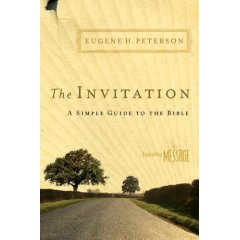
The Invitation.jpgYipeee.  Somebody finally listened to me.  Okay, okay, that sounds both paranoid (surely some people listen to me on occasion) and grandiose. Ooops.   Still, I’ve been saying this for years.  I’ve told the publisher.  I’ve told the author. I’ve told other publishers.  I’ve prayed, which I guess counts for telling God.

One of the best features of Eugene Peterson’s vibrant, folksy, interesting paraphrase of the Bible, The Message, is the spectacular introductions to each book of the Bible.  His entries are at once poetic and insightful.  Style and substance combine, making these short overviews just fabulous;  interesting, fun, helpful, wise.  I’ve wanted somebody—some power that be in the publishing world—to take those one or two page introductory reflections and put them together in one little volume.  Call it Eugene Peterson’s Introduction to the Bible, or The Message Handbook, I don’t care.  It would be the best intro to the grand sweep, the broad narrative, the Christo-centric vision, the God-drenched flavor, the humanly-written, history-heavy, creation-restoring nature of every single book of this wild and wooley text we call The Bible that we’ve yet gotten.  Short, pithy, smart, solid. 

And lo and behold, it is incarnated, the light cometh, before Epiphany, even. It is called (oddly, I’d say, and, unfortunately, only in hardback) The Invitation: A Simple Guide to the Bible.  It does serve well as an invitation to study the story, to live the word, to know the history, literary stylings, and theological message of the drama of Scripture.  So, consider it an invitation for curious seeker, nervous beginner or seasoned reader who needs a delightful, mature, creatively-told and very important reminder of What It’s All About. As the back cover promises, “Simply Profound.”

And invitation to you:  buy this book.  Buy a couple copies of this book.  Tell others about it. Get it in your church library.  My blog, here, is more enthusism than review, but that’s okay: spread the word; forward the link.  Let folks know it is available.   I’m pretty excited, you know, that, finally, the publishing world actually listened to me. Ha.

The Invitation: A Simple Guide to the Bible  Eugene Peterson (NavPress) $16.99  hardcover 203 pages.

Hearts & Minds  234 East Main Street  Dallastown, PA  17313   717.246.3333

Radio Interview: The Most Significant Books of 2007

radio.jpgSometimes I get asked to do radio or TV interviews, speaking about books or opining about the state of religious publishing, or telling about authors we like.  Recently a very wonderful opportunity came up, a call from one Johnny Price, of the Caleb Group, to talk about the most significant books of 2007.  Along with some fabulous folks talking about TV, music, film, and theater, I will “appear” this Sunday night (December 30) on the Caleb Group’s radio talk show–The Intersection: Where Ideas and Perspectives Cross Paths--out of WOLT FM in Greenville SC.

We taped the interview last night.  Whew; significant books?  Not my own favs or stuff I think folks ought to read, but bell-weather titles that are significant? Oh my, what to say?  Time didn’t allow us to de-construct important marketing schemes (scams?) like The Secret, which were sadly significant this year.  Or talk about the emergent conversation which, like it or not, is very significant.  Or the batch of anti-Christian right books which are less significant than their authors think they are.

We did talk about some important memoirs, the deaths of Vonnegut and L’Engle, and, I hope interestingly, the lack of consensus on what constitutes a great novel.  I named a couple of fun books, and another book which may be one of the most important academic studies written in years.

Anyway, if you’d like to listen in, it is streaming at the radio station’s website.  Check it out here.

My own big ol annual lists, to be published over at the website, will appear before too long.  Keep your eyes peeled.   The below picture is swiped from Paper Cuts: A Blog About Books that comes from the New York Times.  These are their picks for the top ten books of 2007.  Really, really astute folks can name some of them.  Not me.
Answers can be found, here.
The Ten Best Books NYTimes.jpg

Who Stole My Church?: a new book by Gordon MacDonald

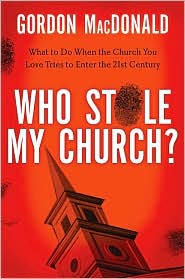
I have long admired Gordon MacDonald, and read most of his clear-headed, balanced, passionate, thoughtful bookswho stole my church.JPG on organizing one’s life for Christian growth and solid discipleship.  He is honest, straight-forward, mature, and, although pleasant, utterly no-nonsense.  He’s forward thinking and pastoral, but what you see is what you get.  He’s not interested in hipster glitz or po-mo edginess, fads or fashions.  He’s trying to help church folk get serious, learn skills of maturity, developing into people of strong character who can withstand the hard times of real life. (His last book was on resilience and was very useful.)   He wants to make a difference for God, and he understands much about how to do that.  I enjoy and respect him.

His new book draws on years of pastoral experience and—a bit surprisingly—is written as a novel, in a clever first person narrative.  The book, Who Stole My Church? offers this on the front cover: “What to Do When the Church You Love Tries to Enter the 21st Century.”  (Nelson; $21.99.)  Although not just about church conflict, the story unfolds about a fairly typical, evangelically-minded congregation in New England (he swears it is not one he has pastored, nor are the characters based on real-life people) who have “builder” generation folk perplexed and frustrated by younger members who are making changes in the congregational ethos, spiritual sensibilities and mission of their church.  I believe, young or old, progressive or traditionalist, you will find this to be a helpful exploration of being church in our times.  I hear of church conflict around these themes—folks pushing too hard for change, folks resisting change, earnest folks trying to discern what sort of change is most appropriate—nearly every single day here in the shop.  Before I even started reading, I said right out loud: “Man, I wished I could have had this ten years ago” and proceeded to list a few friends, family members and churches who needed someone wise to walk through this stuff with them.

From the Preface:

The title of this book, Who Stole My Church?, springs from a conversation a few years ago with a distraught man who felt betrayed by the church he had invested in for most of his adult years.  From his perspective everything had changed—overnight, he said—into something that made him feel like a stranger in the place he’d always thought of as his spiritual home.

I listened to him describe what sounded like ecclesiastical carnage. Programs had been dumped, traditional music trashed, preaching styles and topics revolutionized, symbols of reverence (appropriate clothing, crosses, communion tables, and pulpits come to mind) thrust aside.

His anguish (and his anger) began with a young pastor who had been appointed with a challenge from the church’s leadership to “stir things up with a new vision.”…

…According to my friend, most of the church members—in particularly the older generation—had no idea what they were getting themselves into when all the growth talk began.  Who would protest against, he asked, the idea of finding fresh ways to evangelize the unchurched?  But what people expected was merely a fresh voice in the pulpit and a program or two imported from more successful churches.

Here’s what I heard him saying.  What he and his fellow church members had not anticipated was a total shift in the church’s culture, a reinvention of ways to love God and serve people.  What they did no see coming was a reshuffling of the church’s priorities, so that lost and broken people rather than found and supposedly fixed people became the primary target audience.  In summary: virtually everything in the life of their church under new leadership became focused on reaching people who were not yet there.

It was during that part of the conversation that my lunch partner finally said, “Our church has been stolen out from under us.  It’s been hijacked.”  His solution to the problem?  To leave and search for another church that “appreciated” the older and better church ways his generation was familiar and comfortable with.

As I recall the conversation, my friend was less than delighted when he discovered that I wasn’t completely sympathetic to his cause.  I tried to find a kind way to say, “get used to it,” but I wasn’t very successful.

MacDonald continues on explaining the situation in many churches these days, and his concerns for all parties involved—“the dear people in the pews”— who are called by God to be agents of change for the sake of contextualized and effective ministry.  He continues, about the crafting of the book, 

My first attempt at writing about church change was abortive.  I could not escape the feeling that I was writing one more dull book on an overworked subject.  So I restarted my project, but in a way I’d never tried before.  I decieded to create an imaginary New England church in which there was a small collection of average people who were bumping up against change issues and resisting them.

Once I set these people in motion, I asked myself:  If I were to enter the story as I really am, what would I say to them?  How might I engage with them and persuade them to take a fresh look at the realities in our world that do indeed require a new kind of church?

My imagined people are all in their fifties and sixties.  They are from the so-called builder and boomer generations, people who were once very much at the center of their churches and have now relinquished control and influence to others younger than they are.  Once I had them all in their proper places in my mind, it was as if they took over the story and began to tell it for me.  I just had to do the typing.

And then, this:

My hope for this book is that it would spark dialogue among people of all generations who love the church.  I would be grateful if the book would convince younger generations of church leaders to be more sensitive to the older generation and their thoughts.  Conversely, I have a passion that older Christians would be led—if they read this book—to understand why many things about the way we have made church work must change and reflect new realities.

To that end, there is a good study guide/group discussion resource in the back.  And, to that end, we will sell it at nearly 25% off, bringing the price down to $16.95  I’m sure some of our BookNotes fans should read this.  Others, at least, know somebody who would find it helpful.  Let’s work together and get the word out about this balanced, caring, thoughtful and contemporary parable.

ORDER
Who Stole My Church?
HERE

Hearts & Minds 234 East Main Street  Dallastown, PA  17313  717.246.3333

Eyes to See: A great new short story collection

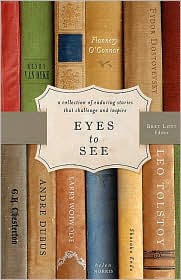
eyes to see.JPGDo you know anyone that would love a great, classy gift, a hardback anthology of a good handful of some of the best short stories of the ages, written with a view to give argument for and texture to the Christian gospel?  Do you know any lit lovers who would appreciate a slightly late gift, brand spanking new, though, a book that will most likely be missed in the already-in-progress Best of the Year lists?  This is what they call a sleeper, and we want to wake book lovers up to it.  Wouldn’t you like to kick back some holiday day next week and spend some graced time with excellent writing and tall tales, created by true masters of the craft?

Eyes To See is edited by contemporary novelist Bret Lott and described on the spectacularly inviting cover as “a collection of enduring stories that challenge and inspire.”  Kudos to Nelson (a publisher I roundly criticized a month or so ago in the blog) for offering this wonderful gathering of our best authors.

 It sells for $22.95, but we have a blog special price of $20.00.  We will pay your shipping costs, too.  Merry Christmas!

Here’s what’s included:

“The Blue Cross” by G. K. Chesterton
“A Father’s Story” by Andre Dubus
“The Final Martyrs” by Shusaku Endo
“The Christmas Wife” Helen Norris
“A Good Man Is Hard to Find” by Flannery O’Connor
“What Men Live By” by Leo Tolstoy
“The Widow’s Mite” by Anthony Trollope
“The Story of the Other Wise Man” by Henry Van Dyke
“Silent Passangers” by Larry Woiwode

There is a very nice introduction here by Mr. Lott, and a one-page bio of each of the chosen authors.  The typeface is nice, the hardback binding makes it something nicer than the cheap paperbacks to which anthologies so often get relegated.  I predict that as this volume becomes known, new book groups will blossom.  Perhaps you should start one.  If you do let us know.  The staff of Hearts & Minds would be thrilled to learn of new reading clubs formed, all because we give this a much-deserved shout out.  Happy holidays, and happy reading.

BLOG SPECIAL
$20.00
free shipping
Eyes to See
ORDER HERE

Hearts & Minds 234 East Main Street Dallastown, PA 17313   717.246.3333

Two Incredible Books for Students and Youth Workers

The other day I listed some fairly ordinary, thoughtful, nice books that were devotional in nature, for younger high schools kids. We have a large selection of books for kids and teens, so do let us know if we might help you further.

You know—please say you know this—that we have announced that this summer a book came out written by two of my very best friends, designed for older high school students or collegiates, on taking one’s faith to college.  It is THE best gift to give a Christian college student, or an open-minded seeker and is called The Outrageous Idea of Academic Faithfulness (Brazos; $13.95.) 
                              
Trust me, there is nothing like it in print, and it is fun, funny, and very
solid in how it invites serious discipleship, the
Outrageous Idea.jpg development of the Christian
mind, a reason for being in college that is something other than the American
dream. the deep integration of faith and learning.  Taking faith to college is
essential; taking faith into the college classroom, thinking in outrageously
creative and normative ways, seeking God’s Kingdom, even amidst classes and
papers, sports teams and bull sessions, homework and research, well, this is the
book that can provide meaning, purpose, challenge, joy and and integral
spirituality for students.  I’ll bet you can think of somebody that would find
this book to be a true gift.  Maybe you could offer it as a 12-day of Christmas
gift or New Year’s present before students go back to school for the Winter
Semester. Go to www.academicfaithfulness.com to
learn more. 

deep justice.jpgAnother book I really would love to get some early enthusiasm about is a brand new youth ministry book (that would also be good, by the way, for college ministry groups) that just came out.  It is a book–again, this is just extraordinary—that would not have been published even a decade ago.  Thank goodness, the stuff we’ve worked and prayed for, including a reformation of the religious publishing world, is coming to pass.  Get this:
Deep Justice in a Broken World: Helping Your Kids Serve Others and Right the Wrongs Around Them is written by Chap Clark & Kara E. Powell, two of the sharpest folk in youth ministry circles these days.  It is published by Youth Specialties ($18.99) who has long offered some pretty good resources for youth workers, Sunday school teachers, parents and others who work with teens.  This places them, in my view, into a whole new league.  “Don’t waste another minute doing mediocre service” it shouts on the back, and it offers research, insights and practical ideas that can go beyond simply trying to motivate your kids to care about others, but can help them learn the deeper structural injustices about why people are oppressed and hurting in the first place.

“The poor and oppressed” is a commonly used phrase in Scripture, and as Ron Sider (see, for instance, one of the most important books in religious publishing in the 20th century, the must-read Rich Christians in an Age of Hunger) has taught, the Bible insists that  God’s people, shaped by His heart and worldview, speak up as advocates for structural change, social reformation and political renewal on behalf of those who have little voice or acess to power.  As social justice ministries are increasingly being discovered within evangelical circles (in ways the religious right never imagined) and as a wholistic, Kingdom-vision for youth ministry takes hold, we will increasingly need books like this.  I can name a handful of youth ministry books published in the last 30 years that are truly benchmarkers (for instance the now-classic The God-Bearing Life by Kendra Creasy Dean which spawned books like this year’s excellent Presence-Centered Youth Ministry: Guiding Students into Spiritual Formation by Mike King.)  Deep Justice may be one of those.

There are significant contributions to this book, and you may know some of the stellar cast who helped with it:  Jim Wallis, Tony Campolo, Shane Claiborne, Lisa Thompson, John Perkins, Rudy Carrasco and others.  This is a truly amazing collection, and the authors have assembly what is surely a must-have book for anyone who works with youth, is intersted in social justice in the church, or helps with short term missions or social action.  Yeeaaah.

By the way, although you needn’t read it first, in a sense this is a follow-up to the very good Deep Ministry in a Shallow World (Youth Specialties; $18.99) that Kara and Chap co-wrote last year.  Doesn’t the title alone call you to think more deeply about the ways in which we nurture our youth, and what sort of youth groups, teen fellowships and college ministry programs we promote?  Again, we are so grateful that these kinds of resources are available, and that our readers may be able to help us get the word out to those who need to know.  Why not forward this BookNotes to the youth worker or volunteer at your church?  Thanks. 

BLOG SPECIAL
20% off
any of the books mentioned today
ORDER HERE

Hearts & Minds 234 East Main Street Dallastown, PA 17313   717.246.3333