new edition of Donald Miller’s Searching for God Knows What (including hidden game)

Not too long ago a website came to my attention (they were complaining about the heretical books we sell, authored by the likes of Eugene Peterson or Brennen Manning or on topics like creation care) and although I have tried to forget their cult-like narrowness (seeming to advocate book burning, literally) I involved myself (against dear Beth’s wiser wishes) in asking them to, at least, tell the truth about what authors do or don’t really say.  We can disagree about much in our culture, and certainly even within the church, but this nasty tendency to make our adversaries worse then they are is just wrong.

I mention this because I realize that a few folk out there—maybe even among our fair readers—don’t trust Donald Miller.  They have heard he is a bohemian who is a bit out there.  Blue Like Jazz (I first ordered it not only because I had so liked his previous book about a post-college road trip in a mini-van, but also for the sheer allusiveness of the title) is a bit meandering, full of odd musings, edgy, even.  It is laugh-out-loud, hold yourself so you don’t pee on the floor, funny.  It is not an orderly theology book. But I think it not only has a good heart, but is very thoughtful, even wise at times.  His memory of growing up, his ponderings about deep things, his understanding of being a follower of Jesus, it is all very, very much worth reading.

And so, I was particularly peeved when that dumb website said the most outlandish things about the book, saying things about it, and about the author, that simply were untrue, grossly untrue.  I called ’em out on it, but they did not back down.  One can find fault with Mr. Miller, I suppose, but these were flat out lies and it nearly made me ill to think of it, and the great harm done by people who are too sure that they are defending God.  I am sad even writing it now.

It is nearly a cliche, it seems, one that the emergent movement and many others (including some Christ-followers who are now writing books about not belonging to a church) seem nearly defined by, that ugly and shallow fundamentalists have made grace-filled, robust Christian faith nearly untenable these days.  Yeah, yeah, I get that.  Don’t get me started.  But, sometimes, I want to shout out: get over it!  Sure there are lots of unappealing and even mean Christian folks, too many slimy televangelists, plenty of tacky “Christian” kitsch in the “Christian bookstores” (that don’t stock many real books.)  But we sure don’t need to reject orthodoxy or traditional faith communities because some are overly middle class or up-tight or seem to not quite understand what Jesus called “the weightier matters of the law, mercy and justice.” (Matthew 23:23.)  And, anyway, for every so-called “Christian” militia plotting evil in God’s name, or some using despicable language about gays and lesbians, or every super slick “name it and claim it” religious huckster,  there are decent and dedicated followers of Jesus doing quiet deeds of Kingdom worth.  And there are those who are indeed credible, innovative, and interesting who bring a creative eye and voice and yet maintain clear Christian conviction.

Which brings me back to Donald Miller.  He is a fun author, and he is interesting, and his last big book—A Million Miles in a Thousand Days: What I Learned While Editing My Life—has gotten great press.  I’ve raved about it here at BookNotes, truly enjoying the notion of how the principles and structures of “story” (they were making a movie about his life, and realized there wasn’t much happening in Blue Like Jazz except going to the coffee shop to think and write about God) could help him actually make something of his life.  It really was one of the best books I read last hear, and so love certain parts that I’ve taken to reading pages out loud to friends who will listen.  Lawyer and global humanitarian Bob Goff plays a part in it, too, and anyone who knows Bob knows he is about the most amazing fellow one could ever meet, all three of the musketeers (and stooges) rolled into one.  If Goff befriends Miller, and Miller tells about that, trust me, it is worth reading. 

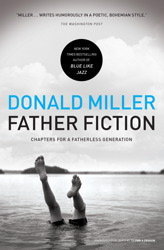
Miller also is doing some pretty considerable work in getting guys to sign up to mentorfatherfiction.jpg fatherless young men.  He writes about not knowing his own father in Blue… and then revisited that in an entire book—a tender and thoughtful book about why boys need men in their lives—called To Own a Dragon.  Happily, it has been considerably expanded and re-released this spring under the title Father Fiction: Chapters for a Fatherless Generation (Howard Books; $19.99.)  It isn’t quite as hilarious as his other stuff as it is a tad more serious in focus, but it still is Donald Miller.  Lots of stories, anecdotes both amusing and poignant, a bit zany, with considerable insight.  We recommend it.
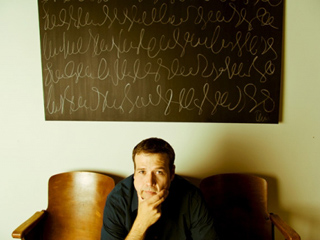
So, no, Donald Miller is not that “out there” and he seems to hold a very orthodox, evangelical faith.  Those who have met him have enjoyed his presence, his honest, Gen X tone, and his authentic, casual demeanor.  (I’ve been with Christian authors and convention speakers who just reek of showmanship and pride.  I honestly don’t see this in Donald, although he may have to fight for integrity and character here, who knows?)
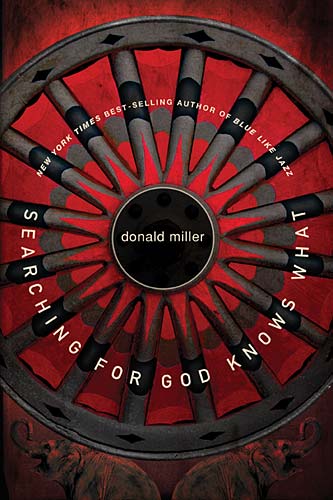
1400202752.jpgThose who care about solid doctrine, who worry about what kind of wacky stuff this Portland storyteller is promoting only need read his most substantial book, newly released this month, Searching for God Knows What (Nelson; $14.99.)  It has a structure a bit like Blue…, but perhaps less memoir and a bit more exposition.  He does extended riffs on certain notions (including his fairly famous Calvinist take on Romeo & Juliet.)  He’s got the edgy counter-cultural beatnik thing going on, and the artful cover—a very authentic-looking bit of Americana, a carnival-esque publicity poster—sure gives it the feel of a book that any young literary type or coffee shop hipster would love.  Yet, despite the feel, the tone, the vibe, when the haze from the smoke and mirrors in the fun house clear, this dude can preach.  This is gospel.  Not so plain and not so simple, but it is solid.  We are thrilled that such an fine writer and interesting thinker can speak with clever prose and wild analogies into the hearts of seekers, reminding them of pretty basic, true truths. Truths about Jesus.

(And, yes, there are some of those weirdo shifty mirrors in this fun house.  One chapter is called “The Circus of Redemption: Why a Three-Legged Man is Better Than a Bearded Lady.”  Got that?)

He has some serious ideas, here, but yet–and this is an idea worth savoring (as John Piper might say)—“Being a Christian is more like falling in love than understanding a series of ideas.”

I liked what Christianity Today wrote when the first edition came out in 2004 “Like a shakennews_1256819541_Donald_Miller.jpg snow globe, Donald Miller’s newest
collection of essays creates a swirl of ideas about the Christian life that eventually crystallize into a lovely landscape…”

The new expanded edition, by the way, is considerably expanded, and also includes a brand new introduction, a personality theory based on Genesis (essentially a whole new chapter), and a game hidden in the book with clues, anagrams, and codes that unlock prizes and secret content.

I almost feel like some barker on the mid-way, asking you to “step right up” ladies and gents.  But it really is a hoot.  This revised version of Miller’s most substantial book really is a bit more interesting, and re-reading it, with an eye for these weird clues—it is sort of explained in a cool, glossy insert—makes the book a bit like a tilt-a-whirl.  I’m enjoying the wit, appreciating his famous cadence, making sure that my claim that he’s really quite orthodox hasn’t been undone in this new version, and yet all the while doing this odd anagram thing.  Only Donald Miller, I think to myself.  Or maybe Bob Goff.  I bet he cooked this up, daring Miller to put games in his most serious, theological book. What a holy, goofy blast. 

All the game instructions and (yes) the decoder wheel can be found at www.DonaldMiller.Fan.com or www.SearchingForGodKnowsWhat.com.

Our little game is simple.  Buy Searching for God Knows What (revised) from us and we will thank you for it.  And give you a 20% off.  Buy the book from us along with any other Donald Miller book or DVD and we will give you a 30% discount on them all.  Step right up…

ORDER HERE
Takes you to the secure order form page at our website.
Or click here to be go to our “inquiry” page if you have questions
.


Hearts & Minds 234 East Main Street  Dallastown, PA 17313          717.246.3333 
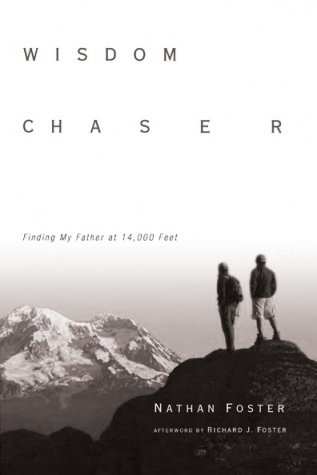
Wisdom Chaser: Mountain climbing with Richard Foster (and the healing power of the outdoors)

No, silly, I wasn’t mountain climbing with Richard Foster, or anyone, for that matter.  Beth and I did have a recent rendezvous with some long lost pals from Beth’s college days in the foothills of the Rockies.  I even walked around a bit (hiking would be an overstatement.)  We were at a wedding, so forgive me if I didn’t take a backpack.  The weather and scenery and micro-brews and recovered friendship were stunning.

So it seemed right to be reading a book about the famed Colorado “fourteeners” along the way.  To be reading about Mt. Quandary as one friend mentioned it, or the breath-taking Long’s Peak while literally gazing at its snow-capped jut into the sky, was really cool.  As with so many topics, reading can enhance an experience (knowing a bit about Colorado climbs was helpful as I listened to a local climbing expert and reading about the various chains and canyons helped me appreciate them even as we drove around) and it serves as a great, vicarious substitute.  We can “do” and “visit” so many things and places in the pages of a book that I can hardly imagine why more people don’t read widely.  What fun!  What learning! 

wisdom-chaser-6b2.jpgThe book I carried is about climbing with famous mystic and Christian author, Richard Foster.  It is called Wisdom Chaser: Finding My Father at 14,000 Feet (IVP; $16.00) and is written by his son, Nathan.  It has a very interesting thesis, and it is a story that is nicely told.  It is on the fabulous “likewise” imprint of InterVarsity Press, so has an honest, contemporary feel.

Here’s the brief version: Richard Foster, as most BookNotes readers will know, is a studious and quiet author who has brought the deep mystic tradition of the ecumenical church to evangelicals (and others, too.)  His best-selling books from the 1970s and 80s, Celebration of Discipline or Prayer: Finding the Heart’s True Home or the one against speed, greed, and materialism, (Freedom of Simplicity) are must-reads.  I think Foster is the only living author in the top ten of the Christianity Today list of top 100 Christian books of all time.

Sadly, Nate was a somewhat quirky kid who became a truly troubled youth, and it seems that Foster in his monk-like practice, and his seriously introverted job (writing about the inner journey) and his (often difficult for him) rise to fame and subsequent world-wide travels, simply didn’t relate well—hardly at all, it seems—to his boy.  As Nate remained unaware and, then, increasingly hostile to his father’s work, he fell into aloofness, rebellion, addictions, self-injury, and hostility to organized religion.  He doesn’t dwell too much on his descent into such pain, but the few scenes he describes are shocking.  How could a member of the household of a solid, Godly author become so unglued? 

In his young adulthood, Nate approached his father and basically said something like this: ” I don’t know you and you don’t know me and, despite my rage and dysfunction, we ought to get to know each other.  Let’s climb a bunch of fourteeners and see what happens.” 

As the back jacket copy puts it, “It began with a simple question…and for Nathan and Richard that simple question changed everything.”

Surprisingly, to Nate, and to some readers, too, I’d bet,  60-something father Foster says yes.  Climb by climb, Wisdom Chaser unfolds the story of the reconciliation of father and son, describing Nate’s own journey–with frank language, telling of huge frustrations, painful episodes, and his deep questions in his “lovers quarrel” with the church.  As he matures and grows (and comes to understand and appreciate his famous Quaker dad) he tells of his own young, struggling marriage, his entry into parenting an infant, finishing a college degree, and seeking out his own vocation, first as a crisis counselor and  leader of an Outward Bound-type of program for very troubled youth, and, eventually, becoming a college teacher.  He continued to climb, or hike, with his dad (and their faithful companion, a dog named Ziggy) as Nate’s recovery blossomed and their relationship saw considerable healing.

I loved this book, in part due to its simple and clear prose, and its fairly obvious themes. It’s very good stuff, traversing some serious emotional and spiritual terrain, but it is a very quick read.  Famous and famously spiritual dad fails to connect with his son, son rejects traditional faith and dives into self-abuse and addictions, they re-connect in some trying and dramatic episodes of wilderness experiences.

Almost anybody who is a Foster fan will enjoy this, as you learn a bit about his life, his family, and his approach to these daunting tasks—the climbing and the relating.  Those of us who have met and been ministered to by Richard know of his humor and his nearly casual way of approaching extraordinary spiritual experiences (but we learn here how we learned some of these gifts.)  He and Nate are so different on this that it produces some conflicted (and, at times, hilarious) situations; from packing to pacing, Richard is slow, methodical, and gentle.  His son is, well, exhuberant and wild.  What a duo!

I can think of several sorts of readers who will enjoy this.

I think almost anyone who loves outdoor education, wilderness expeditions, or even moredsc02399.jpg casual day hikes will love this.  There is much to learn about experiencing the harsh terrain and dangerous weather and “going with the flow”, resisting presumptions about “conquering” nature and learning to respect nature’s wild ways.   Nathan Foster’s writing style is not richly literate like Annie Dillard or Terry Tempest Williams, Brenda Peterson or Aldo Leopald.  He’s not writing mostly about the aesthetics of the wild.  (Although there are beautiful sentences here, and Richard’s slower pace allows Nate to see and be attentive to striking little flowers and lovely colors of rocks as the slant of sun changes, or as ice forms in lovely detail.  The writing about an encounter with wild lightening was itself electric, and the coming to grips with certain “failures” during climbs was very moving.)  So it isn’t about nature, per se.  Still, the dramatic center and arche of the book—Nate’s recovery and the healing the wounds of his boyhood—is set in the great outdoors.  It is not a book of pure “nature writing” but it is about mountain climbing. 

Further, I think anyone interested in psychology, AA stories, recovery, discovering one’s self, inner healing from deep hurts, learning to find a radical Christian faith community that is authentic and hopeful, relevant and not about marketing or glitz, but about Christ-like relationships, will find this immensely useful, too.  It isn’t a guide book to recovery or how to be honest about one’s pain within the religious community, but it is important to hear these kinds of stories of brokenness and restoration, fears, foibles and the search for reconciliation.

 Whether or not the story is about a famous (distant) dad and his hurting son, and whether or not the story is set in the spectacular drama of Western wilderness sojourns, this messed up fella finds God’s great grace to be real and m
akes commitments to being an agent of Christ’s reign of shalom on Earth.  He is a poster boy for Nouwen’s nice phrase, “wounded healer.”   I suppose it is fair to say that, at the end, besides the tender parent/child stuff, and the thrilling accounts of mountaineering, this is a testimonial book, a memoir of what God can do for needy sinners, through ordinary stuff—talking, hiking, paying attention,being faithful in relationships, surrender.  It is a book about deepening discipleship, about being serious as followers of Christ.  What a wonder that an adult child and an older parent can become friends and partners in the journey of grace and write about it with such candor.

Here is a link to Richard Foster’s website that has some great youtube videos of the two of them talking about their quest, and the book.  Enjoy. 

***

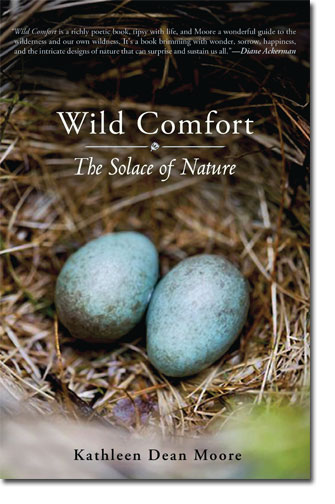
9781590307717.jpgOther books come to mind on this topic, especially about how being in the outdoors can be revelatory.  I’ve written previous entries about great nature writing, about memoirs that illustrate the beauty of creation.  One of my favorite writers is Kathleen Dean Moore, an exceptionally talented writer, a trained naturalist and philosopher, who has an ability to help us see by telling of what she sees.  She has given us a lovely, lovely gift in a recent book  entitled Wild Comfort: The Solace of Nature (Trumpeter; $15.95.)  The always impressive Diane Ackerman says it is “a richly poetic book, brimming with wonder, sorrow, happiness, and the intricate designs of nature that can surprise and sustain us all.” 

Most who know this genre respect the prolific Scott Russell Sanders (do you know his splendid A Private History of Awe, with that great blurb in the form of a letter from his friend Wendell Berry?  Sweet!)  Sanders says of Moore’s Wild Comfort,

…in spite of grieving over the death of friends, the extinction of species, and
the tattering of Earth’s web, she finds comfort in natural and human creations,
in symphonies and snakes, in science and stars, in the beauty constantly
upwelling from the mystery we call life.  This book itself is such a consoling
creation, a cause for gratitude and joy.

Wisdom Chaser is simply written, very interesting, and clearly helpful—he tells of lessons learned along the way, insights gleaned from the talks with his father, stuff he learned from creation and stuff he learned in his own journey towards healing and wholeness.  Even if you’ve never been to Colorado, this is a book we highly recommend.  As Eugene Peterson (perhaps only half-jokingly) writes, “Wisdom Chaser is as poignant and winsome as successive mountains deepen for each, the son and the father, what it means to be a son, to be a father.  Add mountain climbing to your list of spiritual disciplines.”

And Wild Comfort, again, is great for anyone who loves good nature writing, beautiful and luminous words about the glories of seeing stuff.  Whether one is in grief or not, don’t we all need comfort and care?  Shouldn’t we be glad for authors who model for us how to be attentive, and find solace in the commonplace?  Who can with such elegance point things out along the way?  Kathleen Dean Moore has much to teach us, and teaches in such a gorgeous and stimulating way.  Thank God for good writers who share their wild experiences with us.  Especially when the wildness is quiet, gentle, healing and hopeful.

BLOG SPECIAL
“fourteener” special

$14.00
either book

ORDER HERE
(takes you to our order form page which explains shipping and billing options)

Hearts & Minds 234 East Main Street Dallastown, PA  17313     717.246.3333
 

Five great books about the struggle with radical Islam

After the last post’s mention of the Paul Marshall books and his expertise on a balanced and informed view of Islamic extremists, I thought I’d list a few books that those serious about this crisis of our times might want to know about.  Two are a bit demanding, two are more readable and inspiring.  All are recent.

By the way, those of us who are followers of Christ have to always keep in mind–sorry to preach–that despite however unjust and grossly dangerous our enemies may be, we are called to exhibit a Christ-like demeanor, always protecting the dignity of all who are made in the image of God, with the goal of seeking reconciliation, not necessarily victory.  (Gandhi was right, I think, that a defeated enemies is not nearly as good as a converted friend.) Just war theorists and pacifists alike who are serious Christians agree that we must frame our examinations of these current affairs by the coming reign of the One who was slain.  We are to bring great glory to Him, and we know how He did that.  Through suffering love, the sort of non-violent grace that Peter says is “an example for us to follow.”

I don’t know if any of these authors share this ethic of Biblical peacemaking in the way of the Christ, but they are nonetheless vital resources for contemporary living.  We recommend them.

images.jpgFaith and Power: Religion and Politics in the Middle East  Bernard Lewis (Oxford University Press) $24.95  Agree fully with him or not, there is little doubt that he is one of the top world-wide scholars of the Arab world.  For years he has researched, written, observed and guided the world’s leaders into a deeper understanding of the conflicts of our age.  “Lewis has done us all–Muslim and non-Muslim alike–a remarkable service”, says Paul Kennedy in his New York Times review of the classic What Went Wrong?  In this collection released just this week, the Emeritus of Near Eastern Studies at Princeton gives us previously unpublished pieces, chapters formerly published in obscure academic journals, and a few first released in foreign languages.  A long introduction frames the collection.  Very important. Here is a good summary of some of his views, an overview of some of the criticisms waged against him and a link to a transcript of his debates with Noam Chomsky.

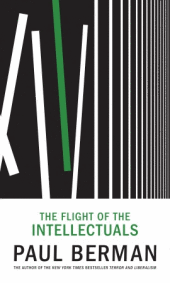
www.randomhouse.com.gifFlight of the Intellectuals  Paul Berman (Melville House) $26.00 Mr. Berman’s post 9-11 book Terror and Liberalism was one of the most stimulating and important I read in those hard years. Considered one of the most significant books on the topic, it was widely reviewed. He admitted that as a proud and classic liberal intellectual and activist (a framer of what was once called the New Left and a true man of letters), he resisted abuses of American power, worked for international justice, presumed that war was a front for crass U.S. power and investigated how imperial interests too often propped up unjust regimes, and failed to stand for human rights.  Oddly, however, in his view, his liberal comrades failed to see or understand the horrific human rights abuses and despotism found in radical Islam.  From their treatment of homosexuals and women to their foreign policies of terror, their hatred for modernity and reason, extreme Islamists stood against everything liberals stood for.  So why the failure to speak a clear “no” to the repression and totalitarian tendencies of some of the more unsavory parties within radical Islam, such as the Muslim Brotherhood?  Why the failure to denounce the rabid anti-Semitism? Why blame the West?  Terror and Liberalism brilliantly exposed the inconsistencies and blinds spots on the left and while I didn’t agree with all of his conclusions, it was a very, very important work.

 Here, in this very important new work, Berman continues to skewer the failures of the left, asking tough questions about the integrity of the American intellectual tradition.  Perhaps you saw the much-discussed piece about Oxford professor (and near celebrity) Tariq Ramadan in The New Republic from which this book grew.  It is respectfully dedicated to two great liberal journalists and intellectuals, Marty Peretz and Leon Wieseltier.  These are top shelf intellectual reflections, which I commend for the sheer joy of seeing a master essayist at work, to spend time with the writings of a public intellectual, who, sadly, may be more correct than we realize. 

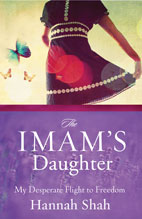
0310325757.jpgThe Imam’s Daughter: My Desperate Flight to Freedom Hannah Shah (Zondervan) $19.99   There are several great books that illuminate conservative Muslim culture, that tell the fascinating tales of what it is like living in places where fundamentalist Islam is the primary culture. In this instance, Hannah Shah (not her real name)  lived in the strict Pakistani Muslim sub-culture of  Northern England.  Sexually violated and abused, with a submissive mother, she fled to freedom at age 16 (to avoid an arranged marriage), married for love, and writes poignantly about trauma and freedom.  Some of the story is harrowing, even after her escape as there is the need to flee from her families efforts to execute her in an “honor killing” (since she converted to Christian faith.)  A moving, powerful story from a woman who Rob Bells says has “Jesus-sized courage.”    See more about her at www.hannahshah.com.

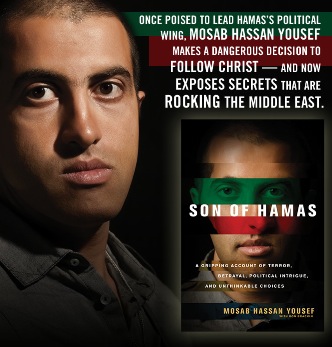
Untitled-Image_1269995700.jpgSon of Hamas Mosab Hassan Yousef (SaltRiver) $26.99  Before the age of 21 Mosab Yousef had seen things that are truly horrible—-Palestinian poverty, human rights abuses, torture, even.  He observed historic backroom arrangements with some of the leading figures in the Arab world, participated in the Intifada, was held captive deep inside an Israeli prison.  He eventually gained the trust of various factions within Hamas, and had access to extraordinary secrets that only a few people in the world really know.  He is the son of Sheikh Hassan Yousef, a founding leader of Hamas, internationally recognized as a terrorist organization and responsible for countless suicide bombings against Israel.

It isn’t every day we get to read the account of a potential double-agent, a man interested in jihad, who has slowly come out of it.  Here is a good interview with him, oddly, in GQ (sorry.) As they say in the interview, this is not your typical Christian book.  By the way, his father has now disowned him, and he is under threat.  He says he is not afraid, and still loves his father, and stands with his people.

The dust jacket reports that “aft
er a chance encounter with a British tourist, he began a soul-searching journey that lead him to jeopardize his family and threatened his life.  He has since embraced the teachings of jesus and sought political asylum in America.”
Ron Brackin helped him write this and he is a man with extensive and dramatic investigative journalistic experiences (from the Al Aqsa Intifada to Baghdad, from southern Sudan to time in Gaza.) 

The subtitle puts in powerfully: “A Gripping Account of Terror, Betrayal, Political Intrigue, and Unthinkable Choices.”  Pretty amazing stuff.

stones.jpegStones Into Schools: Promoting Peace with Books, Not Bombs, in Afghanistan and Pakistan Greg Mortenson (Viking) $26.95  Even the most politically jaded warmed to the great adventure and beautiful humanitarianism of Three Cups of Tea. We are glad it has even been made into a children’s picture book called Listen to the Wind.   Here, he is back, with a forward by Khaled Hosseini, affirming the joy of books, the beauty of learning, the need for cross-cultural relationships, and how his tenacious work to help girls in remote mountainous villages may be the very best way to resist terrorism.

BLOG SPECIAL
20% off
any book mentioned
ORDER HERE
link takes you to our secure order form page

Hearts & Minds 234 East Main Street Dallastown, PA 17313     717.246.3333
 

Glad to hang out with Paul Marshall. Glad for churches who care.

Thanks to Shepherd of the Hills (UCC) and Morningstar Fellowship (Assembly of God) in Bechtelsville (near Pottstown, PA) who Friday and Saturday co-sponsored an event with my old pal Paul Marshall for an exceptional set of lectures on radical Islam, the religious dimensions of global terrorism, how the media does and doesn’t report on that well, and what the persecuted church in the third world is going through.  Paul just got back from a very high level meeting in Europe with several Prime Ministers, Duchesses, Baronesses, and Dukes and famous folks from Tony Blair to an official from the Vatican.  From there, despite jet lag, to a couple of small town churches here in Pennsylvania.  It is to Dr. Marshall’s credit that he lectures amongst the world’s elites, and he worships with common folk in Sudan, Pakistan, Indonesia, or Nigeria.  He has seen the worst sort of human rights abuses (documented in the chilling book, now out of print, Their Blood Cries Out) and that may be what motivates him to speak so often, so passionately.  

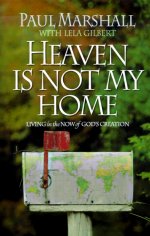
Paul, as you may know, wrote one of my all time favorite books, a call to live faithfully in the9780849990403.jpg ordinary, with good chapters on a Christian perspective on work, play, education, art, politics, technology, and the like.  We are embodied, made for this creation, and therefore can worship God gladly in the ways in which we live into our daily practices, from shopping to voting, playing, to resting, doing our jobs and thinking about evangelism.  Heaven is Not My Home: Living in the Now of God’s Creation (Nelson; $15.95) preceded by a decade Surprised By Hope (N.T. Wright) or Randy Alcorn’s Heaven, each which also celebrates the “this world being restored/creation-regained” vision, and emerges from the worldview stuff that we are so fond of.  That Os Guinness, while writing his magnificent book The Call, encouraged Paul to write this—an easy to read, wide-as-life, guide to discipleship—reminds me of how excellent and vital it is.  The folks at the two churches were thrilled to hear about this— intuiting, I think, that if we are to care about the big stuff of human rights and be faithful in this age of terror, we must first get it into our minds that God cares about this world.  Real life matters, and we do live “in the now of God’s creation.”  We are meant to be here.  You know that “for God so loved the world” stuff?  It’s really, really true!

41HG79WXK0L._SL500_AA300_.jpgPaul also wrote what I take to be the best book on politics from a distinctively Christian view, God and the Constitution: Christianity and American Politics (Rowman and Littlefield; $27.95.)  It isn’t partisan, and, to be honest, I believe the title is mis-leading, as it isn’t about the constitution, as such.  It is more generally about faith and civic life, the Biblical framework for governance, what the task of the state is and isn’t, and how faith informs and funds a vision of pluralism and justice.  It isn’t academic, really, but it is quite substantive.  If you are wishing to get beyond the fairly predictable examples of the “Christian right” and the “social action left” this provides a thoughtful foundation…

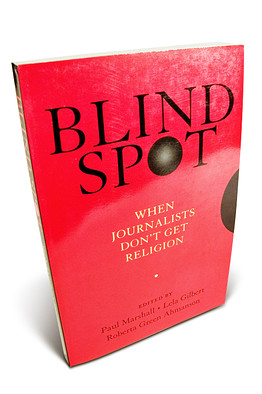
blindspot2.jpgMarshall literally rolled up his sleeves for the jam-packed lecture of examples of how the leading newspapers and news sources in the Western world don’t seem to get how religion influences major world events.  From the religiously-motivated Al Quada, for instance, to the ways in which American citizens vote, the press seriously and routinely make significant errors and omissions.  It is, as the book he co-edited puts it, a “blind spot.” (Blind Spot: When Journalists Don’t Get Religion, [Oxford University Press; $19.95.]) It is a big seller right now for Oxford, and, although it is written to the journalistic community, firstly, it is great reading for anyone serious about the nature of religion in the modern world, and the secular “tone deafness” that is prevalent, especially among cultural leaders.)  Marshall’s examples—over and over—of how, for instance, radical Islamist terrorists kill Christians in developing countries (say, Pakistani Catholics or Christians in Bali, or believers in certain states of Nigeria) and the typical Western press (The New York Times, say, or the Associated Press, or the major papers in France or England) says the terrorist actions were against “Westerners.”  Of course the dead Pakistanis or Nigerians aren’t Westerners, and they were targeted because of their faith.  This misunderstanding of religion, even where it seems so evident, is an example of a perplexing matter in how we get our information and how we see God’s work in the world.  (His lecture, I might add, was not about media bias, about whether Fox news or CNBC is more honest or balanced.  It was about this blind spot which is evident in most major media outlets.)  Other great chapters in the book are by other faith-based media scholars (not all Christians, by the way) and a great piece by the Orthodox  syndicated columnist Terry Mattingly, who I admire a lot.  A Jewish scholar says on the back that it isn’t always when he “let’s out a whoop of joy” in reading a book, but he did with this. 

Well, again, it is great to see one who has this deeply spiritual and robust faith who sees his calling as mostly to the secular world, scholars, activists, and think-tank wonks.  Praise God with me for Paul’s good work at the Hudson Institute, for congregations who bring in authors (and booksellers) allowing us to do our thing.  Maybe through this learning and thinking together, we will not only be better prepared to help “repair the world” but to work together across denominational lines.  It was worth the trip to Bechtelsville just to see two very different congregations sharing in a joint project.  An Assembly of God mega-church with a very cool contemporary worship space and coffee shop and a UCC parish (with wooden beams and stained glass in their lovely circa-60s Protestant sanctuary) bringing in a human rights activist who is Episcopalian, who had just gotten back from Europe— with a Presbyterian bookseller from Dallastown.  It was a good week-end.  Thanks for caring.  

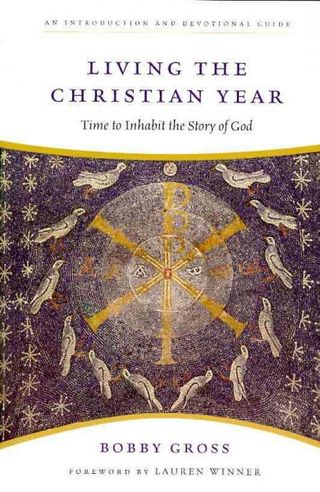
Living the Christian Year: Time to Inhabit the Story of God

In yesterday’s post I celebrated some good and useful books about the liturgical year.  Joan Chittister’s has gotten some good press, as have most in that fabulous “Ancient Practices” series.  (The last two have been on tithing and going on pilgrimages.) 

9770.jpgAnd, I celebrated that we are doing an author appearance with Bobby Gross.  He is the author of the aforementioned Living the Christian Year, a book we commented upon when it first came out, and which we are very happy to be able to promote again now.  Having an author around keeps us on our toes and we are filled with nervous anticipation.  We hope you are with us in spirit, as they say, and that if you’re in the area, you might stop by.  As we’ve announced, we will have a worship service at First Presbyterian Church of York (downtown)  at 7:30 to celebrate Ascension Day with Bobby reading excerpts from the book and more.  Afterward, we will gather for refreshments and another “ancient practice”—that of getting books signed with author autographs.  I doubt if that will get into the series edited by Ms Tickle, but it is classic, eh?  Something about signing books. 

If you want one, just send us WHO it is to be made out to, and we’ll get Bobby to autograph a book for you.  We’ll send it, at the sale price of $15.00.

Living in the Christian Year: Time to Inhabit the Story of God starts out with Gross giving anliving the christian year.jpg historical overview, educating us about the “intersection of time and eternity” and how living into these sacred cycles really helps attune us to the ways of God.

That very first part alone is worth the price of the book, but, of course, there is immense wisdom scattered in the rest of the daily devotions, too (and I mean that— there are treasures of insight here, good, good stuff.)  In that first chapter he tells of his own growing journey into liturgical time and how living in New York during the horrors of what we now call “9-11” effected him.  His judicious use of good quotes from the likes of Eugene Peterson, Lawrence Stookey, and Dorothy Bass show that he has read widely and deeply in this sacramental view of time.  And, given his own experiences (as one who didn’t grow up in a highly liturgical church), there is nothing taken for granted. He tells us a bit about where these notions come from, and—what is most important, I think—how inhabiting these patterns, allowing these cycles and seasons and holy days to shape our imaginations, allows us to do what even the most recent Donald Miller book invites us to: living into a bigger and better story.

Bobby starts the book with a brief, but well written and tender recollection of having Bible devotions in his family  (see, he did have some ritual experiences early on.)  This love for Bible stories and other stories, too, gave him the “ears to hear” the deeper meanings of epics like the Tolkien myths, which he cites to great advantage. 

“Most of us,”  he writes,

think of ourselves as ordinary people living quiet lives in unremarkable places.  We are merely hobbits in our shires.  But listen!  We may not be caught up in dangerous drama like Frodo and his loyal companion, Sam, but we nonetheless live inside a big story, one that started long before our birth and that will go on long after our death, one that’s as wide as the universe and as old as eternity: the Story of God as centered in Jesus the Christ.

Our personal narratives take their fullest shape and deepest meaning in relation to God’s purposes for us and for the world.  As Eugene Peterson puts it, “God is the larger context and plot in which our stories find themselves.” A very large context and very long plot indeed.

Later, Bobby summarizes, “In other words, we want to inhabit the still-unfolding Story of God and have it inhabit and change us.  And this is exactly what the ancient liturgical habits of living the Christian year helps us to do.”

I don’t know if this language of “story” resonates with you.  Bobby has worked with university students, and now directs those who do this hard work, campus ministers among grad students, faculty, and emerging young scholars.  I do not think it is an accident that he has found this approach helpful, as it is a common-place that our post-modern generations long for coherent stories.  Some of us still just tell the gospel in terms of dogma and doctrine with little beyond theological facts either affirmed or rejected. (Think of the debate about how to best describe justification and imputation that raged at my Facebook site after I applauded N.T. Wright last week.)  Some of us talk about faiths as worldviews, but often as if they are mere intellectual constructs, philosophies, ideas.  Yet others are increasingly realizing that worldviews are, in fact, shaped not only by ideas, but by the flow of narrative, by images, by metaphor.  That is, our lives are story-shaped and our deepest convictions come to us as a story of which we are a player.  As scholars as diverse as Stanley Hauerwas, Eugene Peterson, Madeline L’Engle, Lesslie Newbigin,  (and yes, N.T. Wright) remind us, the Bible itself is story-shaped.

So how to “get into” the Bible story?  Reading it in bits and pieces won’t do, and wading through Genesis, Exodus, Leviticus, Numbers and so on, while mandatory, isn’t enough, either. Perhaps this ancient wisdom of a liturgical calendar, of arranging our very days and months and seasons in terms of the life of Jesus might help us.  Bobby makes a brief, but solid case that this is so, and then gives us 52 weeks/chapters showing us how it is done.

At one point he nicely reminds us that the Christian year “gives us a panoramic view of the triune God and his Story.  But we don’t just survey the landscape; we inhabit it.”  Nicely put, isn’t it?

Near the very moving last page, he wonders how the reader is doing.  He wonders out loud for a paragraph or two about different kinds of readers, those who naturally enjoy this approach, or those who have found it odd or off-putting.  Some are part of communities of faith that reinforce these ancient rituals and practices, others not so much. 

He suggests, “But whether all this seems brand new or old hat, feels liberating or overwhelming, I encourage you to stick with it.  Continue to avail yourself of this means of grace.  Enjoy the freedom to experiment and find the patterns of observance that work for you.
And be patient.  Like any new habit, the doing gets easier over time and the dividends grow more rewarding.”

Reading and pondering books like this is a way to grow up in Christ, to deepen discipleship.  In workshops I do, I sometimes call reading a “spiritual discipline.” Whether it is this resource or another, I hope you are doing “spiritual reading” and “sticking with it.”

Here is the transcript of an interview with Bobby Gross about Living the Christian Year.

Order Here
takes you to our secure website order form

Hearts & Minds  234 East Main Street  Dallastown, PA 17313     717.246.3333
Living the Christian Year author Bobby Gross to speak here on Ascension Day

living the christian year.jpgLiving the Christian Year: Time to Inhabit the Story of God by Bobby Gross (IVP; formatio line; $17.00) is one of the most interesting and unique 52-week devotional books I’ve seen.  We’ve mentioned it before, and we could hardly recommend it more gladly.  I love even the first few pages about the power of stories, and what it means to have our story shaped by God’s Story.  It is, as you might guess, a devotional guide to the church calendar, so it is arranged with daily readings from the cycle of Light— Advent, Christmas and Epiphanhy, through the season of Life Lent/Holy Week/Eastertide, and into the ordinary days, which he explains compose the “cycle of love.”

Although not all churches frame their year through this three-fold cycle, and even fewer attend to the lesser known festivals and feast days, nearly everyone knows about Advent; many non-liturgical churches have Maundy Thursday services or Good Friday sermons.  So this is pretty universal stuff.  We think it is a great way to learn about ways to live into the graces of God, in ways that may not come quite naturally, but, once considered and experienced, really, really do make sense.  This is not just a quick pick-me-up sort of daily inspiration, but an invitation to deeper ways of being.  “Inhabiting the Story of God” as the sub-title puts it.

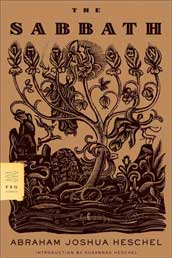
the-sabbath.jpgYet, few really plumb the deepest depths of understanding time–the rhythms of our days and weeks and seasons–in light of a truly spiritual view of the calendar.  20th-century Hebrew prophet Abraham Heschel, of course, gave us one of the great classics in his little book The Sabbath (Farrar, Struass & Giroux; $15.00) which explores notions of time from within the Biblical, Jewish worldivew.  It is a serious and important work, highly regarded. (It is such a rich and lovely book that we stock a gift edition in a small compact hardback with ribbon marker that is very, very handsome to hold. Send me an email if you want more info.)


0787956473.jpgAlso,surely one of the most elegant and insightful books I’ve ever read is  Dorothy Bass’s sublime Receiving the Day: Christian Practices for Opening the Gift of Time (Jossey-Bass; $14.95.)  Words can hardly express how much I enjoyed this when I first read it, very slowly, when it first came out. It is one of the three or four books on Sabbath that are “must reads” in my view.  I always need to be reminded of this deeply faith-filled and wonderous view of time, so this is helpful for me. 

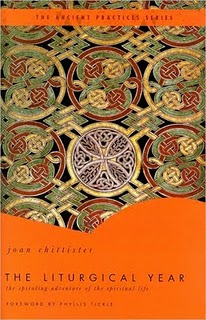
liturgical year.JPGMuch more recently there is a lovely book in the “Ancient Practices” series by popular Benedictine sister Joan Chittister called The Liturgical Year: The Spiraling Adventure of the Spiritual Life (Nelson; $17.99)  So many folks are exploring this ancient and historic way of thinking about our lives, that it seems that we are reaching what might be a new ecumenical agreement.  Evangelicals are learning about this from the Orthodox; liberal Episcopalians are teaching staunch Reformed folks, and Roman Catholic practices are enriching even charismatic and non-denominational folks.

 I recall with glee how Marva Dawn once confided that she often dressed according to the colors of the church year.  Many of us adore the writing of where Vigen Guroian such as the small and delightful Inheriting Paradise: Meditations on Gardening (Eerdmans; $12.00) where he tells of his garden, and how he plants flowers to bloom to compliment thinking about the liturgical colors andthe church year.  Listen to his fabulous Krista Tippett interview from NPR, here.  I think this is really quite interesting, how this ancient notion of an embodied spirituality, enhanced by thinking about time and seasons and our church calandar is cropping up in many, many circles.  

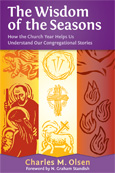
9781566993968.jpgYet another example of this trend is seen in the wonderful new book on these themes published by the Alban Institute, that think-tank that most typically publishes reliable guides to parish life, mainline authors offering best practices learned from the thorough research within healthy mainline churches. It is by a Presbyterian author that we like and the title and subtitle shows how it is linking this year-long practice of attending to the church year and ordinary parish issues.  It is called The Wisdom of the Seasons: How the Church Year Helps Us Understand our Congregational Stories (Alban Institute; $18.00.)  Isn’t that just a fabulously rich idea?  The book looks very good, and we’ve been happy to tell pastors about it— thinking that such a resource will firstly enrich their parish spirituality even as it strengthens their congregational management competencies.  Knowing the church year is good for disciples of Jesus and it is good for congregations.

Which brings me to this great announcement, that we have Bobby Gross coming to our bookstore9770.jpg this Thursday to do a presentation on Living the Christian year: Time to Inhabit the Story of God.  Actually, we are hosting the book talk and author appearance and book signing in the context of an Ascension Day service so we won’t do it here at the shop.  We are inviting folks to gather at John Calvin chapel at First Presbyterian Church (York, PA) to celebrate this very significant holy day.  40 Days after Easter, you know—always a Thursday.  Yep, we’ll sing and pray and Bobby will read from his book, and do a bit of a sermon on the significance of Christ’s ascension, his exaltation and reign.  Then we’ll have some refreshments and hang out while he signs books.  If you know anybody in central PA, we sure would love it if you’d spread the word.  It is being co-sponsored by the InterVarsity Christian Fellowship Emerging Scholar’s Network here in Central Pennsylvania (That’s Tom Grosh) who does creative work trying to reach and connect those in grad school, young scholars, and seasoned professors. (Bobby is the National Director of graduate and faculty ministries and is on the national board of one of our favorite organizations, CIVA (Christians in the Visual Arts.)  Bobby is a very thoughtful guy, a good friend,
and, as we’ve noted, this is a topic of increasingly popularity.  Come and join us if you can.

hemingway-ernest1.jpgWant an autographed copy of the book?  On sale, even!

It sells usually for $17.00 but we’ll be offering them at $15.00 
 okay, it might not look like this...  

 With a forward by Lauren Winner, and some helpful explanations about the seasons and cycles, Living the Christian Year is a daily reading guide really that is a wonderful, wonderful resource for you or your family.  I’ll tell you a bit more about it in a post tomorrow, but, for now, let us know if you want us to get him to sign one for you.  Tell us TO WHOM IT SHOULD BE SIGNED and we’ll take it from there.

ORDER HERE
takes you to our secure website order form page

Hearts & Minds 234 East Main Street  Dallastown, PA 17313     7117.246.333

Best Prices Ever on N.T. Wright books!

As I wrote in the last post, The right Rev. Wright was excellent in his lucid and inspiring lecture at Redeemer’s Center for Faith & Word in New York City last week.  Thanks to those who prayed for us—we unloaded the van in an (illegal) parking place that providentially opened up, and we couldn’t have been more glad.  Central Park West is stunning in springtime, and maddening all the time, with traffic and people and all the mid-town Manhattan tension creating a stressful spot to unload boxes and cash.  Load-in was an adventure, but late-night load-out was cool. Thanks be to God, and all who helped.

Now, we’ve got some extra books.  I’ll be candid.  One doesn’t want to run out of books during an author appearance—a blunder we’ve made only a time or two—so we tend to take more books than any reasonable bookseller can hope to sell.  The Wright event did have nearly 800 folks and this new book about virtue is certainly urgent and important.  You may know about the conference about Wright held at Wheaton last week, too (google that and see the lectures and panels) so he is quite the man, these days.  We sold a lot of books, but we have a lot left over.

I’m not ashamed of this, and it isn’t anything cheesy to say we are going to offer a one week “inventory clearance” sale.  We would rather lose some dough selling them at a great savings to you, rather than pay the high shipping costs to send ’em back.  Win/ kinda win, I’d say.

THIS OFFER GOOD UNTIL FRIDAY, MAY 7, 2010. (And while supplies last.)

Here are the items we are selling cheap.  Half off, mostly.  Awww right!

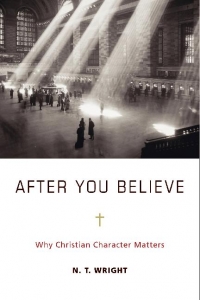
b77ac17aa0d118083416da2c076ffeb3-200x300.JPGAfter You Believe: Why Christian Character Matters (HarperOne) $24.99  sale price$13.00

Surprised By Hope: Rethinking Heaven, the Resurrection, and the Mission of the Church (HarperOne) $24.95  sale price$13.00

Surprised by Hope DVD Six Sessions (Zondervan) $24.99  sale price$13.00

Simply Christian: Why Christianity Makes Sense (HarperOne) $24.95 sale price $13.00

Following Jesus: Biblical Reflections on Discipleship
 
(Eerdmans) $14.00 sale price $7.00

For All God’s Worth: True Worship and the Calling of the Church (Eerdmans) $13.00 sale price $7.00

What Saint Paul Really Said: Was Paul of Tarsus the Real Founder of Christianity? (Eerdmans) $17.00 sale price $9.00

The Lord and His Prayer (Eerdmans) $10.00 sale price $5.00

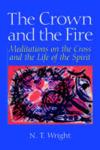
9780802841315.jpgIt is not on sale, but you should know that we now have a rare Wright paperback, an early 90’s set of messages about the Holy Spirit.  It had been out of print for quite a while and we are thrilled to find it is now available again. I read it over a decade ago and loved it.   

The Crown and the Fire: Meditations on the Cross and the Life of the Spirit (Eerdmans) $14.99

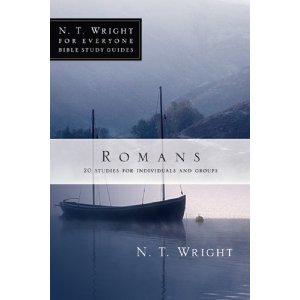
And, while we are at it, you may not know that besides his astute,41YBRSv6lEL._SL500_AA300_.jpg readable “For Everyone” New Testament commentaries, IVP has recently released a set of almost a dozen small group Bible study guides put together by N.T. Wright.  They are called the “N.T. Wright for Everyone Bible Study Guides” and are quite useful little resources for personal study or discussion groups or Bible classes. Most are six sessions and they sell for $8.00.

Of course we stock all other Wright books, and a couple that offer critique of his views.  Drop us a line if you have any questions.

Remember the half-price deal is good for one week only.   We’re acting like a real discount store, here, huh?  Woo-hooo.  Sale time!

Order Here
(link takes you to our secure order form page at the website)

Hearts & Minds 234 East Main Street  Dallastown, PA 17313     717-246-3333

Wright and work

I don’t have time to do much of a review but wanted to post for BookNotes friends a request to keep us in your prayers.  In the next few days we will be at five different events, lugging late, driving through the night, unpacking and re-packing.  When it rains it pours, they say, and this configuration of book-selling opportunities is a great chance to serve God’s people.  And we sure don’t have to face the persecution or shipwrecks of the Apostle Paul on his journeys.  Can you imagine how far that man walked?  And he carried books (well, scrolls and manuscripts) with him.

I bet we’ll cross paths with some of our faithful readers, and we’ll have tons of manuscripts!

Momentarily, Beth, and I will head out the door for Manhattan, selling books at the prestigious Redeemer Presbyterian Church’s Center for Faith and Work.  The speaker is N.T Wright and we are very excited to be with him again.  They expect a big crowd, hosted in a historic building on Central Park West.  We are nervous and giddy with excitement.

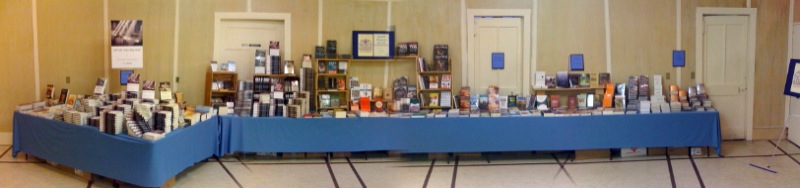
book table photo.jpgAdd this in after Chris Carson took this shot of our set up.  Got it set up in record time!, Wright books and books about vocation, calling, work and witness in the world.  And some Tim Keller resources on the right end, since this was a Redeemer Presbyterian Function. 

This is a very appropriate event for us, since the Center for Faith and Work (who partners with our friends at Cardus to publish Comment, by the way, a journal I sometimes write for) is all about helping people live our their Christian discipleship in the marketplaces and studios and offices of the daily work-world.  They invite and equip folks to honor Christ’s Lordship over labor, helping people connect the dots between Sunday and Monday, between prayer and politics, between worship and work. 

N.T. Wright has longed helped us imagine how the new creation/Kingdom which was launched with Jesus’ resurrection–which he steadfastly argues was historical and bodily—might effect the missional ways of the church of Christ.  That is, how does the mission of God become our mission?  How can our congregations—and church members, scattered throughout the professions and workplaces and social institutions thought-out the week—take up the responsibility of witnessing to the ways of God?  How can we develop a Christian view of work?

Wright’s little book called For All God’s Worth (Eerdmans $10.00) is exactly on this theme.  The first half is about what one might consider traditional worship, and the second half is about worshiping in the world, daily living out the claims we make in our liturgy.

Although it may be missed, his very thoughtful and important small hardback, The Challenge of Jesus (IVP; $18.00) has a section in it inviting each and every worker to think of the implications of faith for his or her disciplines, industry or profession.  (See the section “Retaining and Forgiving Sins.”  He even talks a bit about his own work being “in but not of” the world of higher education, and witnessing there to his Christian perspective.

Simply Christian (Harper; $24.00) also mentions work.  So does his one on the Holy Spirit (The Cross and the Flame, now happily available again.)  I don’t recall, but I bet the one on evil, does, too..  (It at least discussion globalization and such.)  Because he fleshes out the implications of this idea of bodily resurrection and new creation, it is natural for him, it seems.  He rejects a “sacred secular dualism” and lives out whole life discipleship, Biblically-informed and with God’s energy and creativity.

Of course his new one is all about character.  It is called After You Believe: Why Characterb77ac17aa0d118083416da2c076ffeb3-200x300.JPG Matters (HarperOne; $24.99.) We suppose this will be his theme tonight.  It should be obvious that “thinking Christianly” and serving God as agents of gracious renewal within the various spheres and occupations of the marketplace demands more than fresh ideas (although certainly it does include that, new theories, new proposals.)  But it demands new people.  In what ways are our characters shaped into Christ-likeness, and what sort of ethics and values does that create?  Character?  This is a very, very important matter, and Wright tells us why. 

I’ve said before that the book starts a bit slow. Hearing him speak, though, about the ways in which classical virtues (the Greeks and pagan Romans) and uniquely Christian virtues do or don’t overlap and why character is so misunderstood in our postmodern culture, reminds me that this foundation few chapters are very important.  Soon enough, the book explodes into relevance and practicality, as Wright calls us to live with  character, as people of virtue.  We recommend it.  Maybe you could even read it at work!

NT Wright photo.jpg
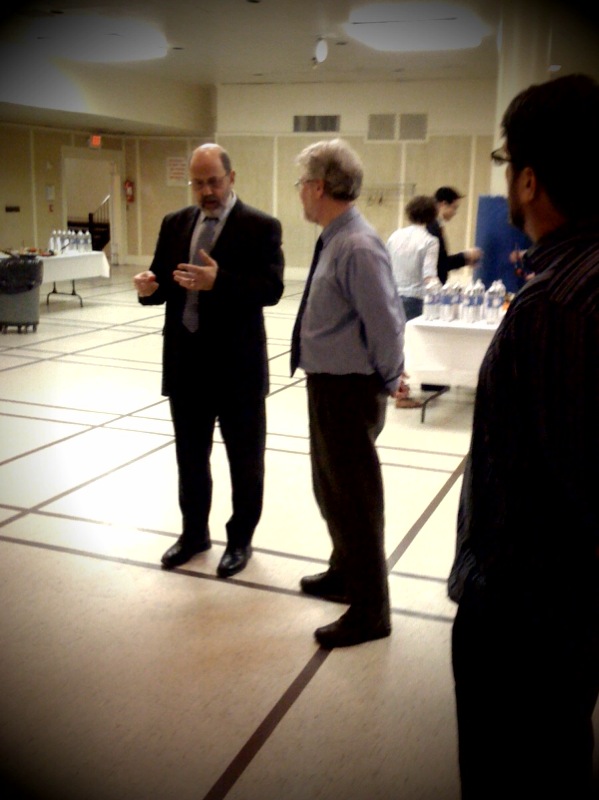
This shows that Tom is animated even in those few moments between speaking to a crowd of 800 and his autographing session.  We were discussing our mutual friends Brian Walsh & Sylvia Keesmaat who had presented at paper at the Wheaton conference on Wright earlier in the week.  I wanted to note that both Wright and Borger endorsed their Colossians Remixed on the back–my name is right there next to his!—, but that seemed a bit of a stretch.  Ha!  I’m hardly worthy to be standing next to him, pestering the poor chap about books and authors when he just needed a 2 minute break before the reception.  Thanks to Scott, too, every lurking around the edges of this crazy work of ours.

Hearts & Minds 234 East Main Street  Dallastown, PA  17313     717-246-3333 

4 Poets (Part 4) L.L. Barkat

In Peter Leithart’s provacative, well-written, witty, learned and altogether orthodox study of what the scholars call hermeneutics (how to read the Bible), Deep Exegesis: The Mystery of Reading Scripture (Baylor University Press), he reminds us that part of learning the “inside” story—the joke, as it were (most jokes, like, say, lawyer jokes, presume some prior knowledge to “get it”)—comes, from, well, spending the time and energy to read the text and pay close attention to it.  The art of interpretation comes from experience.  Ahem! Didn’t I say something like that a few posts ago about poetry? Speaking as much to myself as BookNotes readers, I hinted that we may not “get” poetry because we just haven’t worked at it very hard.  We haven’t read enough, haven’t found the good ones, haven’t invested a bit to develop an eye and ear for it. 

Leithart has one chapter that is curiously called “Words are Players.”   He says that words are characters and have “rich, perhaps contradictory personalities and behaviors and hidden but influential pasts.”   After a bit of good etymological observation from the gospel of John, he asserts that “The Bible is closer to poetry than of linguistics or scientists…how can we hear good news as news if the Bible’s words are not permitted to say anything new?” 

I write this heady stuff to once again say that words matter, that even for the most spiritual among us, the most astute students of God’s Word, language matters.  Poetry matters. 

And, it may not be a long shot to argue that the patience and imagination and playful work it takes to learn the inner vocabulary of an art form—contemporary architecture, Medieval tapestries, iconography, be-bop jazz, and yes, poetry of all sorts—creates a character and disposition that is human and humane.  I hate to sound like your mom telling you to eat your vegetables, but we all know that mom is right about that.  Yup, poetry is good for you.

Is poetry good for your soul?  Can it help shape us into what God might want us to be?

I heard a friend say something like that recently, saying matter-of-factly how she buys a new volume whenever she can.  She herself is a serious Christian, a theologically-aware disciple, and a writer of memoir and story.  She longs for playful juxtaposition of words, cleverly-crafted lines, new sounds, images, similes, metaphors.  My friend is Laura Barkat and in a gleeful and certain way—as if this was very exciting news or as if she was sharing a very important secret— she insisted that poetry is good for her soul.

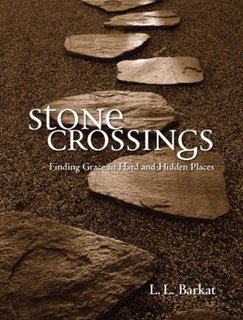
If you don’t know L.L.’s wonderfully written and deeply affecting memoir Stone Crossings:stone_crossings.jpg Finding Grace in Hard and Hidden Places (IVP; $15.00) please read my review of it from a year or so ago.  I was truly blessed by spending time with her reflections, and a few chapters I have read and re-read. Not a few smart writers have given it their endorsements, and one reviewer properly linked her to Annie Dillard.  It is one of my favorite books and she deserves to be known as a very profound writer.

I heard her, at Jubilee 2010 in Pittsburgh last February, doing a talk/reading on her commitment to experience beauty, and it was one of the highlights of a very memorable weekend.  Beauty can be healing and it may take a person who has seen the hardest of times to testify. 

Ms Barkat not only searched for greater beauty in her life, she made a choice to embody a spiritual practice of attentiveness, of being present to creation–in her own backyard, a sliver of space in a pretty urban outskirt of New York city—and to make poems from her observations. 

I committed to sit outdoors every day for at least the time it would take to finish a cup of tea.  It was nothing fancy, mind you; each day for a year, I sat in my back yard under a pine tree.  Having begun the endeavor in winter, Fall was my final season.  I used to think the times of leaves drifting, air crisping, apples ripening was my favorite…Now I am undecided…

“It was nothing fancy, mind you.”  I love that.

I also love her preface in which she suggests that we all might try our hand at this game of making poems. 

Few of us who play with words will become the next  poet laureate, but why should that stop us?  If we can read poetry well, or speak poetry in our normal conversation (which many of us uncannily do), then it might not hurt to try writing poetry too.  At some point I must have decided this for myself.  For better or for worse, you hold that decision in your hands.

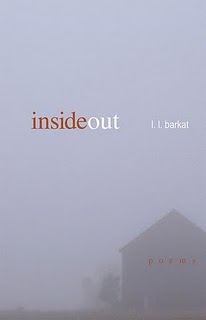
InsideOut.jpgWell, you don’t hold insideout by L.L. Barkat (IAM; $15.00) in your hands, yet, but it is my pleasure to tell you that you ought to consider holding this very book, this fruit of her year-long experience of waiting and watching and writing.  The collection is divided up into four nice seasons, and often the offerings are quite short.  Some are full of colorful imagery of nature—“impossible white tips evergreens blankets dead leaves” or “Furled leaves of wild garlic mustard and, soon, forsythia breakfasts!” or “Light plays upon the pine, dips her in golden oil.”  Yet, these are not back-to-nature Walden tributes to the wild.  Some are just her interaction with her back yard, perhaps a garden, or the neighbor’s dog, or her own sensations, as when she writes of her “eyelashes now saffron pollen freckled, undone.”

In winter, she writes short lines such as, “Blueberry bushes stripped lean, amber crimson against a bronze need bed” and “Snow empties the sky to a bare whiteness, but it fills me, fills me.” 

Some, though, seem to be about things other than what she saw in her year-long, tea-drinking sitting.  A few are about memories, or global concerns (a powerful one about Sudan) and some are about her own inner journey. A few are quite obviously about the mystery of creativity, the arts, her own work as writer, photographer, blogger and cultural agent.

Verse

What is poetry,
she asked, fetching
it to me with full
hands. How could I
answer the woman?
I do not know what
it is any more than
she. I guess it must
be marks on tender
skin, bearers of sin,
cool cups of rain
and bottles of tears
collected on midnight
trains from the eyes
of old men, old women
and infants traveling
to God knows where,
it hangs and is lifted
from our hair
goes onward
and onward speaking
itself, tripping us
as we debark
chewing-gum mottled
metal stairs.

And, as we have seen in the other three great poets I’ve highlighted this week, human suffering and great grief finds (healing?) voice in poems.   Some of these poems are about the sadness of the human condition, but (of course) not generically so.  It is different than reportage, but there are stories here. 

There are hints in the titles.  This one, “Instructions” is for a person, whose name is given.

What to do when a best friend’s husband dies
on the eve of your little girl’s birthday:

Hang up the phone, lean into the counter
in a kind of conscious faint.  Moan.
Moan, a deep cry that comes from a place
you didn’t know existed, tremble,
feel the ice sensation that begins
rising and falling within you like
Northern Lights
shimmering up and down
a midnight sky

The poem continues, with gloriously rich description as in (a poet’s) recipe, as she cooks the birthday meal,  “one glass, one dish at a time.”  Several beautiful stanzas would delight any literary-minded cook, with such lovely descriptions or her utensils and ingredients.

And then this interlude:

Curse the maker
of lawn mowers. Beg the man
to come back and this time decide
upon a nap instead of simple exercise
of back and forth on green, where he has
fallen.  Did fall.  Ask God to turn back time,
if only for this one whose heart has failed
him.  Let it not be so, that he has fallen.

And back to some final instructions for the meal, more good lines, then this:

In the morning, sing happy birthday
to your eight-year-old.  Kiss her on the
cheek and forehead. Hold her to your
chest.  Give her the black-handled scissors
so she may go out into the green.

The birthday sauce will be needing fresh basil, fresh.
And she will go out skipping,
snip it for you at the tender neck.
Put it in your hand with soft, round
fingers.  Toss her head and smile.

Life, indeed, does go on, and beauty–even the beauty of thoughtful words well parsed—can help.  I commend this work to you, this nice little book of experiments with words.  Laura is a kind soul, a good thinker, and one who seems to have a mature awareness of the deeper currents of her own emotions.  Not only does seeing (reading? hearing?) her poetic ruminations on these feelings give us joy for the sheer beauty of the poems themselves (that it, it is art) but we can (I hope I’m not being too blunt) also “get something out of it.” 

Poems are not self-help books.  One doesn’t slap down the payment and demand a unit of insight, a package of advice.  Yet, it pays off, if we must use such a term, as immersion in another’s story, and immersion in her allusive use of imagination and the literary arts, creates in us a way of seeing.  Perhaps a new way, perhaps a (re)newed way.  Either way, art can transform us, usually in subtle nudges.  (I don’t mean to be too blunt about this, but, you know, if the art comes on too forthrightly strong, it probably is bad art.  It is propaganda.  I sometimes tell young religious songwriters, especially, that if they want to preach that badly, get a pulpit or lectern, not a sound-stage.  Of course art can be bold and brave, but most often is must suggest, not say.)

L.L. Barkat does this well.  I think she has a gift, a gift of sight and of vocabulary, which makes her descriptions so wonderful and enjoyable.  She has obviously worked at her craft, but she does have this glorious bundle of words she carries, this tool-kit, this laundry list.  Good writers must, I suppose.  But also, beside her natural gift and her hard work, she did this thing.  She put herself in her backyard and looked and listened, pen in hand.

Introducing the Spring portion of the books she says,

In the semi-urban environment where I make my home, it is hard to embrace solitude for even fifteen minutes.  The culture of the place agitates and urges.  No time for rain (it will muss up your hair for the next appointment), no time to watch Spring’s first blossoms.  Seasons turn and we miss the nuances.  But I had committed to sitting still in my yard and watching.  So I saw things I never saw before…

As we’ve said, she has some great nature stuff going on.  She uses the language of color, of fruit, of fragrance, and it is really enjoyable, better with second and third readings. Bird-watchers will love some of these, as will gardeners.  And, she has some relationship stuff, romance stuff, a few that are a little sexy, even.  What is this about?

Bottled

I am fizzle
fazzle pizazz
snap crackle,
slide your hand
past my red belt
take me by the
ribbed neck
set teeth on edge
flick fluted tin
and, pop!

Kudos to IAM (International Arts Movement) for producing this lovely paperback poetry book, for honoring L.L. as a writer in their movement. (She writes for their fantastic journal The Curator, too.)  She also works managing the remarkable, multi-voiced HighCallingBlogs (of the Laity Lodge folks) and has for years had her own classy website, Seedlings in Stone.

2545722702_9c388d761d.jpg

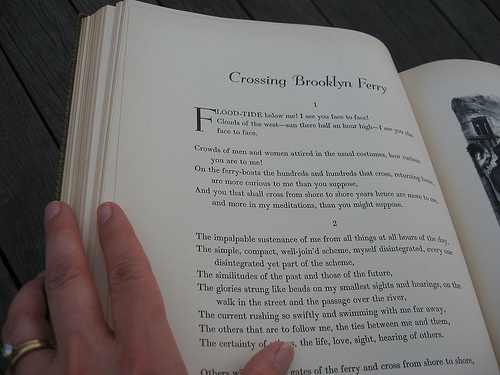
picture of L.L. reading a poem by Walt Whitman on the Brooklyn Bridge

Thanks for allowing us to tell you about some of the poetry we stock, some of the writers we like (remember that first part of the first post where we named Luci Shaw, Wendell Berry, Mary Oliver and others?)  And thank you even more for allowing us to share some of the lines of four new books, each of them somewhat “under the radar.”  And each by friends of H&M. 

These four are pretty much indie artists and they deserve our support.  Could you perhaps share these reviews with somebody you know who might be interested in thoughtful, faith-shaped poetry?  Could you call together a reading group to read these poems out loud?  Might you considering ordering one or two?  It is National Poetry Month, after all.  Cool. huh?

Kent Ira Groff is a spiritual director whose latest poems are prayers.  You can use it devotionally in conversation with Bible passages.  Lew Klatt is a Calvin College English prof and award-winning, avant-garde poet.  This is serious stuff.   Michele Barnes McClendon  is a brilliant black woman who shares her life with great poignancy and grace. I can’t express how tender some of these are, and how I enjoyed them. L.L Barkat is a professional writer, artist, editor, whose beautiful writing illustrates her practice of seeing well and writing with lovely, striking words.  It may be that for many, her insideout may be the one to start with.  We thank each of these pals, encourage them to keep at it, and thank you, our bookish friends for caring about good lines.  Happy National Poetry Month!

BLOG SPECIAL
10% off

any book mentioned
ORDER HERE
(takes you to the secure order form at the Hearts & Minds website)

Hearts & Minds 234 East Main Street  Dallastown, PA 17313     717.246.3333
4 Poets (Part 3) Michele Barnes McClendon

If you are just joining us, this is part three of a four part series in honor of National Poetry Month.  I’m hoping to introduce Hearts & Minds customers/friends to some other friends of mine—ahhh, that social networking thing—friends of mine who happen also to be poets.  I am unashamed to be promoting these four scribblers, all whose books have come out recently.  First I told you about prolific Kent Groff, formerly of central Pennsylvania and renowned in spiritual direction work, who has done a new book of poems that are arranged around four weeks of devotional reading using some of his Jesuit insights.  Kent is an ordained Presbyterian pastor and wrote these prayer-poems in India.

In the last post I told you about L.S. “Lew” Klatt, who I first met when he worked for the CCO with graduate students at Pitt Law and Pitt Med schools.  He did very moving work, helping them gain a sense of their vocations in law and medicine, even as he schooled them in theology and spirituality.  He encouraged mission work, even among the local homeless, and, no doubt, read to his young friends with whom he was ministering, lots of poems, favorites of his and his own.  It wasn’t long until Lew was clear about his own calling, to pursue the vocation of being an English professor and a writer.  His award-winning collection of serious, playful, unusual verse is called Interloper.  I hope you enjoyed my reflections on it.

 (It is difficult doing this—describing poems, which are often so visceral, like music.  I’m not sure how to encourage folks to buy poetry volumes, so I tell you who these friends are and a bit about their work.  I hope you enjoy it.)

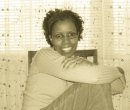
4881_101378799872736_100000018501482_35091_1154938_s.jpgNow I am eager to tell you about a woman who also worked for the CCO for a spell, doing campus ministry in Ohio.  Michelle Barnes McClendon did good outreach for the CCO and I was so glad to know of her efforts working with students, and was sad when she moved on from her campus ministry stint.  However, as she became a blogger, I came to realize what remarkable talents she had, what good writing she did, and although she posts less, now, her mundane stuff about family, kids, food, Jesus, recipes, hubbie….it just glowed.  I think her fine writing inspired me to blog here at BookNotes.  She is a very talented writer, a good wordsmith, and a person of huge, huge integrity.  It should come as no surprise that I think that much of what makes a writer worth reading is beyond sheer talent, but has to do with their character, their vision, their heart.  Ms. McClendon is that kind of a writer, who works hard at her craft, and—in the best way possible—wears it on her sleeve.  Did somebody say something about hearts and minds?  I invite you to listen to this wonderful one minute video clip of her talking about what she learned as a student at Kent State, before being employed by the CCO.  The Ted Schumacher she mentions is one of my oldest friends from college who was an older friend and mentor to me!  

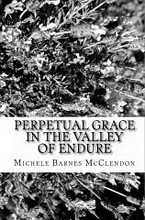
Perpetual Grace in the Valley of Endure Michele Barnes McClendon (CreateSpace; $9.99) is her fine 
ThumbnailImageperpetgrace.jpg recently published collection, and when I got it with a hand-made ribbon marker, I was overjoyed at the sheer gift.  This is what artists do, I know, they give gifts.  They use their gifts—their talent, their heart, their passion—and give it away, like bread in the wilderness. Indeed, my favorite writer about the arts, Calvin Seerveld, has a brilliant essay in a book by the same title, called Bearing Fresh Olive Leaves which tries to capture this radical sense of the contribution of Christianly-inspired art work.  That is the sign of hope the dove brought back from the ark—olive leaves—and they are neither earned nor deserved, but point to a whole new creation.  It is a sheer gift of grace, this God-sent branch of beauty, and we are invited to pass it along, to carry good cultural artifacts into the needy world.  Art is gift.  Michele is a housewife and mom and active in extended family, neighborhood and church ministry, but I don’t think she sees herself as a professional writer or full-time poet.  She did this book as a gift.

She tells us a bit about this in a lovely preface, a well-written and fun story of her wanting to get together some older poems to cheer some friends.  Alas, notebooks and journals had gone missing (surprising for such an organized person) so she had to work anew.  One thing led to another (she tells it better than I) and she ended up creating this book, literally as a gift.  (Girl, what happened to the age-old customer of visiting with chicken soup?  You wrote a book for your friends??!!)  And, I am not kidding you, what a gift it is!  This is doubtlessly the best volume of new poems that I have seen this year.  Some of these were so deeply moving that I fought back tears sitting at the coffee shop; elegant and eloquent, tender and angry, insightful and honest, she narrates her life in charming ways, allusive and imaginative, yes, but utterly clear; clear as a bell.

I recommended Groff’s use of poetry as prayer.  I celebrated Klatt’s energetic aesthetic, his messing with words, sounds, playing in cryptic ways that demand attention to create mature art.  McClendon is a different sort of writer, a poet of the everyday, sharing poigant lines composed that are about mostly obvious things: the betrayal of a friend, loneliness, broken homes, the joy of children, fear, risk, romance, marriage.  She has a sensuously charged worldview, seeing God’s hand in everything, it seems, so she can celebrate the good and the bad.  It sounds like a cliche, and not terribly poetic of me, but these poems really, really, spoke to me.  Her life is interesting and her attention to her inner life and the raw honesty of the work shows her as willing to be vulnerable.  To name this stuff, this longing, this heartache, this joy—it is a blessing to hear, and I salute her.

Michele (as I hinted in a previous post) stands in a grand tradition, and she is well read and studied, especially in the movement of women and men writing intentionally as people of color.  One need not know (but it might help, so get thyself to a bookstore or library if you need to) the names of our best black poets, but she does pay good homage.  In fact, one section of the book (“gravity”) is exactly a collection of tributes to other writers.

In the preface she writes,

When I first began writing poetry at around the age of eight, it was a release for me: a way to comfort my own fears and insecurities.  As I grew, my love for poetry grew right along with me.  In my teen years, I was heavily influenced by such writers as Nikki Giovanni, Gwendolyn Brooks, Langston Hughes and Paul Lawrence Dunbar.  I would sit and read the words of these great poets and, in many ways, I felt deeply connected to them….In my teens I also discovered Toni Morrison’s hauntingly colorful literary style of writing and I fell in love. Later, I read Alice Walker, and I continued to be inspired and write about my world
—and the world of others—which was growing and changing all the time.

Here is a poem that not only pays honor to Toni Morrison, but shows the power of a book, of serious literature, of pressing on for dear insight.  Oh, yes!

“For Toni”

i have read your books
some of the books i must
return to
and read again
must remind myself
again
of your literary mystery
why i am pulled
inward
ushered into a world
of friends
nappy-headed lovers
childhood grief
\religious tones
southern towns
black folks built themselves
after the war
a world of
wounded men
lost women
naked
and
fully clothed words
you bring me
pieces of a puzzle
i think i shall never assemble
but then you creep in
quiet as a reprimanded child
offering a single clue
that stitches
 it all together
some say
you are too difficult to grasp
hop to the point already
but me
i’d rather be lost
in your literary forest
forced to find my way
and
in the end
to understand
to grow wiser
to see deeper
my own self
in a thousand different selves
from a thousand different
worlds
how could i look away
choose the path
of least resistance
for a chuckle at the end
or a mere tear
I choose reflection
contemplation
and a prayer
here
in your world
there is life
and love
and God waiting
and above other things
I choose
these

There are some wonderful poems in a section called “Growing Up Black” that she admits is a bit of a catch-all.  (Besides the ones about other writers, there is a good section about her marriage, and a section on suffering, a topic she knows a bit about.)  Regardless of the reader’s ethnicity, these poems are both insightful as a glimpse into at least this particular black woman’s life, but in many ways, are insightful about any of our lives.   Not all of these are her exact lived experiences as she tells stories of others, too—friends, loved ones, relatives. 

A few of these are about what might be called inner city life, American poverty, some hard stuff going down.  These are not overwrought, but tell of aspects of her experience; one about an uncle with whom she corresponded while he was incarcerated is very moving.

And one that just knocked me over was “I Sang George Benson”

you taught me to respect
my elders
and to properly fear mice
there we were
standing on chairs
at the edge of the living room
hoping that the noise
of our voices
would drive away
the unwanted scurrier
you said
“Sing Michele!
Sing something
Sing anything!”
so I sang George Benson
you sang escape
from a prison
of abuse
and in the spring of 1997
while he was at work
we hopped a greyhound
left our pretty big house
behind
(for his anger to fill)
and settled in
small roach-invested rooms

i sang george benson
you sang struggle

She continues this tale, her mother working, her “unsupervised hair” and the refrain before each short stanza is  you sang pride, you sang men, you sang femininity, you sang alone…there is a twist, as there often is, as she plays on these images–a long tale in a few short minutes.  It ends,

i sang george benson
but you
sang
life

There is a remarkable poem about dating a white fellow, and how they broke up.  It is laden with race and awkwardness, what their respective friends and family may have thought, with Michele sharing great regret.  It is one of the most moving poems I have read, so simple but so true.  As the story unfolds she nears the end and writes

in the end
your departure
was no more a race issue
than with the black men
before you
but
looking back
of course
i’d like to think
i’d handle it all differently now
that id hold my head high
and your hand tight

(Oh, how those last two lines struck me, the cadence and commitment…)

For those who have been in chronic pain or have longed for healing, her hopeful, but realistic poem “Healing” is a great gift.   

healing don’t come
with a command
God gimmee it
make my grass grow green
like Charlotte’s…

After great, great lines of other stunning word-play and theological insight, she continues,

make me want to cry
that I can’t earn it
but
make me grateful
too
and sometimes
just sometimes
healing don’t come at all
and in the ache of it all
there is healing
(to some degree)
just not like you thought
not the healing
make you run wild
and forget God
but small enough
make you remember

There are light-hearted poems in Perpetual Grace…, lovely ones for her husband, great odes to loving mentors, brown skin, fine food, good days.  As with the best work, usually, there is particularity—she talks about specific events or certain failings or specific stories of her life—that then allow for some universal insight from the reader.  Yes, these are her tales, and we thank her for allowing us into her life with such poignancy.  (M: were you scared to put this out there?)   And, yes, we can all ponder life’s moments, reflect on our loves and losses,  our longings for justice, and personal stories,  it will “make you remember.”

 As we do, we come, through God’s grace working through (un)common work, a great insight.  She names it in a poem dedicated to her father-in-law, where the last lines are these:

we are
miraculous tales
of a whimsical glory
we scarcely
knew
we
owned

20063_107293065947976_100000018501482_196923_4061505_n.jpg

We stock these and other poetry books in our bookstore, of course.  Tomorrow, I’ll offer part 4 of this “4 poets” series.  It is a beautiful book by a writer who I am really, really fond of.  

Hearts & Minds  234 East Main Street  Dallastown, PA  17313     717-246-3333